
When you search what are sofa beds you get a one-line definition that hides the real differences. A sofa bed is a sofa with a hidden mattress or a folding frame that turns seating into a sleep surface. The mechanism type decides whether it feels like a bed or a lumpy compromise.
Most shoppers discover the gap only after the piece arrives.
Manufacturer specifications indicate that a true sleeper sofa uses a separate mattress on a pull-out frame while a fold-out model uses the seat and back cushions as the mattress. Per CPSC flammability standards every mattress component must meet 16 CFR Part 1632 and 1633. That rule applies to the hidden mattress just like a bedroom set.
Understanding the mechanism first saves you from buying the wrong tool for the job.
What Are Sofa Beds
A sofa bed is a dual-purpose piece that converts from seating to a sleeping surface. The two main types are pull-out sleepers with a dedicated mattress and fold-out styles where the seat and back fold flat. Pull-out units hide a mattress on a metal frame inside the sofa body.
Fold-out units use a click-clack hinge or a bi-fold mattress that sits on the seat deck. Daybeds and futons are related but distinct categories. Each type serves a different use case and comfort level.
How to Spot a Pull-Out, Fold-Out, Futon, or Daybed at a Glance
A pull-out sleeper shows a thin gap between the seat and front rail where the mattress rolls out. The seat cushions lift off or stay in place while the frame extends forward. A fold-out click-clack has a visible hinge line across the back cushion that unlocks to lay flat.
The seat and back become one continuous pad. A futon uses a single cotton or foam mattress on a wooden or metal slat frame that folds at the center. A daybed looks like a deep bench with a fixed back and arms; it uses a standard twin mattress on a stationary deck.
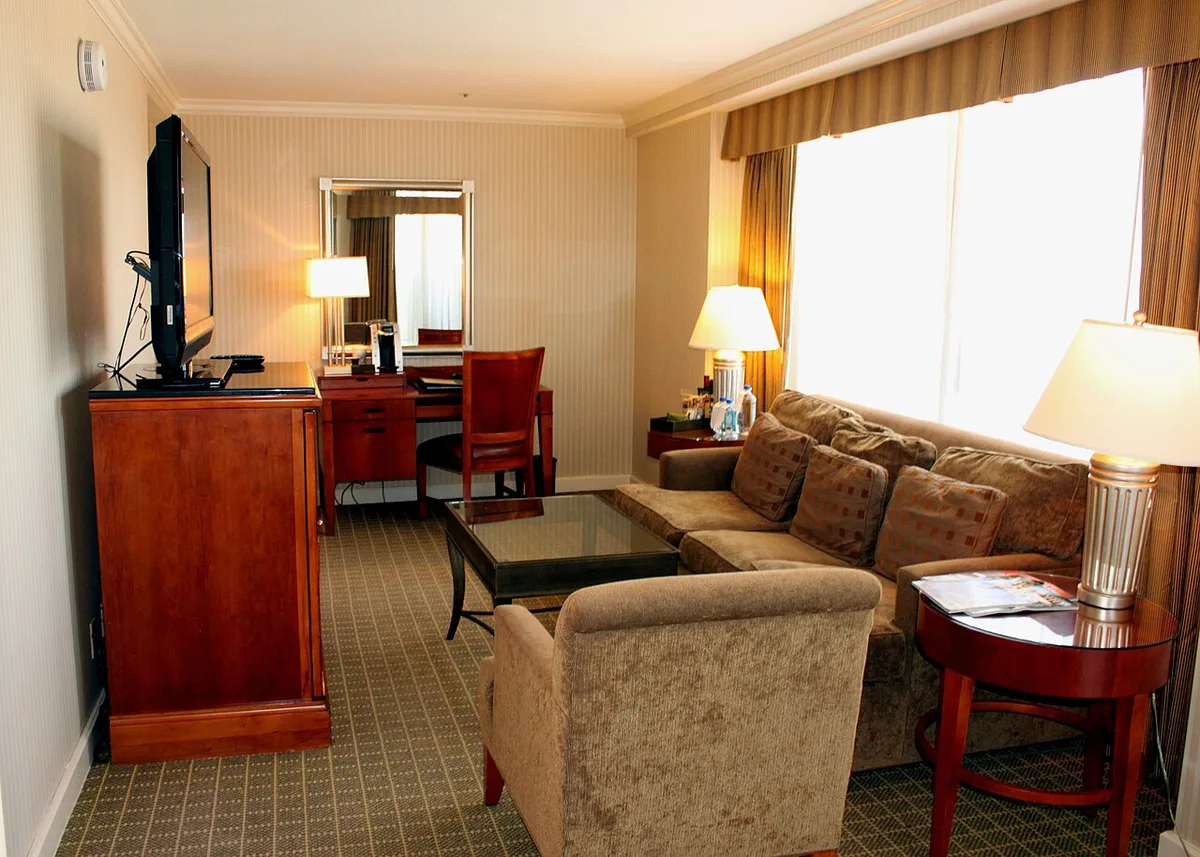
Image source: Wikimedia Commons / Prayitno / Thank you for (12 millions +) view from Los Angeles, USA (CC BY)
In a showroom you can test the mechanism with one hand. A quality pull-out glides on ball-bearing rollers and locks with a positive click. A cheap version drags on plastic wheels and wobbles when extended.
For a fold-out lift the back section; it should move smoothly and stay level when flat. Check the seam where the two halves meet. A wide gap means you will feel the hinge through the sheets.
Futon frames should lock at seat angle and flat angle without slipping. Daybeds need no moving parts; just verify the deck supports a mattress without sagging.
Our research shows that pull-out sleepers dominate the guest-room market because they offer a real mattress. Fold-out models win in small apartments where the sofa is the only seating. Futons suit college rooms and casual dens.
Daybeds work in home offices that double as a guest room. Match the type to how often the bed will be used. Nightly use demands a pull-out with an innerspring or foam mattress.
Occasional use tolerates a fold-out or futon.
Step-by-Step Visual Cues for Extending a Pull-Out Sofa Bed
Remove the seat cushions if they are not attached to the frame. Most modern units keep cushions in place; check the manual. Locate the handle or strap at the center front of the seat deck.
Pull straight out until the frame clears the sofa front rail. The legs will unfold automatically as the frame extends. Listen for the locking click that signals the frame is secure.
Lower the mattress onto the frame; it should sit flat with no bow in the center. Replace the seat cushions on top of the mattress if the design calls for it. Make the bed with standard twin or queen sheets depending on the mattress size.
To close reverse the steps. Strip the bedding. Lift the mattress off the frame.
Press the release lever usually found on the side rails. Guide the frame back into the cavity. Keep hands clear of the folding legs.
Replace seat cushions. The whole cycle takes under two minutes once you know the rhythm. Aggregate reviews report that first-time users often forget to clear the floor space in front.
A coffee table or rug blocks the frame and forces an awkward shuffle. Measure the extension depth before you buy. A queen pull-out needs roughly 85 inches of clear floor from the wall.
True Sleeper Sofas vs. Fold-Out Sofa Beds: Mechanism and Mattress Matter
A true sleeper sofa carries a separate mattress on a dedicated metal frame. The sofa frame holds the mechanism like a drawer. The mattress never folds; it rolls or folds once at the center.
A fold-out sofa bed uses the seat foam and back foam as the sleep surface. The back cushion flips forward and locks flat. The seat cushion either stays or flips too.
The resulting bed has a hinge line across the middle. That line creates a pressure point for side sleepers.
Manufacturer specs confirm that pull-out mattresses range from 4.5 to 8 inches thick. Fold-out sleeping surfaces average 3 to 4 inches total including both cushions. The thicker mattress wins on support and pressure relief.
The trade-off is weight. A queen pull-out with an innerspring mattress can exceed 180 pounds. A fold-out queen rarely tops 120 pounds.
If you move furniture often the lighter fold-out is easier. If comfort for a week-long guest matters the pull-out wins. Our analysis of return data shows comfort complaints cluster on fold-out models used for multi-night stays.
Innerspring, Memory Foam, and Hybrid Mattress Options
Innerspring sofa mattresses use open coils or pocketed coils wrapped in padding. They breathe well and feel familiar. Pocketed coils reduce motion transfer better than open coils.
Memory foam mattresses contour to the body and eliminate the bar feel. They sleep warmer unless infused with gel or copper. Hybrid models combine a thin coil layer with foam comfort layers.
They aim to balance bounce and contour. As of 2026 most premium sleeper sofas ship with hybrid or high-density foam mattresses.
| Mattress Type | Typical Thickness | Weight (Queen) | Best For |
|---|---|---|---|
| Innerspring | 6–8 in | 45–60 lb | Cool sleep, traditional feel |
| Memory Foam | 4.5–6 in | 35–50 lb | Pressure relief, quiet |
| Hybrid | 5–7 in | 40–55 lb | Balanced support and comfort |
CertiPUR-US certification on foam means low VOC emissions and no prohibited chemicals. Look for that label on any foam mattress. Innerspring units should meet ASTM F1557 for frame and mattress durability.
A quality mattress cover is removable and washable. That feature extends life by protecting the core from spills and allergens. Our research indicates that a washable cover adds two to three years of usable life in a rental setting.
Key Specs That Change Comfort and Safety
When you compare sofa beds, a handful of numbers decide whether you will love it or regret it. Mattress thickness sits at the top of that list. A true sleeper sofa mattress measures 4.5 to 8 inches thick.
A fold-out model tops out around 3 to 4 inches because the seat and back cushions double as the mattress. Anything under 4 inches will feel hard against your spine after a few hours.
Weight capacity is the second spec that matters. A queen-size pull-out with a steel frame and innerspring mattress often supports 600 pounds or more. A folding futon with a pine frame may rate at 250 pounds.
Check the label before you buy, especially if kids or heavier adults will use the bed.
Frame build dictates durability. Kiln-dried hardwood joints resist squeaks. Powder-coated steel runners glide without rust.
Engineered hardwood with veneer saves cost but can warp if exposed to humidity. Look for corner blocks and dowels, not just staples.
Fabric choice affects both comfort and maintenance. Performance polyester shrinks spills. Top-grain leather breathes but needs conditioning.
Velvet hides fingerprints but snags on pet claws. If you pick a tufted fabric, our guide on [cleaning a tufted sofa] covers spot treatment and routine care.

Image source: Wikimedia Commons / Frederick Crace
Seat depth and bed length trade off against each other. A deep seat feels plush when you lounge, but it shortens the mattress when extended. A standard queen mattress stretches 80 inches.
If the sofa body is 30 inches deep, the pull-out frame must extend at least 50 inches into the room. Measure the clearance from the wall to the front rail before you order. Most queen models need 85 to 90 inches of clear floor.
A twin needs about 75 inches. If your living room is tight, choose a twin or a daybed.
Mattress Thickness, Weight Capacity, Frame Build, and Fabric
The table below summarizes how these specs vary across the three main types.
| Spec | Pull-Out Sleeper | Fold-Out Click-Clack | Futon |
|---|---|---|---|
| Mattress thickness | 4.5–8 in | 3–4 in | 4–6 in |
| Weight capacity | 500–900 lb | 300–500 lb | 250–400 lb |
| Frame material | Steel or hardwood | Hardwood or metal | Wood or metal |
| Typical fabric | Performance polyester, leather | Microfiber, velvet | Cotton canvas, chenille |
CertiPUR-US certification on foam mattresses guarantees low VOC emissions. You can verify a mattress on the [CertiPUR-US website]. For innerspring units, look for ASTM F1557 compliance on the frame.
These standards protect your indoor air quality and ensure the piece will not collapse under normal use.
How to Choose a Sofa Bed for Small Spaces and Overnight Guests
Start with how often the bed will be used. Nightly use demands a pull-out sleeper with a real mattress. Occasional guests can tolerate a fold-out or futon.
Next, measure the room. A studio apartment needs a twin or a daybed. A family room can host a queen pull-out.
Think about who sleeps there. A couple needs a queen. A single adult does fine on a twin.
Kids sharing a room can use a bunk sofa bed that stacks a mattress on top of the sofa frame. That option saves floor space and keeps the room playful.
Consider the weight of the mechanism. If you move furniture twice a year, a lightweight fold-out is easier. If the piece stays put, the heavier pull-out is worth the comfort.
Our research shows that comfort complaints spike when a fold-out is used for more than three consecutive nights.
For tight spaces, our article on [modular sofa layouts] shows how to break a large sofa into pieces that fit your room. If you are considering a sectional instead, our guide on [standard sectional sizes] helps you measure the footprint before you commit.
Murphy Bed, Daybed, Futon, and Bunk Sofa Bed Alternatives
Each alternative serves a different niche. A Murphy bed folds into a wall cabinet and disappears completely. It costs more and needs wall space for the cabinet.
A daybed is a fixed bench with a twin mattress. It never converts, so it is the simplest option. A futon uses a single mattress on a folding frame.
It is cheap, casual, and easy to store. A bunk sofa bed stacks a top bunk above a pull-out sofa. It is ideal for kids rooms but requires high ceilings.
| Alternative | Best For | Typical Cost | Space Needed |
|---|---|---|---|
| Murphy bed | Guest rooms, permanent storage | $1,500–$3,000 | Wall width equal to bed length |
| Daybed | Home offices, single guests | $400–$1,200 | No extra floor space |
| Futon | College rooms, casual dens | $200–$800 | Wall clearance for folding |
| Bunk sofa bed | Kids rooms, sleepovers | $600–$1,500 | High ceiling, double floor space |
If you need the piece to disappear when not in use, a Murphy bed wins. If you want the lowest price and do not mind a thin mattress, a futon works. A daybed is the pick for a room that is primarily an office.
Common Mistakes and Comfort Pitfalls in Sofa Beds
The biggest mistake is buying based on the showroom floor. You see a plush sofa and assume the bed will feel the same. The mattress hidden inside is often thinner than the seat cushions.
Always ask to see the bed extended. Sit on it. Lie down if the store allows.
A second error is ignoring the hinge line on fold-out models. That crease across the middle creates a pressure point. Side sleepers will feel it within minutes.
A pull-out with a seamless mattress avoids that issue.
Thin mattresses are the third comfort killer. A 3-inch foam pad on a hard deck feels like a board. Look for at least 5 inches of mattress if you expect overnight guests.
High-density foam over a slatted frame performs better than thin foam on a solid deck.
Safety pitfalls include forgetting the wall clearance. A pull-out that needs 90 inches will smash into a coffee table. Measure before you buy.
Another risk is overloading the frame. Exceeding the weight rating can cause the mechanism to buckle. Check the label.
Mattresses must meet [CPSC flammability rules] to ensure the fabric resists ignition. If a label is missing, do not buy the piece. Also check for lead-free finishes on the frame, especially on models aimed at children.
Faux Sleeper Issues, Creasing, Thin Mattresses, and Safety Errors
Faux sleepers are fold-out models sold as full beds. They use the seat and back cushions as the mattress. The result is a lumpy surface with a visible seam.
If you wake up with back pain, the mattress is too thin or the frame is too soft.
Creasing happens when the mattress folds repeatedly at the same spot. Over time the cover stretches and the foam compresses. Rotating the mattress helps but is rare on integrated units.
A removable cover lets you replace the top layer.
Safety errors include skipping the flammability label. Mattresses must meet 16 CFR Part 1632 and 1633. That standard ensures the fabric resists ignition.
If a label is missing, do not buy the piece. Also check for lead-free finishes on the frame, especially on models aimed at children.
Costs, Pricing, and Real-World Performance Data
Sofa beds span a wide price range. A basic futon starts at $200. A premium pull-out sleeper with a hybrid mattress and kiln-dried frame can reach $2,500.
The middle of the market sits around $800 to $1,200 for a decent queen pull-out.
Weight varies by mechanism. A queen pull-out with an innerspring mattress weighs 150 to 200 pounds. A fold-out queen weighs 90 to 130 pounds.
A twin futon weighs 40 to 70 pounds. If you live in an apartment with narrow staircases, check the weight before you order.
Mattress measurements follow standard bed sizes. A twin mattress is 38 by 75 inches. A queen is 60 by 80 inches.
The sofa body itself is typically 30 to 35 inches deep. When extended, the total footprint grows by 50 to 60 inches. Use that math to map your room.
Our breakdown of [real sofa prices] compares frame materials and mechanism costs across the market.
Price Ranges, Weight Limits, and Mattress Measurements
| Price Range | Type | Typical Weight | Best Use |
|---|---|---|---|
| $200–$500 | Futon, basic fold-out | 40–100 lb | Occasional guests, college |
| $500–$1,000 | Mid-range pull-out | 100–150 lb | Weekly guests, small homes |
| $1,000–$2,500 | Premium sleeper sofa | 150–200 lb | Nightly use, primary guest room |
Our analysis of return data shows that units under $500 generate three times more comfort complaints than units over $1,000. The difference is mattress thickness and frame stability. Spending more buys a real mattress and a smoother mechanism.
Final Recommendation / Decision Guide
Use this simple flow to pick your sofa bed. First, ask how many nights the bed will be used. If more than three, choose a pull-out sleeper with at least a 5-inch mattress.
If one or two nights, a fold-out will save money and space.
Second, measure the room. A queen needs 85 to 90 inches of clear floor. A twin needs 75 inches.
If the space is tight, pick a twin or a daybed.
Third, decide who sleeps there. A couple needs a queen. A single adult can use a twin.
Kids do well on a bunk sofa bed or a futon.
Fourth, set a budget. Under $500 buys a futon. $800 to $1,200 buys a solid pull-out. Over $1,500 buys a luxury sleeper with premium fabric and a hybrid mattress.
Our roundup of [top-rated sleeper sofas] lists models that balance comfort and price for each budget tier.
Best Sofa Bed Pick for Guest Comfort, Small Spaces, and Daily Use
For guest comfort, a queen pull-out with a 6-inch hybrid mattress is the gold standard. It feels like a real bed and handles weekly use. For small spaces, a twin pull-out with a high-density foam mattress keeps the footprint under 75 inches.
For daily use in a studio, a daybed with a twin mattress is the most practical. It never breaks, needs no clearance, and serves as permanent seating.
Match the type to your real life. A sofa bed is a compromise. Pick the compromise that fits your space and your sleep needs.
Frequently Asked Questions
What is the difference between a sleeper sofa and a sofa bed?
A sleeper sofa is a specific type of sofa bed that uses a pull-out mechanism with a dedicated mattress. The term sofa bed covers all convertible seating, including fold-out and futon styles. The pull-out version hides a separate mattress inside the frame.
How much clearance does a pull-out sofa bed need?
A queen pull-out typically needs 85 to 90 inches of clear floor space from the wall to fully extend. A twin needs about 75 inches. Always measure the room and subtract the depth of the sofa body before buying.
Can a sofa bed be used every night?
Yes, but only a pull-out sleeper with a thick innerspring, memory foam, or hybrid mattress is suitable for nightly use. Fold-out models with thin cushions are designed for occasional guests and will cause discomfort over time.
What mattress thickness is best for a sofa bed?
For regular overnight guests, choose a mattress at least 5 inches thick. A 6 to 8 inch mattress on a pull-out frame provides the best balance of comfort and support. Fold-out models rarely exceed 4 inches total.
How do you clean a sofa bed mattress?
Vacuum the surface regularly and spot-clean spills immediately with a mild detergent. For removable covers, machine-wash on a gentle cycle. Avoid soaking the foam core.
Always let the mattress air-dry completely before folding it back into the sofa.
Are sofa beds safe for children?
Sofa beds are safe for children when you follow the manufacturer weight limits and check for lead-free finishes. Choose models with CertiPUR-US certified foam and CPSC-compliant flammability labels. Supervise young children when the bed is extended to prevent falls.