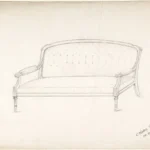
What is a standard sofa? It is a three-seater couch that falls within a narrow range of dimensions most manufacturers build to. The typical width runs 84 to 96 inches.
The depth sits between 35 and 40 inches. The height measures 30 to 36 inches from floor to top of back.
Those numbers only tell half the story. Seat depth decides whether your feet touch the floor or dangle. Arm height determines if you can see the TV over the roll.
As of 2026 the industry still clusters around these figures because they fit average living rooms and standard doorways.
What Is a Standard Sofa?
A standard sofa is a three-seater couch measuring 84 to 96 inches wide by 35 to 40 inches deep by 30 to 36 inches high. Seat height ranges 17 to 19 inches. Seat depth ranges 20 to 24 inches.
These dimensions fit average doorways and living rooms.
Why "Standard Sofa" Only Makes Sense Once You See the Numbers Against a Room
Where the 84-inch figure actually comes from
The 84-inch baseline comes from ANSI and BIFMA testing standards for residential seating. Manufacturers design frames to that width because it seats three average adults with 26 to 28 inches per person. It also clears a 32-inch interior door when angled.
That clearance drives the entire supply chain.
Imperial vs. metric: why UK and European "standard" sofas run narrower
European sofas often measure 180 to 215 centimeters wide. That converts to roughly 71 to 85 inches. A UK three-seater can be 10 inches narrower than a US model.
If you shop imported brands you must convert every spec. A 200-centimeter sofa is not a US standard three-seater.
What 84 Inches Wide and 38 Inches Deep Actually Looks Like in Your Space
Width: how many adults really sit on a three-seater
Three adults fit shoulder to shoulder at 84 inches. Four adults fit only if two are children. At 96 inches you gain genuine four-person capacity.
The extra foot changes the room layout more than the seating count.
Depth and seat depth: the 20–24 inch range that decides whether your feet touch the floor
Overall depth includes the back cushion. Seat depth is the usable surface. A 24-inch seat depth suits tall people.
A 20-inch seat depth suits shorter people. If your knees bend past the edge you will slouch. If your feet float you will perch forward.
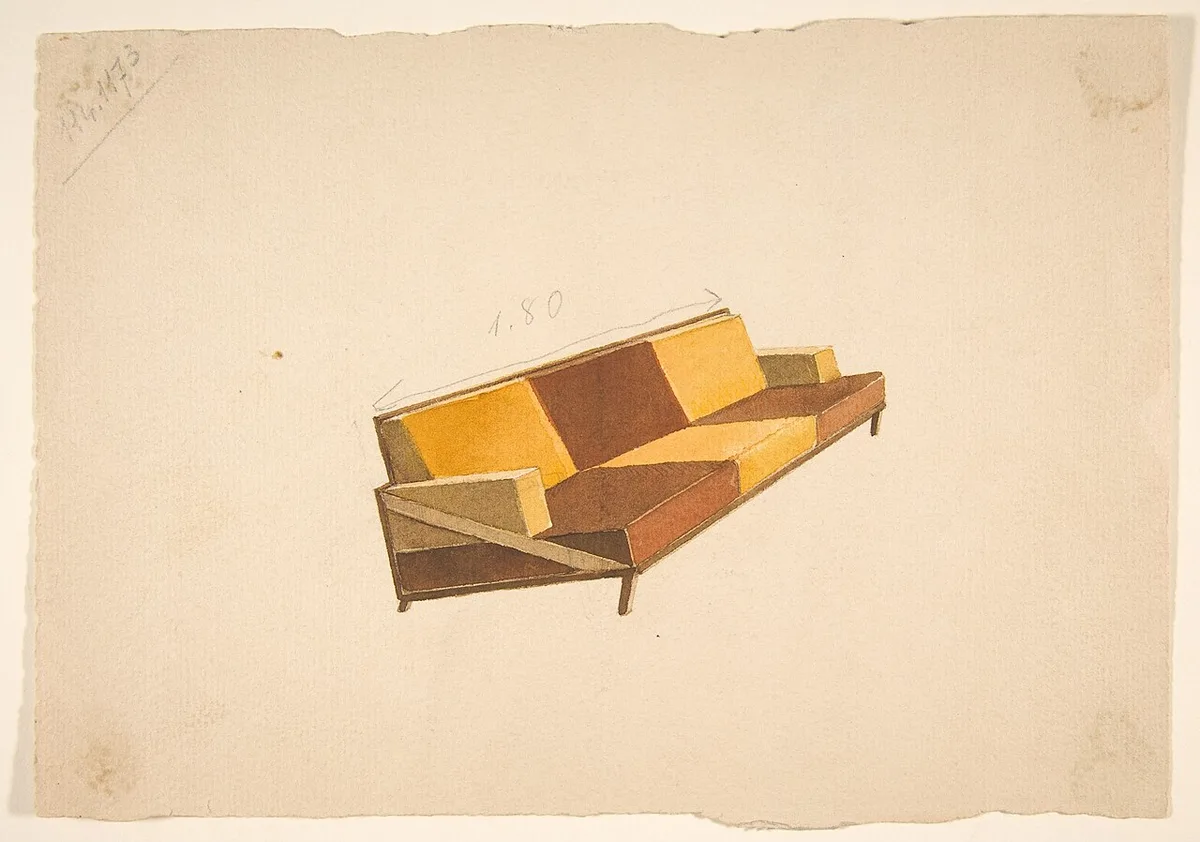
Image source: Wikimedia Commons / Guglielmo Ulrich
Seat height, back height, and arm height as sightline cues
Standard seat height is 17 to 19 inches. Add a 15-inch back cushion and the top hits 32 to 34 inches. Arm height at 22 to 26 inches can block a low TV console.
Measure your screen center height before you choose arm style.
A quick tape-and-tape-measure trick to "see" the sofa before it arrives
Lay painter's tape on the floor in an 84 by 38 inch rectangle. Sit a dining chair at the front edge. Check knee clearance.
Check TV sightline. Walk the traffic path around it. The tape costs three dollars and prevents a return.
The Fit Check You Can Do Before Ordering: Doorways, Stairwells, and Elevators
Measuring the entry path, not just the room
Measure every door width on the route. Measure the narrowest hallway pinch point. Measure the stairwell width at the handrail.
Measure the elevator interior if you live above the second floor. The sofa must clear the tightest spot.
Diagonal clearance, turn radius, and ceiling height on stairs
A 38-inch deep sofa needs a 44-inch diagonal to clear a 90-degree turn. If the stair ceiling is under 84 inches you cannot stand the sofa upright. Some frames come apart.
Bolt-on legs remove five inches of height. Modular sections split the width.
Apartment elevator and hallway limits
Standard freight elevators are 80 inches deep. A 96-inch sofa will not fit flat. You may need a hoist service.
Check building rules before you order. Some leases ban weekend deliveries over a certain size.
Sofas that come apart: bolt-on legs and modular frames
Look for "knock-down frame" in the spec sheet. Legs unscrew. Backs unbolt.
Arms detach. These features turn a 96-inch problem into two 48-inch pieces. They add cost but save delivery fees.
Reading a Spec Sheet Like a Floor Plan: What the Photos Don't Show
Frame construction: kiln-dried hardwood vs. engineered wood
Kiln-dried hardwood resists warping for decades. Engineered wood with corner blocks passes BIFMA X5.4 but may creak after five years. Tap the frame.
A solid thud means hardwood. A hollow ring means plywood.
Spring systems: sinuous, eight-way hand-tied, and webbing
Sinuous springs are S-wires clipped to the frame. They last 10 to 15 years. Eight-way hand-tied coils link each spring to its neighbors.
They last 20 plus years. Webbing stretches fastest. Check the warranty period for the suspension.
Cushion fill, foam density, and reversible vs. attached cushions
High-resiliency foam at 2.0 to 2.5 pounds per cubic foot holds shape. Down blend feels softer but needs daily fluffing. Reversible cushions wear evenly.
Attached cushions cannot flip. Foam density is printed on the law tag.
Fabric durability ratings and cleaning codes (W, S, WS, X)
Residential fabric starts at 15,000 double rubs. Contract grade starts at 30,000. W means water-based cleaner only.
S means solvent only. WS means both. X means vacuum only.
Match the code to your lifestyle.
Labels to look for: TB117-2013, 16 CFR 1632/1633, and Prop 65
TB117-2013 is the California flammability standard adopted nationwide. 16 CFR 1632 covers cigarette ignition. 16 CFR 1633 covers open flame for sofa beds. Prop 65 warns of listed chemicals. The label sits under the seat deck.
Standard Sofa vs. Loveseat, Apartment Sofa, and Sectional: Side-by-Side Sizing
A comparison table of width, depth, seat height, and typical weight
| Type | Width (in) | Depth (in) | Seat Height (in) | Weight (lb) |
|---|---|---|---|---|
| Standard sofa | 84–96 | 35–40 | 17–19 | 120–250 |
| Loveseat | 55–70 | 35–40 | 17–19 | 80–150 |
| Apartment sofa | 75–85 | 32–38 | 17–19 | 90–180 |
| Sectional (per seat) | 30–40 | 35–42 | 17–19 | 60–120 |
Price bands, lead times, and warranty differences
Standard sofas run $600 to $3,000. Loveseats run $400 to $2,000. Sectionals start at $1,500.
Stock ships in one to two weeks. Made-to-order runs eight to twelve weeks. Frame warranties range from one year to lifetime.
Spring warranties often match.
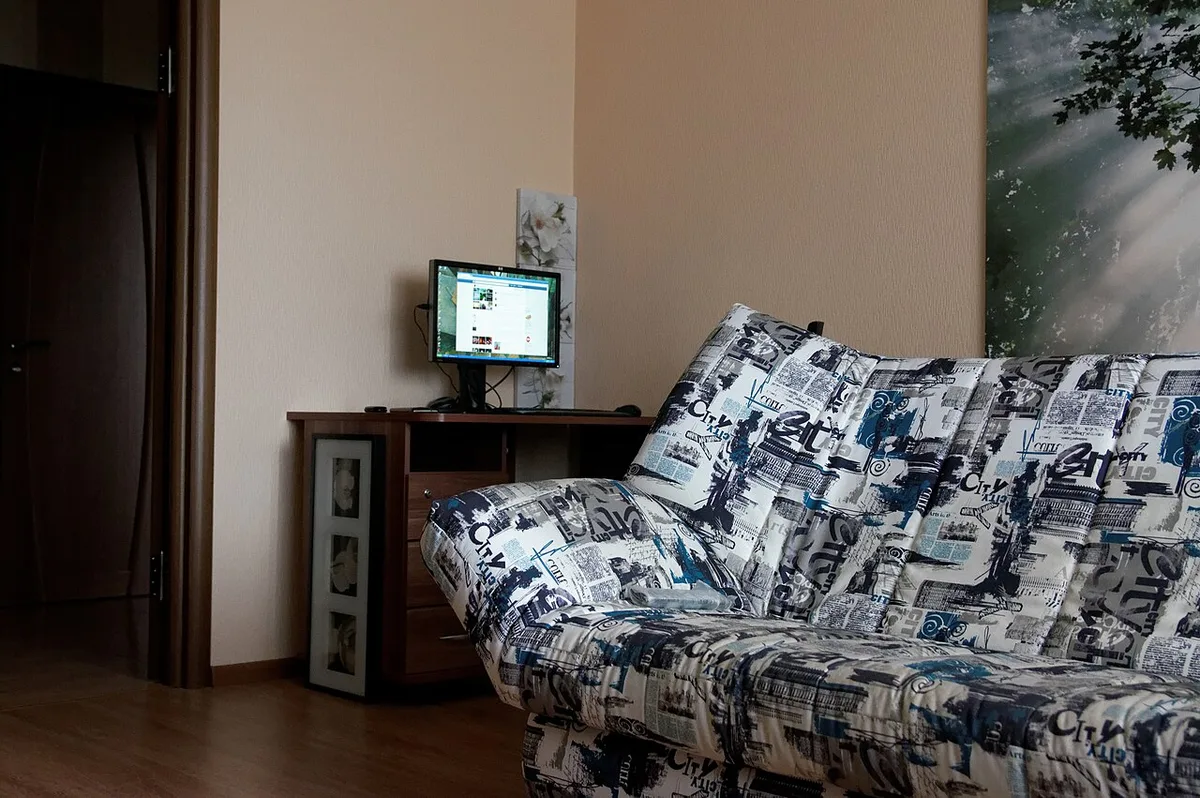
Image source: Wikimedia Commons / Vyacheslav Argenberg (CC BY)
Which size fits which room and household
A 12 by 18 foot room fits a standard sofa with 36-inch walkways. A 10 by 12 foot room needs an apartment sofa or loveseat. Sectionals need a 15 by 20 foot footprint for an L-shape.
Match the scale to the room not the showroom.
For more on picking the right style for your space see our guide on matching sofa scale to room proportions. If you are debating between a sofa and a sectional our breakdown of sectional versus standard sofa layouts walks through the trade-offs.
Where the Picture Breaks Down: Common Fit and Buying Mistakes
Are product photos enough to judge fit?
No. A lifestyle shot hides depth and scale errors. Aggregate reviews show buyers return sofas that look right online but crowd walkways.
Manufacturer specs confirm that camera angles compress 38 inches of depth into a flat image. A return means moving a big sofa back through your door. Always measure before you click buy.
Did you leave room for a coffee table?
You need at least 16 to 18 inches between sofa seat and coffee table. Less than that traps legs and blocks standing up. Our research indicates most living rooms lose usable space when a standard 84-inch sofa sits too close to a low table.
Pull the sofa forward or size down.
Will sunlight ruin your fabric choice?
Yes, if you place a standard sofa in direct sun. Fabric fades unevenly over six to twelve months. Leather cracks faster near windows.
Before replacing, review key factors when buying leather to pick a fade-resistant hide. Rotate cushions every few months to spread wear.
Are pets and kids factored into your fabric pick?
Not always. Pet claws snag loose weave. Spills penetrate light upholstery before you can blot.
Start by checking your sofa fabric type to know what cleaners are safe. Code W fabric handles water-based spills best. Code S needs solvent.
Our research shows households with dogs favor microfiber or tight-weave cotton blends. Match the code to your mess level. The American Home Furnishings Alliance publishes upholstery care guidance.
FAQs About Standard Sofa Dimensions and Fit
Is 84 inches the standard sofa width everywhere?
No. U.S. manufacturers cluster around 84 to 96 inches. UK and European models often run 71 to 85 inches wide.
Always check the spec sheet before assuming.
How deep is too deep for a sofa?
Overall depth past 40 inches often leaves shorter sitters with dangling feet. Seat depth over 24 inches works for tall adults but not petite users. Match seat depth to your height.
Can a standard sofa fit through a 30-inch door?
Yes, if angled correctly. A 38-inch deep sofa needs diagonal clearance. Measure door width plus wall depth on both sides.
Remove legs if the frame allows.
Do standard slipcovers and cushions fit standard sofas?
Only if the sofa matches common dimensions. Slipcovers list fit ranges, not universal sizing. Measure arm width and back height before ordering.
How much space should I leave around a standard sofa?
Leave 30 to 36 inches for main walkways. Allow 16 to 18 inches before a coffee table. Tight spacing makes the room feel smaller than it is.