
Image source: Bing (Web (fair-use with source credit))
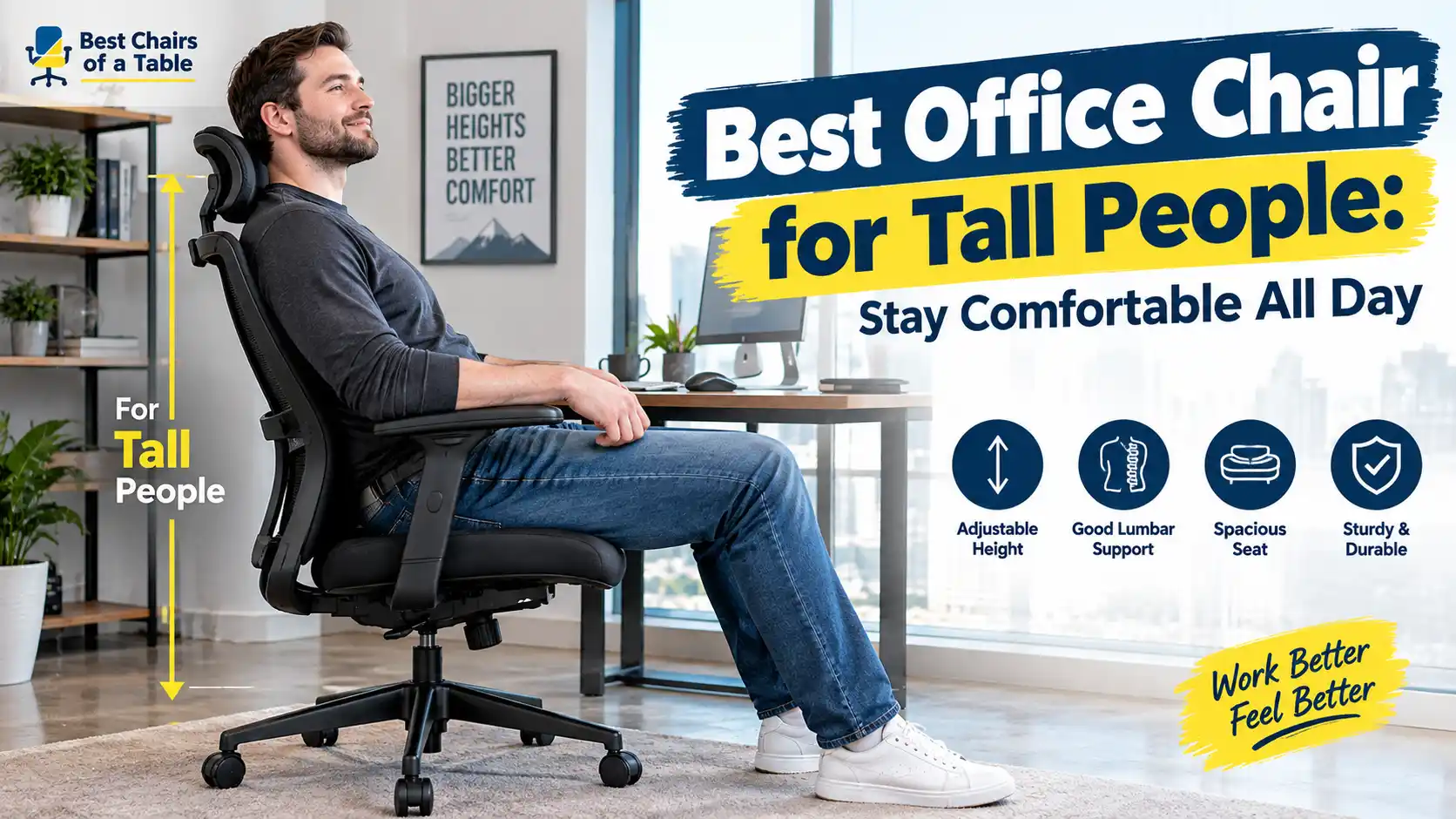
Most office chairs are engineered for people between 5'4" and 5'10". If you're taller than that range, sitting for any length of time in a standard chair usually means knee pressure, bad lumbar placement, and constant readjustment. The real issue isn't that tall people can't find comfort, it's that the vast majority of available chairs simply weren't built with longer thighs and taller torsos in mind.
Finding the best office chair for tall person comes down to three measurements: seat depth, backrest height, and weight capacity. A chair designed for your proportions supports your entire spine, keeps blood flowing, and stays comfortable through long work sessions without forcing you to hunch or shift constantly. Let's walk through exactly how to figure out what you need and which chairs actually deliver.
Quick Answer: What Makes a Chair Actually Work for Tall People
Three specs determine whether an office chair fits a tall frame: seat depth, backrest height, and weight capacity rating. Seat depth should be 18 to 23 inches. Backrest height needs at least 28 inches.
Weight capacity should exceed your body weight by 15 to 20 pounds.
Brands like Herman Miller and Steelcase design tall-friendly models with these specs. Budget chairs often skip these features. Marketing claims may sound promising but don't guarantee fit.
Check manufacturer spec sheets before buying online. Appearance and price rarely tell the full story.
Understanding the Problem: Why Tall People Struggle with Standard Chairs
The Design Gap Behind Most Office Chairs
Most ergonomic office chairs trace their origins back to mid-20th century industrial design standards. Those standards were based on average male anthropometric data from the 1950s and 1960s. The goal was straightforward.
Keep factory and office workers comfortable enough to stay productive during a standard shift. The average meant 5'7" for men and 5'4" for women, roughly speaking.
Decades later, the average American height has risen. Men now average closer to 5'9" and women closer to 5'4". But chair manufacturers haven't kept pace with those shifts.
Many models still target the old average. Taller buyers get stuck with products that don't scale properly. The result is a market full of chairs that look ergonomic on paper.
They fail the moment someone over 6 feet sits in them.
What Actually Goes Wrong When a Tall Person Uses a Standard Chair
When your body doesn't match the chair's proportions, every part of your posture suffers. Here's what tends to happen:
- Your thighs press against the front edge of the seat pan. This happens when the seat is too shallow. The pressure cuts off circulation and creates numbness in your legs.
- Your feet can't rest flat on the floor unless you raise the chair to an uncomfortable height. Raising the chair only pushes the problem upward.
- The lumbar support lands somewhere between your ribs and hips instead of aligning with the natural curve of your lower spine. It ends up pushing your back into the wrong position rather than supporting it.
- Your upper back and shoulders hang unsupported because the backrest ends well below your shoulder blades.
- Your arms rest at odd angles because the armrests don't reach high enough or wide enough for your frame.
These small misalignments compound over time. Lower back pain becomes chronic. Neck tension builds up from the lack of upper back support.
Shoulder strain increases from reaching for unstable armrests. Fatigue sets in faster. Focus drops.
You spend the second half of your workday constantly shifting, standing up, or finding ways to make the chair tolerable.
People often assume the problem is their posture or habits. Best office chair for back pain guides often cite poor seating that doesn't match body dimensions. Switching to a properly proportioned chair is often the single most effective change someone can make.
Why Online Shopping Makes This Worse
Product photos show the chair from the front or a flattering angle. They don't reveal seat depth, backrest height range, or actual weight capacity numbers. Reviewers often describe comfort in vague terms like "very comfortable" or "great support" without mentioning their own height or weight.
A chair that fits a 5'8" reviewer perfectly may feel cramped on a 6'4" buyer.
Aggregate reviews from verified purchasers do sometimes flag fit issues for taller users. But those insights are scattered across hundreds of pages. You end up piecing together whether a chair works for tall frames by reading through dozens of reviews and comparing spec sheets from different pages.
That process is exhausting and still leaves room for error.

Image source: Web (Bing) / kevinashleyphotography.com (Web image (fair-use with source credit))
Measuring Yourself Before You Buy
Knowing your exact measurements turns chair shopping from guesswork into a targeted search. You stop scrolling through pages of chairs that look promising but won't actually fit. You start filtering by real numbers instead of hoping for the best.
Here's how to measure accurately at home.
How to Measure Your Inseam for Seat Depth Needs
Your inseam length directly determines the seat depth you need. Sit on a flat, hard surface with your back straight and legs bent at a 90-degree angle. Have someone measure from the top of your knee where it bends down to the crease behind your knee.
That measurement in inches tells you roughly how deep your seat should be.
A good rule of thumb is to subtract about one to two inches from your inseam measurement to get your ideal seat depth. That gap ensures the front edge of the seat won't press into the backs of your knees when your feet are planted flat. For someone with a 32-inch inseam, a seat depth around 30 to 31 inches might sound right.
But that's too deep for most office chairs. The practical sweet spot for tall users usually falls between 18 and 23 inches of actual seat pan depth, depending on your proportions.
Measuring Your Torso Length for Backrest Height
Your torso length tells you how tall your backrest needs to be. Stand against a wall with a tape measure. Mark the point at the top of your head, then mark the point where your hip bone meets your spine while sitting naturally.
Measure between those two marks while seated. That number represents your seated torso length.
Add approximately six inches to your seated torso length to estimate the minimum backrest height you need. That extra space accounts for the seat cushion thickness and ensures the top of the backrest reaches your mid-upper back or shoulders. Someone with a 20-inch seated torso would likely need a backrest of at least 26 inches from the seat surface.
Shoulder Width and Armrest Spacing
Shoulder width affects whether standard armrests will position correctly. Measure from the outside of one shoulder joint to the outside of the other while standing with your arms relaxed at your sides. Compare that measurement to the armrest span range listed in chair specifications.
If your shoulder width exceeds the maximum armrest span of a given chair, you won't be able to position the armrests under your elbows properly. Your shoulders will either hunch inward or rest awkwardly on the edge of the armrests. Most chairs offer armrest widths between 17 and 22 inches.
Tall users with broader frames should look for chairs that explicitly list wider armrest ranges.
Weight and How It Intersects With Chair Ratings
Your body weight determines which weight capacity rating you need. Take your current weight and add 15 to 20 percent as a safety buffer. That buffer accounts for dynamic movement, leaning back forcefully, and normal wear over time.
A 220-pound person should look for chairs rated for at least 250 pounds, ideally more.
Weight capacity interacts with frame material and gas lift class. Chairs rated for lighter weights often use smaller gas cylinders and thinner frames. Those components may hold up fine for years under optimal conditions.
But they degrade faster under sustained heavier loads. Always choose a chair whose rated capacity comfortably exceeds your actual weight.
How to Measure Accurately Without a Professional
You don't need a professional measurer to get reliable numbers at home. Use a standard tape measure. Stand barefoot for height and inseam measurements.
Sit on a flat surface for seated measurements. Record each number to the nearest quarter inch. Write everything down before you start shopping.
Refer to those numbers whenever you encounter a new chair.
Some retailers offer in-store fitting sessions or free home trial periods. Those options let you sit in a chair. Verify whether your measurements match the claimed dimensions.
How Much Does a Chair Cost? price guides sometimes mention trial periods. Those details help when spending hundreds on a daily-use chair.
If you can't try the chair in person, order from retailers with generous return windows. Most major online furniture sellers offer 30-day returns. That window gives you time to test the chair at home.
Confirm whether the proportions work for your body.
The Critical Specs That Actually Matter for Tall Users
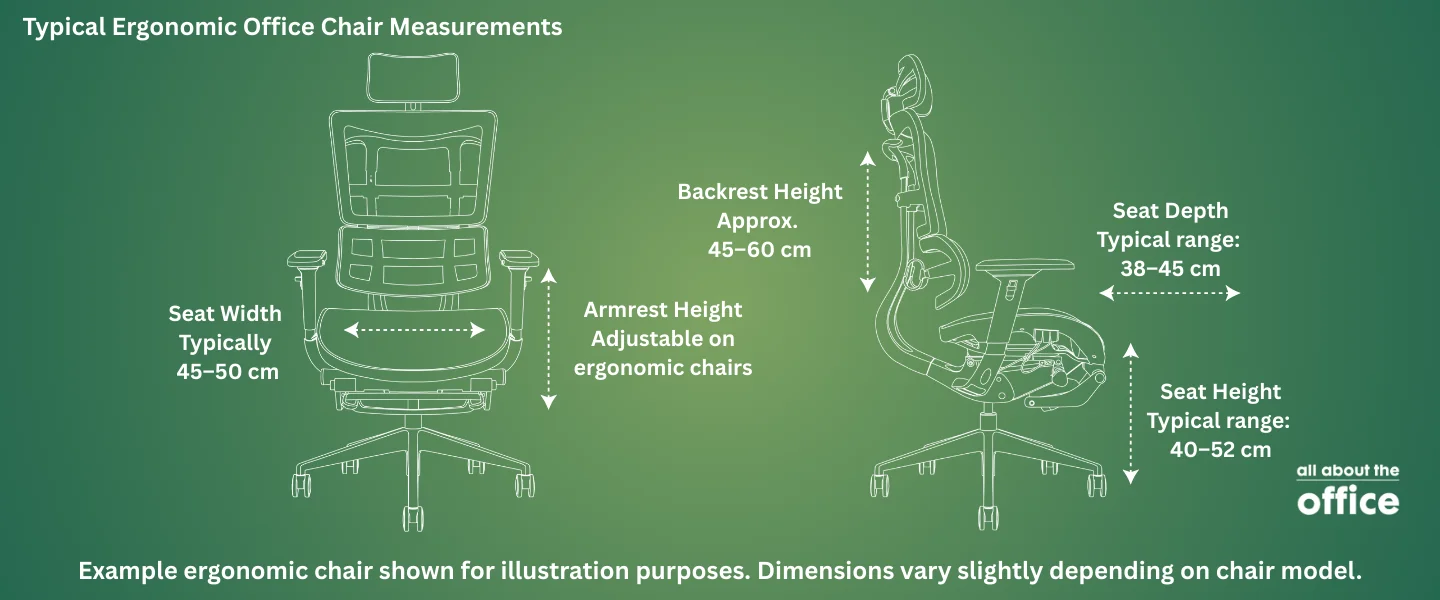
Image source: Bing (Web (fair-use with source credit))
Every adjustment knob and spec line on a chair spec sheet doesn't carry equal weight. Some features barely affect comfort at all. Others make the difference between a chair that supports you all day and one that causes pain by mid-afternoon.
Focus on these seven specifications first.
Seat Depth: The Make-or-Break Measurement
Seat depth is the single most important spec for tall users. It determines whether your thighs receive proper support without creating pressure behind your knees. Too shallow and your thighs dangle with no support.
Too deep and the seat edge digs into your hamstrings, cutting off circulation and causing leg fatigue.
The ideal seat depth range for most tall adults falls between 18 and 23 inches. Measure from the front edge of the seat pan to the backrest. That measurement tells you how much of your thigh can rest comfortably.
Remember to account for the one-to-two-inch gap we discussed earlier. Your ideal seat depth should be roughly two inches shorter than your inseam measurement.
| Seated Inseam | Recommended Seat Depth |
|---|---|
| 28 to 30 inches | 18 to 20 inches |
| 30 to 32 inches | 20 to 22 inches |
| 32 to 34 inches | 22 to 23 inches |
| 34+ inches | 23+ inches or custom |
Chairs with fixed seat depth pose the biggest risk for tall users. Adjustable seat depth gives you flexibility to fine-tune the fit. Look for mechanisms that allow the seat pan to slide forward or backward by at least two inches.
Some premium models offer even greater adjustment range.
Backrest Height: Reaching Your Full Spine
Backrest height determines whether your upper back, shoulders, and neck receive any support at all. A backrest that ends below your shoulder blades leaves your upper spine unsupported. Your shoulders roll forward.
Your neck strains to hold your head upright. This pattern is extremely common with standard mid-back chairs and many budget options.
Look for backrest heights of at least 28 inches measured from the seat surface to the top of the backrest. Some taller users need 30 inches or more. Compare that number against your calculated backrest height requirement from the measuring step above.
If the chair's backrest falls short of your need, skip it regardless of how many other features it offers.
High-back chairs generally serve tall users better than mid-back or low-back designs. They provide continuous support along the entire length of the spine. They also accommodate headrests, which we'll cover in the next section.
Some brands produce specific tall-friendly lines with extra-tall backrests built in. Those models exist precisely because standard high-back designs still fall short for certain frame sizes.
Weight Capacity: Rated vs. Real-World Performance
Manufacturer weight capacity ratings tell you the maximum load a chair is engineered to handle safely. That number covers static weight plus normal dynamic movement like leaning back and shifting position. It does not cover extreme jumping, abrupt slamming into the chair, or sustained abuse beyond reasonable use.
Always select a chair rated at least 15 to 20 pounds above your body weight. This buffer prevents premature wear on the gas lift, base, and casters. It also maintains consistent performance as materials settle and age over time.
A chair operating near its maximum capacity will feel less stable and may develop squeaks, wobbles, or sinkage faster than one operating well below its limit.
Premium chairs from brands like Herman Miller and Steelcase typically rate their seats for 300 to 500 pounds depending on the model. Budget chairs often cap at 250 pounds or lower. If you weigh close to or above 250 pounds, budget chairs will likely struggle to last more than a year or two of daily use.
Checking Best Cheap Office Chairs roundups can highlight which budget models skip weight capacity details entirely. That omission is a red flag for heavier users.
Lumbar Support Adjustability: Height Range Matters More Than Firmness
Lumbar support does you zero good if it sits at the wrong vertical position on your spine. Firmness matters, but placement matters more. An adjustable lumbar mechanism that moves up and down allows you to align the support with the natural inward curve of your lower back.
Fixed lumbar support locks into whatever position the manufacturer chose during design. That position assumes a specific torso length and spinal curvature.
For tall users, look for lumbar systems that adjust vertically through at least a four-inch range. Some premium models offer even greater travel. The mechanism should also adjust in depth, allowing you to control how far the support pushes into your back.
A mechanism that only changes firmness without position adjustment remains limited in usefulness.
Mesh chairs like the Herman Miller Aeron often feature integrated lumbar zones rather than separate adjustable pads. Those zones still require proper vertical alignment across the full range of seat height adjustments. Make sure the mesh tension and lumbar zone position work correctly across your entire sitting height range.
Headrest Positioning: Must Align With Your Upper Cervical Curve
Headrests exist to support the base of your skull and reduce neck strain during reclined positions. A poorly positioned headrest presses against the wrong part of your neck or misses entirely. Either scenario creates more tension than it relieves.
Adjustable headrests should move vertically through at least four inches and tilt to match your neck angle. The top of the headrest should rest near the occipital ridge at the base of your skull when you sit upright. It should support the back of your head without pushing your chin forward or tilting your head at an awkward angle.
Tall users often need headrests that extend significantly higher than standard models allow. Some chair manufacturers pair headrests with tall-back frames specifically for that reason. If a chair's headrest maximum height falls below the level of your ears when seated, it won't provide meaningful support.
Consider removing an ill-fitting headrest altogether rather than using one that causes problems.
Armrest Travel: Enough Range for Your Elbows at Desk Level
Armrests should position your elbows at roughly a 90-degree angle with your shoulders relaxed and down. When your desk height is fixed, armrest height adjustability becomes critical. If the armrests can't reach the correct height for your proportions, you'll either hunch your shoulders up toward your ears or drop them too low, straining both areas.
Look for armrests that adjust vertically through at least four inches. Multi-directional armrests that also move in and out, side to side, and pivot add further customization. Wide armrest pads or contoured pads provide better contact surface for larger hands and forearms.
Narrow or flat armrests dig into sensitive areas during long sessions.
Some chairs offer removable armrests as an option. Those work well if you prefer armless sitting occasionally or need to tuck the chair fully under a desk. Fixed armrests eliminate that flexibility entirely.
Gas Lift Class: Class 3 Versus Class 4 for Heavier Tall Users
Gas lift cylinders come in standardized classes based on their load capacity and cycle durability. Class 3 cylinders typically handle up to 300 pounds. Class 4 cylinders handle up to 500 pounds.
Each class carries certification requirements verified through independent testing labs.
Tall users who also carry significant body weight should prioritize Class 4 gas lifts whenever possible. The extra capacity margin reduces stress on the cylinder and extends its service life. A cylinder pushed near its maximum rating will lose pressure faster and may sink gradually over months of use.
Class 2 cylinders, found on many budget chairs, max out around 250 pounds. They carry higher risk of premature failure for taller or heavier users. Never assume a gas lift will hold indefinitely.
Regular inspection and early replacement prevent sudden seat collapse, which poses a real safety hazard. Look for certifications from bodies like BIFMA that verify cylinder performance and durability standards.
Premium Options: $900+ Chairs Built for Taller Frames
Premium ergonomic chairs in the $900-plus range dominate the tall-user conversation for good reason. Their design teams explicitly engineer for a wider range of body types. Their materials resist sagging and wear far better than budget alternatives.
Their warranties reflect confidence in long-term durability. The investment pays dividends when you sit in the chair eight hours a day, five days a week.
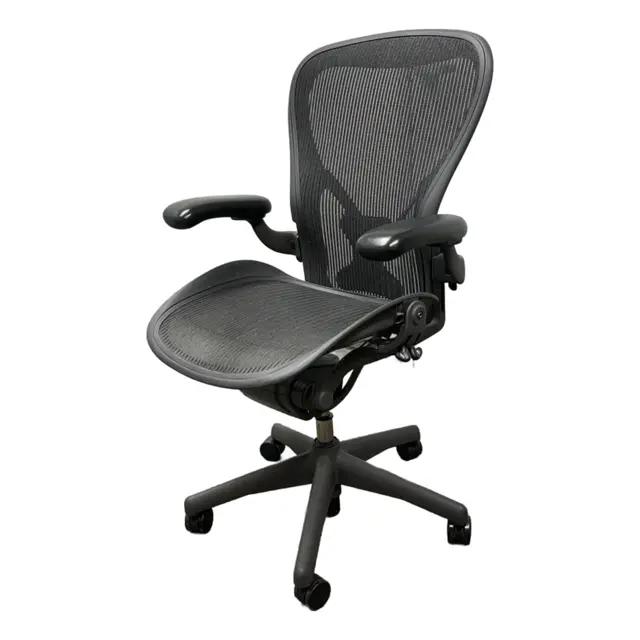
Herman Miller Aeron in Size C
The Aeron stands as one of the most recognized ergonomic chairs on the market. It uses a suspended Pellicle mesh material across the seat and backrest instead of foam padding. The mesh conforms to your body shape while distributing pressure evenly and promoting airflow.
That airflow advantage matters significantly if you run warm or live in a hot climate.
Herman Miller offers the Aeron in three sizes: A, B, and C. Size C targets users between approximately 6'0" and 6'6". It suits those weighing roughly 160 to 260 pounds.
The seat pan runs deeper than Size B, providing the thigh support taller users need. The backrest extends high enough to cover the full spine and shoulders. This holds for most people in that height range.
Adjustability covers seat depth, lumbar support height and depth, armrest height and width, and recline tension. The synchro-tilt mechanism allows the backrest and seat pan to move in coordinated ratios during recline. The tilt tension adjusts to match your body weight, ensuring smooth motion without excessive force.
Potential drawbacks include the firm mesh feel, which some users find too hard initially. The chair also lacks a traditional headrest option from Herman Miller itself, though third-party attachments exist. Pricing places it firmly in premium territory.
The 12-year warranty and resale value partially offset that cost over time.
Herman Miller Leap V2
The Leap V2 takes a different approach from the Aeron. Instead of mesh, it uses a flexible polymer backrest that adapts to spinal curvature as you move. The Natural Glide System coordinates seat pan and backrest motion during recline, maintaining consistent contact between your body and the chair surfaces.
Key advantages include adjustable lumbar firmness and position, seat depth adjustment via a lever under the front edge, and four-way adjustable armrests. The lumbar range extends lower than many competitors, accommodating longer torsos effectively. Weight capacity sits around 300 pounds, appropriate for average-to-above-average builds.
The Leap V2 suits users who prefer softer seating over firm mesh. It also works well for those who recline frequently during the workday. Some reviewers note that the armrests, while adjustable, feel slightly less robust than those on the Aeron.
The overall build quality remains excellent, backed by the same 12-year warranty.
Herman Miller Embody
The Embody diverges sharply from conventional chair design. Its backrest consists of thousands of small pixelated support points that move independently. The goal is to mimic the support of human hands cradling the spine.
The seat features a dynamic, contoured shape that encourages micro-movements throughout the day.
This chair excels for users who shift position constantly. It reduces pressure points more effectively than static foam or mesh designs. The tall backrest provides comprehensive spinal coverage.
The base includes a patented tilt mechanism that distributes weight across the entire back structure rather than concentrating pressure on specific areas.
Considerations include the unconventional appearance, which doesn't suit every office aesthetic. The seat feels firmer than typical cushioned chairs. Price sits at the top end of the premium bracket, often exceeding $1,500 new.
The 12-year warranty covers parts and labor, matching Herman Miller's standard premium coverage.
Steelcase Gesture
Steelcase developed the Gesture specifically to support the varied postures modern workers adopt. Typing, reading, using a phone, reaching across a desk, the Gesture handles all of these positions through highly adjustable components. The backrest flexes dynamically to follow spinal movement.
The arms adjust in nearly every direction, including forward and backward travel beyond typical side-to-side range.
Seat depth adjustment and lumbar support with adjustable depth and height round out the primary customization options. Weight capacity reaches approximately 300 to 350 pounds depending on the specific configuration. The overall build feels solid and stable, with minimal lateral wobble even at extended heights.
The Gesture suits users who switch between multiple tasks and postures throughout the day. It works well in collaborative office environments where visibility matters. Some users find the adjustment complexity initially overwhelming.
Once dialed in, however, the Gesture delivers consistent comfort across diverse body types.
Steelcase Leap
The Leap offers a more traditional ergonomic profile while still addressing tall-user needs effectively. Adjustable lumbar support with both height and depth movement allows precise lower back alignment. Seat depth adjustment accommodates varying thigh lengths.
The backrest flexes naturally with spinal curves without requiring complex manual tuning.
This chair appeals to users who want proven ergonomic performance without the specialized features found in the Gesture or Embody. It bridges the gap between basic task chairs and high-end specialty models. Pricing often lands slightly below the Gesture and Embody, making it an attractive entry point into premium Steelcase quality.
Some longtime users report that the lumbar support, while adjustable, doesn't extend quite far enough downward for very tall torsos. Those individuals may benefit more from the Gesture's deeper lumbar range or alternative brands altogether.
Humanscale Freedom and Diffinity
Humanscale takes a notably minimalist approach. The Freedom chair relies on a self-adjusting recline mechanism that responds to body weight automatically. No manual tension knobs required.
You simply lean back and the chair adjusts in real time. The swing plane of the recline follows your natural center of gravity, reducing shear forces on the spine.
Headrest integration on the Freedom flows seamlessly from the backrest structure. The Diffinity model offers similar self-adjusting recline but with a more compact footprint and slightly different armrest design. Both chairs support users up to 300 pounds and feature durable polymer frames with quality fabric or mesh upholstery options.
The auto-adjusting recline appeals to users who want simplicity without sacrificing performance. However, the limited manual adjustment range may frustrate users who prefer fine-tuning specific parameters. Customization seekers might find the Freedom and Diffinity too restrictive compared to Herman Miller or Steelcase offerings.
Other Premium Notables Worth Considering
Several other brands occupy the premium tier with tall-friendly options worth evaluating.
- Knoll ReGeneration: Sustainable materials with a natural recline mechanism and adjustable lumbar support. Suits environmentally conscious buyers.
- Knoll Tuuci: Features a distinctive curved backrest and adjustable headrest. Designed for users seeking a more sculptural aesthetic.
- Okin Ergonomic Lines: Finnish brand known for quiet operation and refined adjustability. Less widely available in North America.
- Herman Miller Sayl: Budget-conscious option within the Herman Miller ecosystem. Lower price point but reduced adjustability range. May not accommodate all tall frames adequately.
When browsing Best Office Chairs or similar curated lists, premium selections from these brands typically appear near the top. Always verify specific model dimensions before purchasing, because product lines evolve and older specifications may no longer apply.