
So you're wondering how do you make a rocking chair that actually rocks smoothly instead of tipping you backward. Fair question, because a rocker is one of the trickiest chairs to build well. The good news is the hard part isn't the joinery.
It's the geometry underneath, and once you get that, the rest is standard woodworking.
Here's a number that surprises most first-timers: a comfortable rocker arc runs about 72 to 80 inches in radius. Miss that by a few degrees and the chair either dumps you forward or barely moves at all. That one curve drives almost everything else in the build.
Let's cut to the quick version first.
How Do You Make a Rocking Chair
To make a rocking chair, shape two curved rockers first. Set the leg angles so the seat meets the arc at its balance point. Join the rockers, legs, and seat with wedged mortise-and-tenon joints.
Cut the rocker arc around 72 to 80 inches in radius. Test the balance before final glue-up.
Why Visuals Matter When You're Making a Rocking Chair
Rocking chairs are a spatial puzzle. You can't judge a rocker arc, a seat slope, or a compound leg angle from a number on a page. You have to see the curve against the floor and the sitter's body in profile.
That's why seasoned chairmakers work from full-size drawings and physical templates, not just a cut list.
The shapes carry history too. If you've looked into [how the form evolved], you'll notice the key proportions barely moved in a century. Those angles got refined by people who built dozens of them, and the [makers behind the classic designs] knew exactly why each one mattered.
Here's what to sketch before you cut anything: a side view showing the rocker arc and seat slope, a front view for leg splay, and a plan view for seat width. Label every spot where a rocker touches the floor. If you can't picture the arc from a flat drawing, cut a quick cardboard template and lay it on the ground.
How a Rocking Chair Works: Rockers, Seat Slope, and Joinery
Two curved rockers run along the floor, and both have to sit in exactly the same plane. If one sits even slightly high, the chair rocks diagonally or stutters. The rocker arc is a slice of a big circle, usually 72 to 80 inches in radius.
A long, flat arc gives a slow, lazy rock. A tighter arc feels quick and lively.
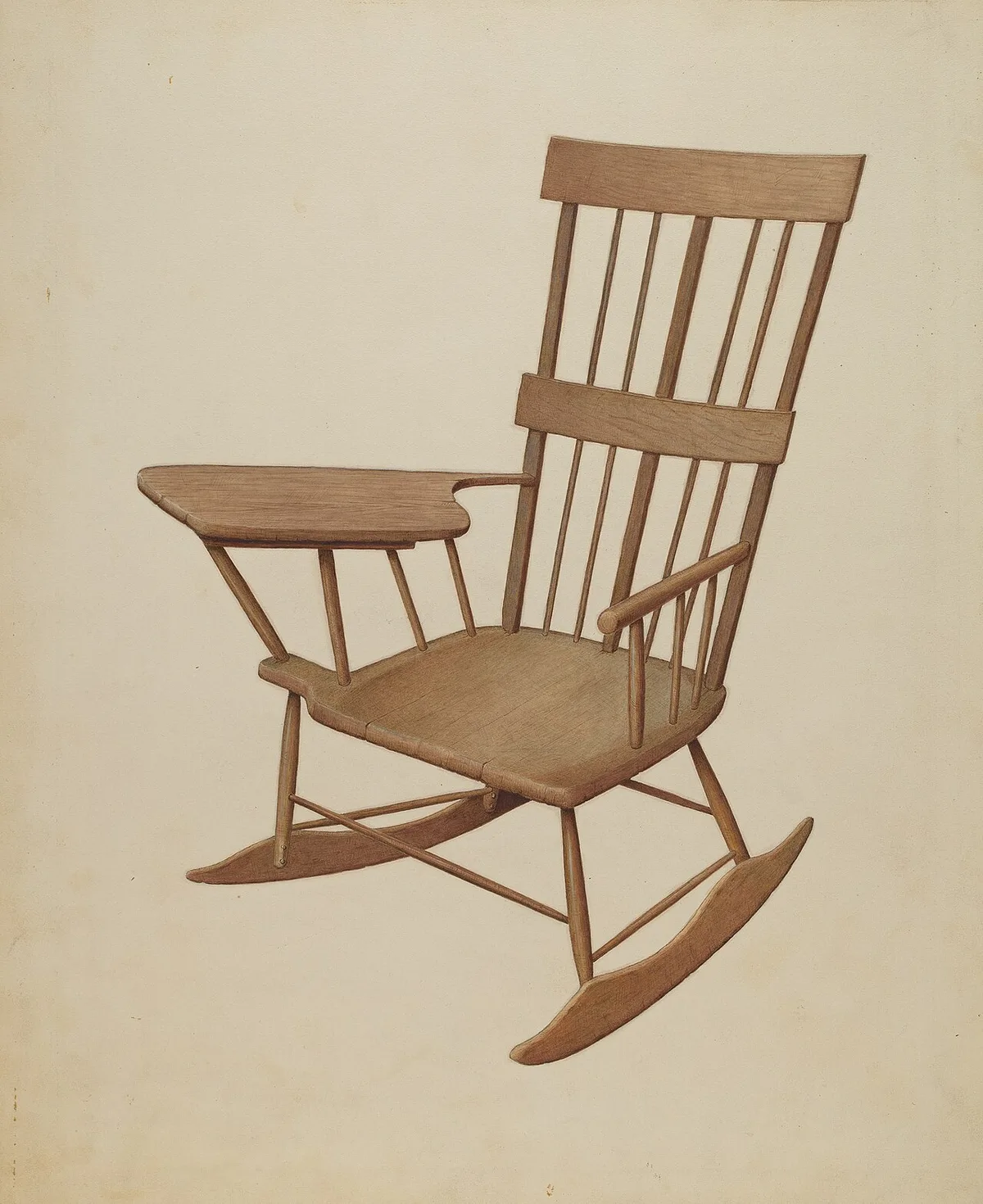
Image source: Wikimedia Commons / Josephine Miller
Underneath it all sits the balance point. That's where the sitter's center of gravity lines up over the middle of the arc. Get it right and the chair sits level and rocks with almost no effort.
Get it wrong and it tips back too far or fights you forward.
The parts you sit on and lean against are all angled. The seat slopes back slightly, the back reclines 15 to 25 degrees, and the arms sit 8 to 11 inches above the seat. Every piece has a name, from crest rail to arm cap.
If you're fuzzy on [the names for those frame members], a quick anatomy refresher clears it up.
Wood movement matters on the wide seat and rails, especially across the grain. The [Wood Handbook] from the USDA Forest Service has reliable data on how species expand and shrink with seasonal humidity.
And if you're curious [how your body responds to that gentle motion], it's mostly relaxation with a little muscle engagement. A chair tuned to your own posture is also one you'll actually use, which helps if you're [adding a bit of movement to your day].
Step-by-Step Visual Guide to Making a Rocking Chair
Start with the Sit: Mock-Up and Geometry
Measure the person who'll use it most. Aim for a seat height near 16 to 17 inches and a seat depth around 18 to 20. Build a crude full-size mock-up from scrap and MDF, then sit in it.
Adjust before you touch good lumber.
Sketch the side view with the rocker arc and seat slope, plus a front view for leg splay. Cut MDF templates for both rockers so they come out identical.
Shape and Bend the Rockers
Lay out the arc with trammel points or a router circle jig. Bandsaw the curve, then true it to the template. For a steam-bent rocker, build your form first and bend the wood while it's hot and pliable.
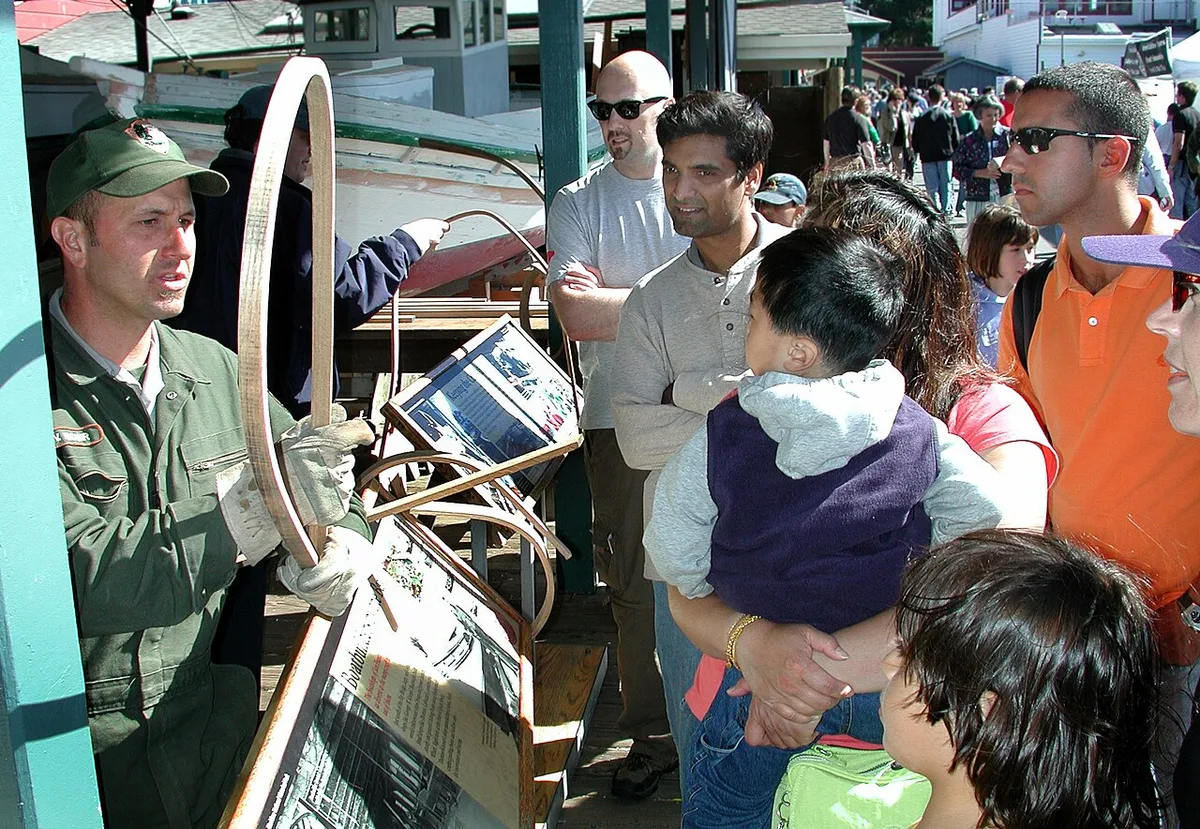
Image source: Wikimedia Commons / NPS
If you'd rather bend from thin laminations, glue them in the form with a compression strap and let them cure fully before trimming. Either way, confirm both rockers sit dead flat on a known flat surface.
Lay Out and Cut Joinery
Set your drill press table to the compound angle for each mortise. Drill the mortises in the rockers, legs, and rails. Cut tenons to fit by hand, then kerf them for wedges.
Dry-fit the whole frame with no glue and stand it up.
Wear a fitted respirator and run dust collection while you rout and sand. [Federal guidance on wood dust] from NIOSH treats hardwood dust as a real respiratory hazard, so don't skip it.
Assemble, Balance Test, and Finish
Glue up in subassemblies, not the whole chair at once. After the glue cures, set the chair on a flat floor and find the balance point. Rock it hard and watch for side-to-side roll or forward tip.
Trim the contact patches until it sits level. Only then do your final sanding and oil finish.
Common Mistakes in a DIY Rocking Chair Build
The biggest one is skipping the mock-up and building straight from a plan that wasn't drawn for your body. You end up with a chair that looks right and sits wrong.
Rocker geometry trips people up constantly. If the two rockers aren't in the same plane, the chair rocks sideways. If the balance point sits too far back, it tips when you lean.
An arc that's too tight gives a short, jerky, uncomfortable motion.
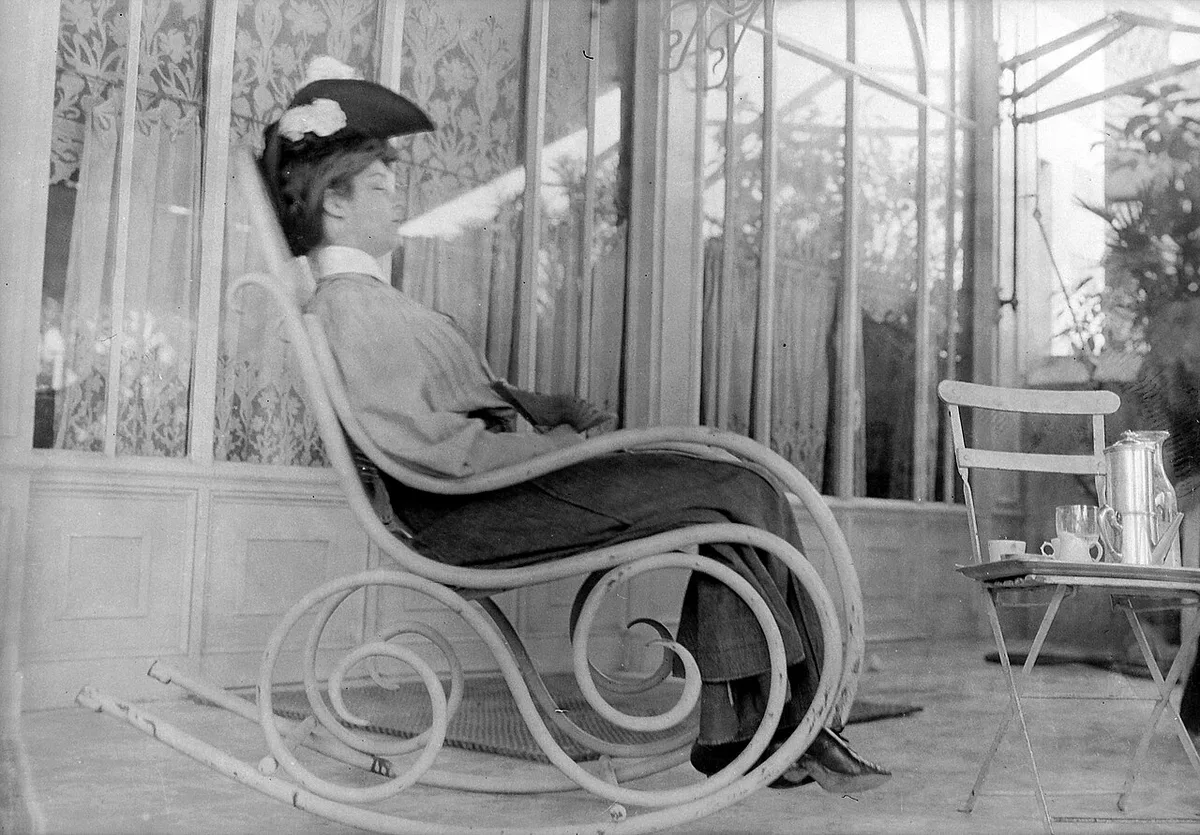
Image source: Wikimedia Commons / FOTO:Fortepan, ID 10756: Adományozó/Donor: Jankovszky György. (CC BY-SA)
Then there's grain runout. If the grain near the end of a rocker or arm runs out toward the tip, that part snaps under load. Choose straight-grained stock and run the grain along the curve.
Angled joinery is another trap. Drill the mortise at the wrong compound angle and the tenon never seats, leaving a gap that becomes a wobble. And don't glue the whole chair at once unless you've got the clamps and hands for it.
Rushing the glue-up is how parts drift out of plane.
Finishing has its own pitfalls. Stain blotches badly on cherry and maple, so a washcoat or dye helps even things out. A woven seat also needs to go on after the frame finish has fully cured.
Costs, Specs, and Benchmarks for a First Rocking Chair
Building a rocker is cheap in materials and expensive in time. As of 2026, domestic hardwood for a first chair still runs in the low hundreds of dollars. Your real cost is 40 to 80 hours of work, often more for a fully hand-shaped build.
Most of those hours go into shaping the seat, bending the rockers, and fitting the joinery. Weaving a seat from Danish cord or cane adds more time on top. Here are the numbers worth knowing before you cut a board.
| Measurement | Typical Starting Value |
|---|---|
| Rocker arc radius | 72 to 80 in |
| Rocker length | 30 to 36 in |
| Seat height (front) | 16 to 17 in |
| Seat depth | 18 to 20 in |
| Back angle | 15 to 25 degrees |
| Build time | 40 to 80 hours |
If those hours scare you off, buying is a fair option. The [online retailers worth a look] carry finished rockers from a few hundred dollars to a few thousand. But nothing off a shelf fits your body the way a chair you tune yourself will.
Who Should Build a Rocking Chair: Use Cases and Best-Fit Scenarios
A rocker rewards patience more than raw skill. It suits people who enjoy fitting, shaping, and problem-solving. If you want seating this weekend, buy one instead.
This build makes the most sense for:
- Intermediate woodworkers ready to tackle compound angles and curved parts
- Hand-tool builders who like a drawknife, spokeshave, and travisher
- New parents making a nursery rocker with a low, quiet arc
- Heirloom and retirement-gift projects that get used daily for decades
- Restorers replacing cracked rockers or loose joints on a family chair
- Tall or older sitters who need a custom seat height and arms sturdy enough to push on
Custom fit is the real payoff. Off-the-shelf rockers come in one geometry, and it rarely matches a 6'4" sitter or someone who needs help standing up. If recline and back support matter more to you than motion, a recliner with proper lumbar support is the easier answer.
One honest note on comfort: a bare hardwood seat is firm. Many owners add a cushion, and outdoor rockers need fabric built for sun and rain rather than indoor foam.
Safety, Load Limits, and Shop Practices
How much weight can a rocking chair hold?
It depends on your joinery and grain direction. There's no mandatory CPSC standard for adult residential rockers, so the design itself carries the load. Test your prototype well past the sitter's weight before you gift or sell it.
Lean back fully and rock hard.
Grain runout is the number one failure point. If the grain at a rocker tip or arm front dives out the side, that part snaps under load. Pick straight-grained stock and run the grain along the curve.
What shop hazards come with the build?
More than you'd expect. Steam bending alone accounts for plenty of burns.
- Insulate the steam box, keep hands out of the plume, and use low-pressure steam only
- Wear a fitted respirator and run dust collection when routing and sanding hardwood
- Dry oily rags flat outdoors or store them in a self-closing metal can, since linseed and tung oil can self-ignite
- Cut away from your body with freshly sharpened spokeshaves and travishers
- Round over hard edges and hide wedge ends if kids or elderly users will sit in it
- Fit nonmarring glides so the rockers don't chew up hardwood floors
FAQs About How to Make a Rocking Chair
How long does it take to build a rocking chair?
Plan on 40 to 80 hours for your first one. Most of that goes into shaping the seat, fitting the angled joinery, and tuning the rocker arc. Add glue cure time and finish drying, which stretches the calendar across several weekends.
Your second chair usually takes half as long.
What is the best wood for a rocking chair?
White oak is the classic choice. It bends well, wears hard, and holds a crisp edge. Black walnut and cherry look gorgeous and machine cleanly, though both are softer.
Skip any board with flat, wide grain on the rockers, because short grain snaps under load.
Can a beginner build a rocking chair as a first project?
Yes, if you start with a simple ladder-back or post-and-rung design. Those teach angled mortises and rocker layout without a carved seat. A continuous-arm rocker with a saddled seat is better as a third or fourth chair.
Why does my rocking chair rock sideways?
Usually one rocker sits slightly higher than the other, so the chair can't track straight. Set it on a known flat surface and check both contact patches. Trim the high spots a hair at a time until it rolls evenly, then recheck after a few weeks of seasonal movement.
Do I have to steam bend the rockers?
No. Bandsawing a rocker from straight-grained solid stock works fine and is easier for a first build. Bent laminations are the other route, glued in a form with a compression strap.
Steam bending gives the best grain flow, but it takes a box, a form, and practice.


