
Hanging a chair from the ceiling sounds like a weekend job until you look up and realize you have no idea what's behind the paint. That one unknown decides whether you get a cozy reading nook or a 200-pound problem.
So we start with the ceiling itself. A wood joist and a concrete slab take completely different hardware, and bare drywall takes none at all. Standard joists sit 16 inches on center, which means once you find one, you know where its neighbors hide.
Get that call right and the rest is just measuring, drilling, and a careful load test.
How to Hang a Chair From the Ceiling
To hang a chair from the ceiling, start with a rated eye bolt. Drive it into the center of a joist or concrete slab. Drill a pilot hole first and go to full depth.
Attach the hardware, hang the chair, and test the load. Never anchor into drywall alone.
First, Read Your Ceiling: Wood Joist, Concrete Slab, or Drywall Only?
Everything downstream depends on this one answer. Under a wood joist, you're in good shape. Under bare drywall with no framing behind it, you stop and rethink.
Under concrete, you swap the entire hardware set.
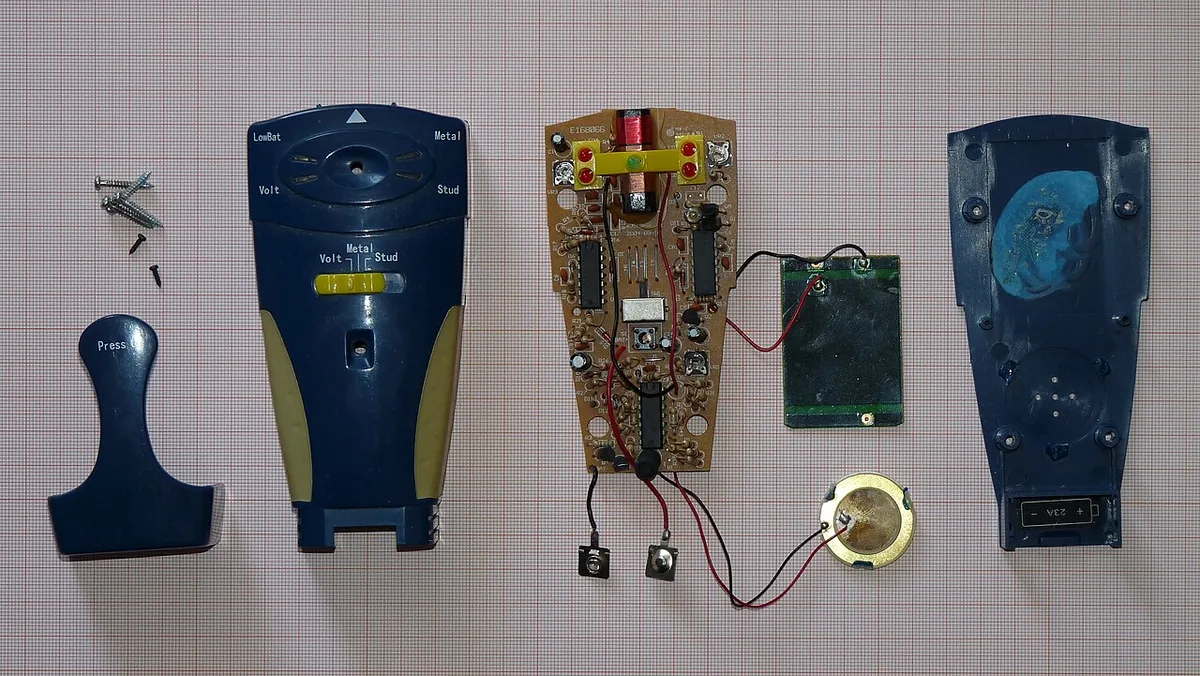
Image source: Wikimedia Commons / Dmitry G (CC BY-SA)
How to find and confirm a joist
Use an electronic stud finder on its deep-scan setting, then confirm by hand. A magnetic finder that grabs drywall screws makes a solid backup. Mark the joist edges, not just the spot that beeps.
Aim for the middle third of the joist face. Edges split under point loads, and a split joist is worse than no mount at all.
Stud finders also lie sometimes. Pipes, conduit, and metal ducting all read as solid. Tap the ceiling and listen for a dull thud instead of a hollow ring.
If you have attic access, climb up and look with your own eyes. That's the only confirmation we fully trust, and it's also the best predictor of how long it all holds up.
What to do when the framing isn't there
Drywall alone can't hold a swinging adult, and no toggle bolt changes that. Your real options are adding blocking between joists, sistering a joist for extra strength, or switching to a freestanding frame.
Concrete slabs need wedge anchors or drop-in anchors, not wood screws. Codes built on the International Residential Code cover structural changes, so ring your local building department before you cut into anything.
Match the Hardware to the Load, Not the Label
Here's the mistake we see most often. People buy hardware rated for the chair's static weight and ignore the swing. A 200-pound person swinging gently can push two to three times that force into the anchor, according to the load multipliers engineers apply to dynamic point loads.
That means a lag eye bolt with a 300-pound label isn't automatically safe. Match the rating to the swing force, not the sitting weight.

Image source: Wikimedia Commons / PattayaPatrol (CC BY-SA)
| Anchor type | Best ceiling | Watch out for |
|---|---|---|
| Lag eye bolt | Solid wood joist | Needs 2 to 3 inches of embedment |
| Wedge anchor | Concrete slab | Permanent, hard to remove |
| Through-bolt with plate | Wood joist, heavy chairs | Requires attic access |
| Toggle bolt | None of the above | Fails under swing load |
Which one fits your setup
If you have a joist and attic access, a through-bolt with a steel backer plate is the strongest option available. If you don't, a lag eye bolt driven into the joist center works well for most residential hanging chairs.
Renters in concrete buildings should look at wedge anchors, but expect to patch and repaint on move-out. And if you're dealing with parts that slip under load, the fix is almost always bigger hardware, not tighter torque.
The Installation Workflow, Step by Step
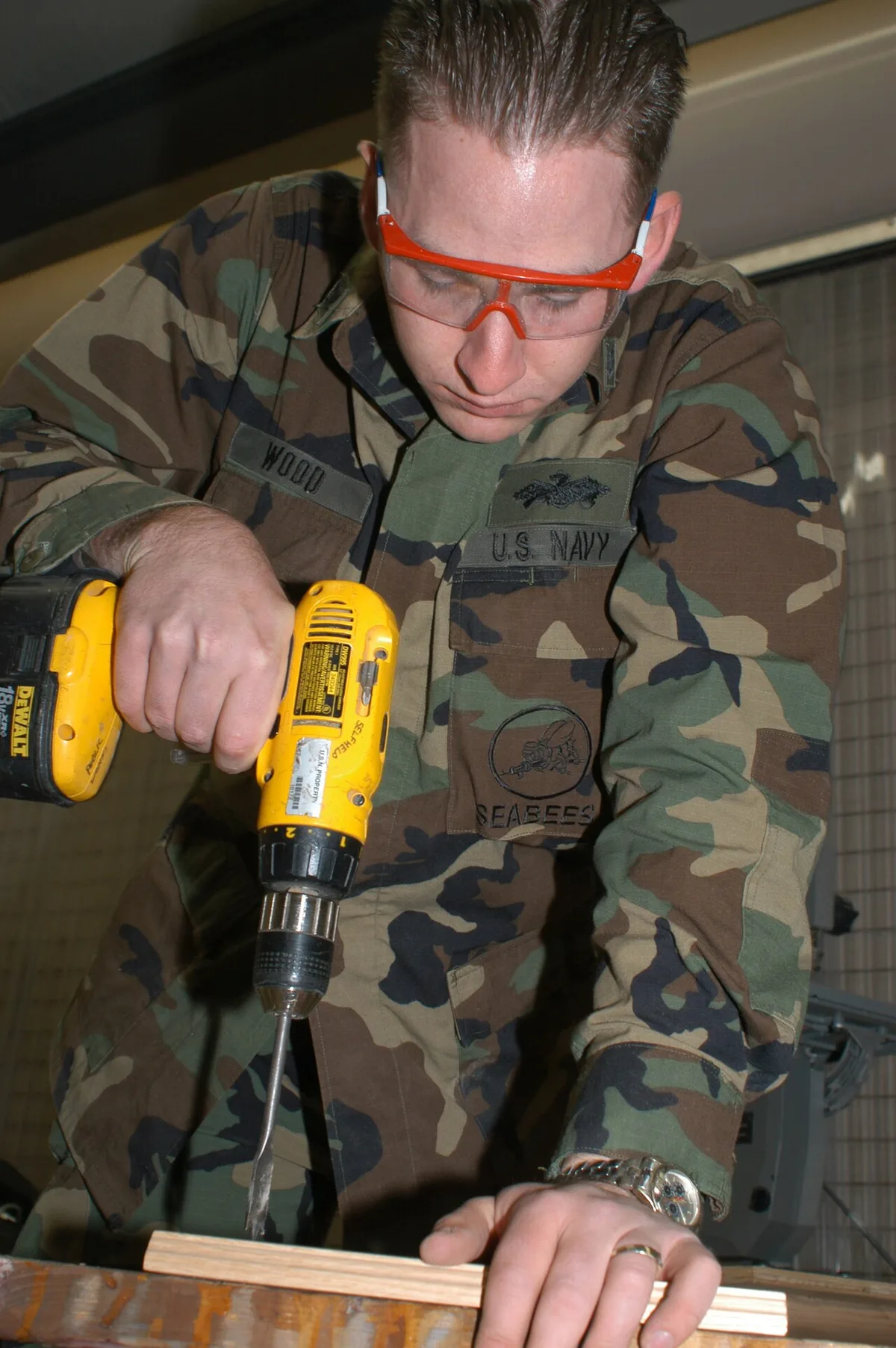
Image source: Wikimedia Commons / U.S. Navy photo by Photographers' Mate Airman Sara Bohannan.
The order matters more than the speed. Here's the sequence our research keeps confirming across manufacturer instructions.
- Mark the drill point at the center of the joist, measured from both joist edges.
- Drill a pilot hole using a bit matched to the shank diameter, not the thread diameter.
- Drive the eye bolt to full embedment. It should feel firm, never spongy.
- Thread a carabiner or quick link through the eye, then attach the chain or rope.
- Hang the chair empty and let it settle for a few minutes.
- Load test with a sandbag or a person of similar weight, seated and still.
- Add gentle swinging only after the static test holds clean.
That pilot hole step trips people up constantly. A hole sized for the threads strips the grip. A hole that's too small cracks the joist.
Treat the hardware check with the same care you'd use when breaking down an old office chair. Every fastener gets inspected, every connection gets a tug.
Adding blocking when the joist alone isn't enough
If the joist feels undersized or has visible cracks, add blocking between two joists and mount to the block. A sistered joist works too, but it's a two-person job. Both options require attic or subfloor access.
Clearance, Height, and Where the Chair Should Actually Live
Placement decides comfort as much as hardware does. A chair too close to a wall bangs on every swing. Too far into the room and it becomes a trip hazard.
- Keep 2 to 3 feet of clear space on all swinging sides.
- Aim for a ceiling at least 7 feet high, ideally 8.
- Set the seat 17 to 20 inches off the floor for easy sitting.
- Keep the anchor directly above the seat center, or the chair hangs crooked.
- Avoid mounting within 3 feet of ceiling fans, light fixtures, or windows.
Swing radius matters more than most people expect. Measure the widest arc the chair sweeps and add a foot of buffer. That's the buffer that stops drywall scuffs and bruised elbows.
The whole point of that gentle rocking motion is to relax, so a chair that thumps the wall on every pass defeats the purpose.
If the room has a low ceiling, a shorter suspension helps more than a smaller chair. If you'd rather be building one from scratch, plan the anchor point before the chair, not after.
Mistakes That Cause Ceiling Failures (and How to Avoid Each One)
Most ceiling failures trace back to a few predictable errors. Avoiding them takes minutes and costs nothing.
Mounting into drywall alone tops the list. Drywall pulls out under a fraction of an adult's weight, especially with a swinging load. Always drive the anchor into solid wood or concrete, never into the finish layer.
Ignoring swing force comes next. Manufacturer ratings usually reflect static weight, not motion. A gentle swing can double or triple the force on the anchor.
Treat the static rating as a ceiling, divide by two or three, and buy hardware rated well above the seated weight.
Off-center mounting splits joists. Drive the eye bolt into the center third of the joist face. Edges crack under point loads.
Skipping the load test ends badly. Hang the chair empty first. Add weight gradually.
Only then let someone sit.
Wrong drill bit size ruins grip. Size the pilot hole to the shank diameter, not the threads.
When to Stop and Call a Contractor or Structural Engineer
Some ceilings demand professional eyes before you drill.
Stop if you see cracked, rotted, or insect-damaged wood. A compromised joist can't be trusted even with perfect hardware.
Stop on plaster-and-lath ceilings in homes built before the 1950s. Lath crumbles, and the plaster coat adds unpredictable thickness.
Stop if you can't confirm joist location and have no attic access. Guessing here is gambling with someone's safety.
Stop on concrete slabs if you don't know the slab thickness or rebar placement. Drilling through reinforcement weakens the structure.
Stop if your lease forbids ceiling penetrations. A freestanding stand avoids the issue entirely.
A licensed contractor or structural engineer can verify the frame and specify the right anchor. That inspection costs far less than ceiling repair after a fall.
Costs, Weight Limits, and Hardware Specs at a Glance
Hardware prices vary by material and rating, but most residential mounts stay under $60.
| Item | Typical cost | Static weight rating |
|---|---|---|
| Lag eye bolt | $8 to $20 | 250 to 500 pounds |
| Ceiling hook | $10 to $25 | 200 to 400 pounds |
| Through-bolt kit | $25 to $60 | 500 pounds or more |
| Complete mount kit | $30 to $60 | Varies by chair |
Manufacturer specs list static limits, not swing limits. Our research shows dynamic force from gentle swinging can reach two to three times seated weight. Choose hardware rated at least 1.5 times the heaviest user's weight, and treat the joist condition as the final veto.
Frequently Asked Questions
How much weight can a ceiling joist hold?
A standard residential joist can support hundreds of pounds distributed across its span, but a single point load changes the math. Manufacturer hardware ratings usually top out at 500 pounds static. Divide that by two or three for swinging use.
Can I hang a chair in a rental apartment?
Only if your lease allows ceiling penetrations. Many landlords prohibit them. A freestanding hanging chair stand avoids drilling entirely and leaves no damage when you move.
What's the difference between static and dynamic load?
Static load is the still weight of a person sitting in the chair. Dynamic load adds the force of swinging, which can double or triple the stress on the anchor. Hardware must handle the higher number.
Do I need a permit to install a ceiling anchor?
Minor fixture installation rarely needs a permit, but structural modifications like sistering a joist or cutting blocking often do. Check with your local building department before cutting anything.
How do I remove the chair and patch the ceiling later?
Unscrew the anchor or cut it flush. Fill the hole with setting-type joint compound, sand smooth, and repaint to match. Concrete anchors leave larger patches that may need masonry filler.


