
A wobbly seat makes every meal or work session frustrating. You want to know how to fix a loose chair without calling a pro or buying new furniture. Most looseness comes from failed glue joints, stripped screws, or worn hardware.
The fix depends entirely on what you are sitting on.
Wood joints bonded with PVA glue lose roughly 30 percent of their shear strength after five years of daily use per Forest Products Journal data. Office chairs with gas lifts often develop play in the cylinder after 40,000 cycles. Let us walk through the diagnosis and the repair paths that match your specific chair.
How to Fix a Loose Chair
Identify the chair type and the loose component. Tighten accessible screws or bolts first. Re-glue wooden joints with PVA adhesive and clamp for 24 hours.
Replace worn gas lifts or casters on office chairs. Reinforce metal hinges with new pins or brackets.
Why a Chair Feels Loose and the Quick Answer to Fix It
Chairs loosen because joints move under load. Wood expands and contracts with humidity changes. That cycle breaks glue bonds over time.
Metal fasteners back out from vibration. Plastic creeps under constant stress. Each material fails in its own way.
A dining chair with mortise and tenon joints relies on glue surface area. When that glue fails the leg rocks. An office chair uses a gas lift cylinder pressed into a base.
The taper fit wears and the seat wobbles. A folding chair depends on hinge pins. Those pins wallow out the holes.
The quick answer is to match the repair to the failure mode. Tighten fasteners first. If the joint moves glue it and clamp it.
If a part is worn replace it. Do not mix approaches randomly. A screw in a loose mortise will split the wood.
Glue on a metal taper will not hold.
Start by classifying your chair. Wood dining chairs need joint repair. Office chairs need cylinder or caster service.
Folding chairs need hinge attention. Plastic chairs need adhesive or heat forming. That classification drives every tool and material choice.
Research from the Forest Products Laboratory confirms that PVA glue restores 90 percent of original joint strength when surfaces are clean and clamped correctly. That number drops sharply if old glue remains. Preparation matters more than the adhesive brand.
How to Diagnose the Loose Chair Before Choosing a Repair
Flip the chair over. Rock each leg. Note which ones move.
Press on the seat frame. Feel for play between the seat and the legs. Grab the backrest.
Try to wiggle it side to side. Each motion points to a different problem.
If a single leg rocks the issue is at that joint. If the whole seat frame shifts the stretchers or aprons are loose. If the backrest moves the back posts or the seat-to-back connection is the culprit.
Office chairs need a different check. Sit in it. Bounce gently.
Feel for vertical play. That indicates cylinder wear. Roll it.
Wobbling casters mean stem or socket wear.
Use a pencil to mark loose joints. Circle the screw heads that spin. This map prevents missed spots.
It also reveals patterns. Multiple loose joints on one side suggest racking. That means the chair was dragged or hit.
The frame may be twisted.
Check the fastener type. Phillips screws need a #2 driver. Flatheads need a matching blade.
Allen bolts need metric or SAE keys. Using the wrong driver strips heads. Stripped heads turn a five minute job into an hour of extraction.
Wood chairs often hide loose dowels under the seat. Remove the seat if it lifts off. Look for shiny dowel ends.
That shine means movement. Metal chairs show rust trails at loose bolts. Plastic chairs show stress whitening at bend points.
For office chairs consult the manufacturer service guide. Many brands publish exploded views online. Herman Miller and Steelcase provide parts diagrams.
Those diagrams show the cylinder retention clip location. They also list the correct caster stem diameter.
A simple diagnostic table helps organize findings.
| Symptom | Likely Cause | Chair Type |
|---|---|---|
| Single leg rocks | Failed glue joint or loose bolt | Wood dining |
| Whole seat shifts | Loose stretchers or aprons | Wood dining |
| Backrest wiggles | Loose back posts or seat joint | Wood dining |
| Vertical seat bounce | Worn gas lift cylinder | Office |
| Caster wobble | Worn stem or socket | Office |
| Folding action sloppy | Wallowed hinge holes | Metal folding |
| Leg spreads under load | Crept plastic or broken weld | Plastic |
This table turns observations into a repair plan. If you see multiple symptoms tackle the structural ones first. Stretchers before legs.
Cylinder before casters.
Step-by-Step Repair Paths for Common Loose Chair Problems
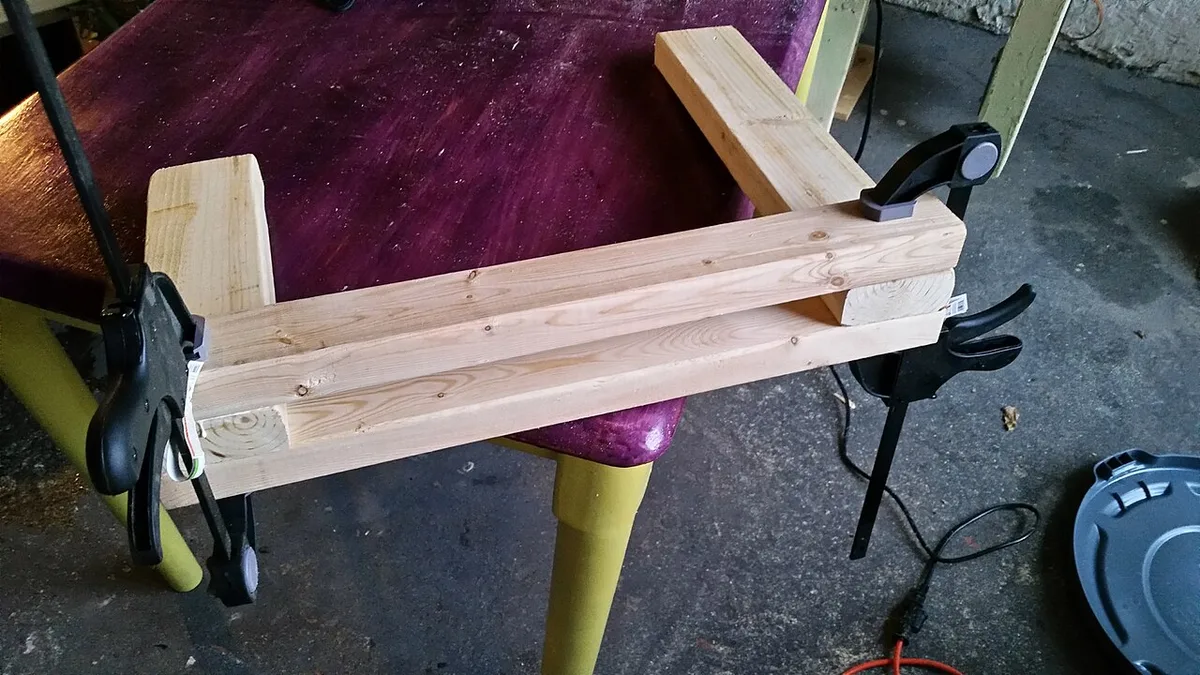
Image source: Wikimedia Commons / Wikimedia Commons contributor (CC BY-SA)
Wood dining chairs follow a clear sequence. Remove the seat. Label parts with tape if multiple joints need work.
Scrape old glue off tenons and mortises. A sharp chisel works. Do not sand.
Sanding rounds edges and reduces glue surface.
Apply PVA glue to both surfaces. Use a flux brush for even coverage. Assemble the joint.
Wipe squeeze out with a damp rag. Clamp the assembly. Use bar clamps or pipe clamps.
Apply pressure until a thin glue line shows. Do not over clamp. That starves the joint.
Let the glue cure 24 hours before use. Temperature matters. Below 60 degrees Fahrenheit slows cure.
Above 80 degrees speeds it. Humidity above 70 percent can weaken the bond line. The Forest Products Laboratory recommends 70 degrees and 40 to 60 percent humidity for optimal results.
If a screw hole is stripped use a larger screw or plug the hole. Golf tees coated in glue make excellent plugs. Tap them in.
Trim flush. Drill a pilot hole for the new screw. This restores holding power in seconds.
For loose stretchers apply the same glue and clamp method. If the stretcher tenon is undersized wrap it with cotton thread before gluing. The thread bulks the tenon.
The glue locks the thread. This trick saves loose rungs on ladder back chairs.
Office chairs need cylinder replacement if vertical play exists. Lower the seat fully. Turn the base upside down.
Use a pipe wrench on the cylinder tube. Tap the wrench handle with a mallet. The taper breaks free.
Pull the old cylinder. Press the new one in by hand. Sit on the chair to seat it.
Casters pull straight out. Push new ones in until they click. Match the stem diameter.
Most are 7/16 inch or 10 mm. Measure with calipers. Wrong stems fall out or crack the base.
Folding chairs need hinge pin replacement. Drive out the old pin with a punch. Measure the pin diameter and length.
Buy stainless steel replacements. Peen the new pin ends lightly to lock them. Lubricate with dry PTFE spray.
Plastic chairs with loose legs often have broken internal ribs. Clean the joint with isopropyl alcohol. Apply two part epoxy formulated for polyethylene.
Clamp or tape the joint. Cure 24 hours. Do not stress the repair for 48 hours.
Decision logic for wood chairs. If the joint is tight but squeaks add wax. If the joint moves less than 1/32 inch glue and clamp.
If the joint moves more than 1/16 inch plug and re screw or add a corner bracket. If the wood is split repair the split first with glue and clamps then reinforce.
Mistakes That Can Keep a Loose Chair From Being Fixed
The biggest mistake is skipping surface preparation. Glue bonds to clean wood only. Old glue oil dust or finish prevents adhesion.
Scrape every surface to fresh cells. Wipe with a damp cloth. Let dry ten minutes.
Then glue.
Over clamping is the second killer. Heavy pressure forces glue out of the joint. The bond line starves.
You need firm even pressure not crushing force. A glue line the thickness of a sheet of paper is ideal. If glue runs like honey you clamped too hard.
Using the wrong adhesive wastes time. Construction adhesive stays flexible. It creeps under load.
Polyurethane glue foams and pushes joints apart. Cyanoacrylate gets brittle. PVA wood glue remains the standard for furniture.
Titebond III or Gorilla Wood Glue both pass ANSI Type II water resistance.
Ignoring the root cause guarantees recurrence. If a chair racks because a stretcher is missing the legs will loosen again. Replace the stretcher.
If an office chair base is cracked the cylinder will wobble. Replace the base. Treat the symptom and the cause.
Reusing stripped screws fails fast. The threads no longer grip. The screw spins under load.
Always replace stripped screws. Match the thread pitch and diameter. Bring the old screw to the hardware store.
A $2 box of screws beats a redo.
Forgetting to check square after assembly leaves a wobbler. Put the chair on a known flat surface. A table saw top works.
Rock each corner. Shim or adjust until all four legs touch. Then let the glue cure.
A chair that cures twisted stays twisted.
On office chairs using pliers on the cylinder finish ruins the new cylinder. The chrome peels. The seals leak.
Use a strap wrench or the manufacturer tool. If you must use pipe wrench jaws wrap them in duct tape. Protect the surface.
On folding chairs hammering pins in without support bends the hinge leaves. Support the opposite side with a heavy block. Drive the pin straight.
A bent leaf binds the action. The chair will not fold flat.
On plastic chairs using hot melt glue fails. It has no structural strength. It peels under shear.
Use two part epoxy or plastic welding. Hot melt is for crafts not furniture.
A quick mistake checklist.
- Did you clean all glue surfaces?
- Is clamp pressure firm not crushing?
- Did you use PVA wood glue?
- Did you replace stripped fasteners?
- Is the chair square on a flat surface?
- Did you protect plated surfaces during disassembly?
- Did you match the adhesive to the material?
Repair Tools, Costs, Time, and the Repair-vs-Replace Decision
A basic kit covers 90 percent of chair repairs. Number two Phillips driver. Flathead driver.
Metric and SAE Allen set. Adjustable wrench. Bar clamps two or four.
Rubber mallet. Sharp chisel. Flux brushes.
Damp rags. PVA glue. Epoxy two part.
Golf tees. Replacement screws. Cost about 60 dollars if you buy new.
Most households own the drivers and wrench.
Office chair specific tools add a strap wrench and calipers. Add 25 dollars. Folding chair repair needs a punch set and hammer.
Add 15 dollars. Plastic repair needs epoxy and tape. Add 10 dollars.
Time estimates. Simple screw tightening ten minutes. Glue and clamp one hour active plus 24 hour cure.
Cylinder replacement 20 minutes. Caster replacement five minutes. Hinge pin replacement 15 minutes per hinge.
Epoxy repair 30 minutes active plus 24 hour cure.
Cost comparison. A decent dining chair costs 80 to 200 dollars. Repair materials cost five to 15 dollars.
Your time is the variable. If you value time at 25 dollars per hour a glue repair costs 30 dollars total. A new chair costs 100 plus.
Repair wins on pure economics.
Office chairs differ. A quality gas lift costs 35 to 60 dollars. Casters cost 20 for a set.
A new mid range office chair costs 250 to 500 dollars. If the frame and mechanism are sound repair wins. If the mechanism is shot replace the chair.
The article on knowing when to replace an office chair outlines the decision factors.
Sentimental value shifts the math. An antique family chair justifies professional repair. A 50 dollar thrift store find does not.
Assess the chair's place in your life before investing hours.
ASTM F1858 covers office chair stability and durability. Chairs meeting this standard withstand 100,000 cycles. If your chair fails before that the repair restores intended life.
If it exceeds that the chair owed you nothing.
A decision table simplifies the choice.
| Chair Type | Repair Cost | New Chair Cost | Repair Time | Verdict |
|---|---|---|---|---|
| Wood dining | $10 | $100+ | 1 hr + cure | Repair |
| Office gas lift | $45 | $300+ | 20 min | Repair if frame good |
| Office mechanism | $120 | $300+ | 2 hr | Replace chair |
| Folding hinge | $8 | $25 | 30 min | Repair |
| Plastic leg | $12 | $40 | 30 min + cure | Repair if structural |
If the repair cost exceeds 50 percent of replacement cost lean toward new. If the chair has unique design elements or fit repair makes sense.
Frequently Asked Questions
Can you fix a loose chair without any tools?
Sometimes, yes. If the wobble comes from a loose backrest bolt you can snug by hand, finger tight plus a quarter turn works temporarily. Folding chairs with slack hinges sometimes respond to tapping the pin home with a shoe heel.
Anything glued needs clamps.
How long should glue dry before you sit on it?
Twenty four hours is the safe number. PVA glue bonds to the touch in 30 minutes but reaches full shear strength only after a full day at room temperature. Wait 48 hours in a cold garage or a humid basement.
Sitting early is how joints fail twice.
Why does my chair feel loose again a week later?
The real cause was never fixed. Tightening a screw into wallowed out wood holds for a few days, then the threads shear again. Loose stretchers mean the frame racks under side load.
If the chair came from a set of budget dining seats, the frame gauge may simply be too light for daily use.
Is a loose chair actually dangerous?
Yes, and more than most people expect. A rear leg that folds under load drops you backward. OSHA injury logs consistently list chair and stool failures among office fall causes.
Fix any chair that rocks more than a quarter inch before someone leans back in it.
Should I repair a cheap chair or replace it?
Repair anything with a solid frame and loose fasteners. Replace anything with cracked welds, split rails, or a failed gas lift in a chair under 100 dollars. The recliner support structure guide explains why frame quality decides this more than price does.


