
Should sofa face tv? It sounds like a yes or no question, right up until you're standing in the room holding a tape measure. Most living rooms fail the test for a boring reason: the screen isn't the only thing competing for your attention.
In our research, the numbers do most of the arguing. SMPTE recommends a 30-degree minimum viewing angle, and most installers land the screen center around 42 inches (107 cm) off the floor. Those two figures rule out a lot of layouts before you move a single cushion.
Should Sofa Face Tv
Not always. Facing the TV head-on works when the screen is the room's main purpose. It backfires in rooms that also host conversation, foot traffic, or hard afternoon light.
A slight angle of 15 to 20 degrees often beats a rigid face-on setup. Measure first, then decide.
Why "Just Point the Sofa at the Screen" Backfires
Most living rooms have more than one focal point. There's the TV, plus the fireplace, a window with a view, or a bookcase you actually like.
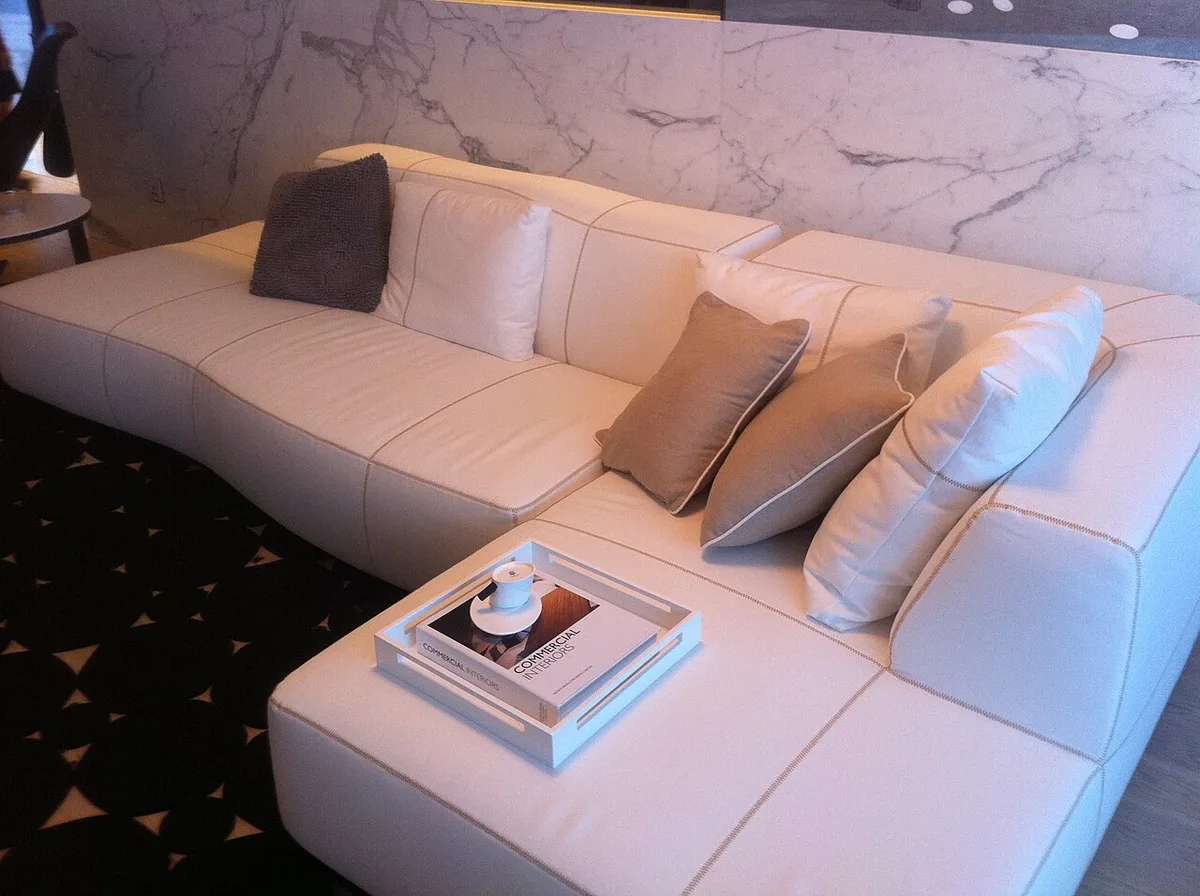
Image source: Wikimedia Commons / GardenKings (CC BY-SA)
When the sofa locks onto the screen, everything else becomes scenery. Guests spend the evening talking to the back of your head. Conversation quietly dies around 8pm.
Traffic is the second problem. If facing the TV means backing the sofa onto a doorway, nobody sits there. It feels exposed, even if you can't explain why.
Then there's glare. A window directly opposite the panel throws daylight straight back at it, and you spend the afternoon watching a mirror.
Off-axis viewing is the sneaky one. Sitting well to one side costs you contrast and colour, and VA panels give up faster than IPS panels do.
None of this rules out a face-on layout. It just means the default isn't automatically the right answer.
The Four Things That Actually Decide Your Layout
Four variables settle almost every living room. Work through them in this order.
- Room shape and door positions. A long, narrow lounge turns a face-on TV into the end of a corridor. Doors at both ends make it worse, because your sightline becomes a walkway.
- Windows and sun path. If a window sits opposite the screen, expect reflections from early afternoon on. Either angle the seating or move the TV to a side wall.
- Competing focal points. A fireplace or chimney breast wants the same wall as the screen. Pick one winner, or the room feels like it's arguing with itself.
- What the room is actually for. Sport and gaming? Face the screen. Mixed use? Don't. And in a genuinely small space, two seats often beat one oversized sectional, which is why compact two-seaters earn their keep.
Answer those four honestly and the layout usually picks itself.
Three Layout Branches (and How to Know Which One You're In)
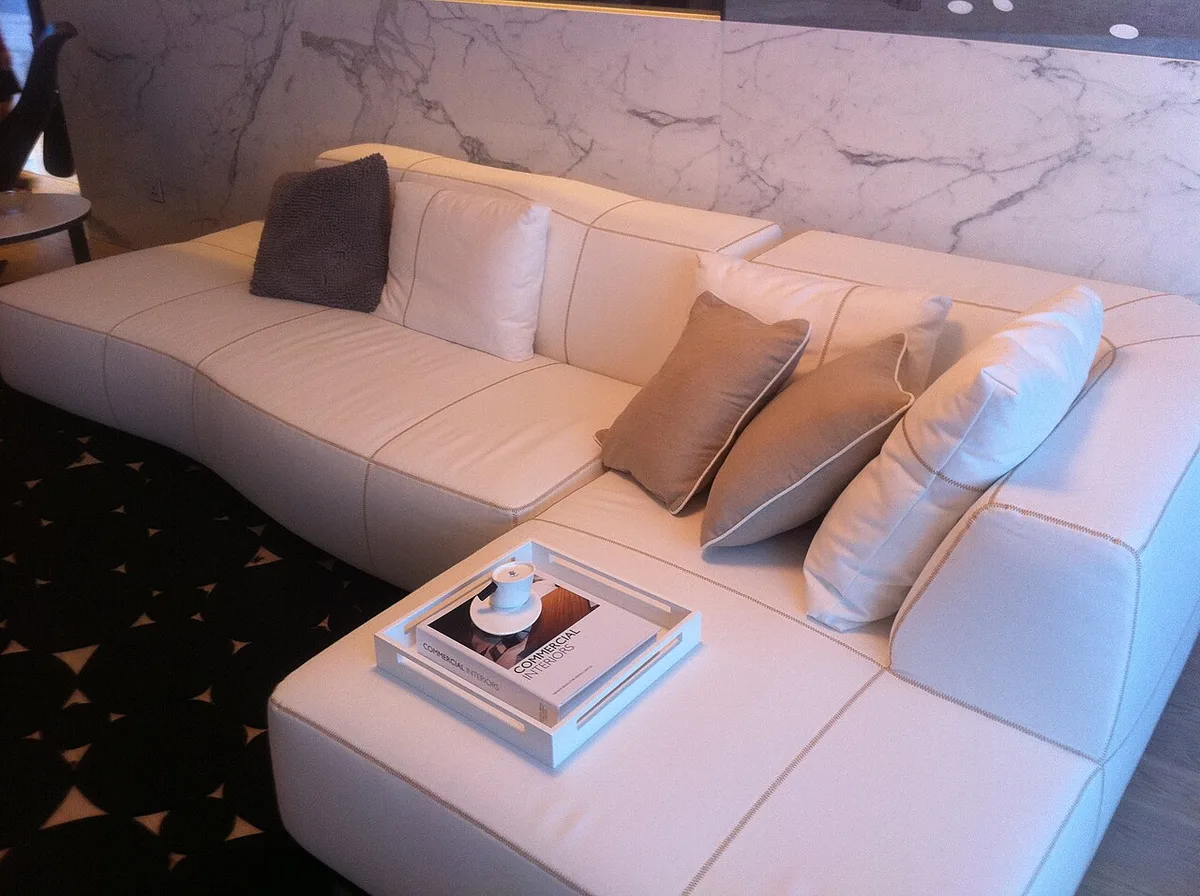
Image source: Wikimedia Commons / GardenKings (CC BY-SA)
Branch 1: Face It Head-On
Pick this when the room has one job. Screen centered on the focal wall, sofa square to it, nothing crossing the sightline.
You're in this branch if the TV is big, the household watches sport or plays games, and the room isn't a through-route.
Branch 2: Angle It or Go Perpendicular
Pick this when facing the TV breaks something else. Rotating 15 to 20 degrees keeps you inside the screen's sweet spot while letting the sofa face into the room.
Perpendicular is the stronger version. TV on a side wall, sofa along the opposite wall, and the screen stops owning everything.
Branch 3: Split the Room Into Two Zones
Pick this when the room genuinely does both jobs. Anchor a viewing zone at one end, a conversation or reading zone at the other, and mark the boundary with a rug.
This is the standard fix for open-plan spaces, and it's why so many of them look better with the TV off-center.
Tape It Out First: The Measurements That Settle It
Nothing beats a low-commitment mock-up. Get the painter's tape out before you drill anything.
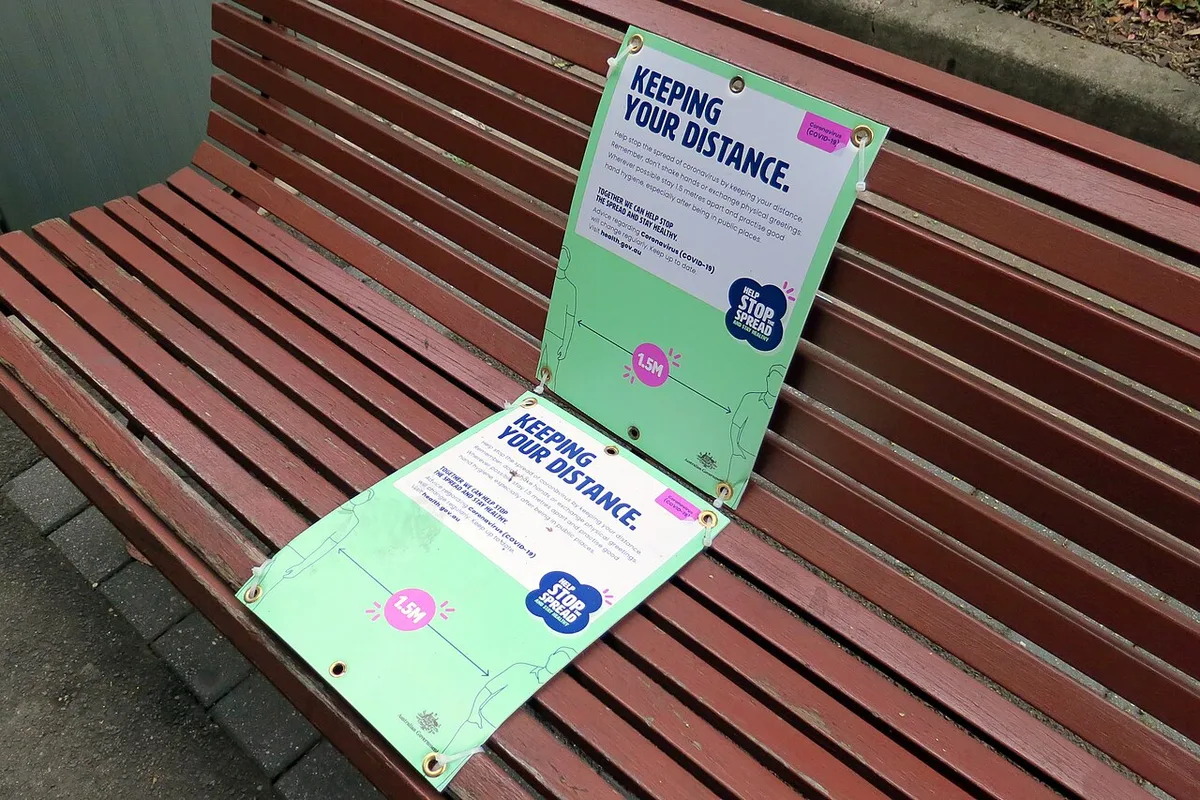
Image source: Wikimedia Commons / Blue Mountains Library from Blue Mountains, Australia (CC BY-SA)
- Tape the sofa footprint on the floor. Use the full depth, not just the frame.
- Stick a paper template at screen center, roughly 42 inches (107 cm) from the floor.
- Sit in every planned seat. Notice the angle your neck makes.
- Check the walkways. Leave 30 to 36 inches (76 to 91 cm) clear.
- Watch the room at the time you actually watch TV. That's when glare shows up.
Then match distance to screen size:
| Screen size | Sofa to screen distance |
|---|---|
| 55 in (140 cm) | 5.5 to 7.5 ft (1.7 to 2.3 m) |
| 65 in (165 cm) | 6.5 to 9 ft (2.0 to 2.7 m) |
| 75 in (190 cm) | 7.5 to 10 ft (2.3 to 3.0 m) |
| 85 in (216 cm) | 8.5 to 11.5 ft (2.6 to 3.5 m) |
Screens sold as of 2026 skew large, so most people are choosing the seat distance, not the TV. SMPTE sets the 30-degree floor, while THX guidance pushes for a wider angle if you want a cinema feel.
Recliners change the math. Traditional designs need 12 to 18 inches behind them to open, while wall-hugger versions need far less. If you're checking how a powered footrest moves, that clearance decides the whole layout.
And if you're adding a footstool to the seating, trim the 14 to 18 inch coffee table gap before you shrink the walkway.
Mount It Safely: Studs, VESA, and Tip-Over Protection
Never mount a TV into plasterboard alone. Wall type decides everything, and a stud finder is the first tool you need. Fix into timber studs at sixteen-inch centers, or use rated wall plugs on masonry.
Match the bracket VESA pattern to the TV model, and check the weight rating before you tighten anything. A screen above a fireplace faces heat and a neck-straining angle, and most manufacturers void warranties if the set sits too close to an active fire.
Tip-over risk matters most with kids and pets. Anchor the TV and any tall furniture with anti-tip straps. Aggregate safety data links unsecured screens to thousands of emergency-room visits each year, per consumer safety guidance.
Renters can skip drilling. A freestanding console with an articulated stand keeps the screen off the wall entirely, and no deposit is at risk.
Mistakes That Make the Room Feel Wrong
Floating a sofa in the middle of the room without an anchor leaves it looking abandoned. A rug under the front legs grounds the seating group, the same way matching the footstool to the sofa keeps the look deliberate.
Buying a sectional before measuring the door is a classic error. Large pieces often arrive and won't turn the corner into a narrow terrace or flat.
Putting the TV above the fireplace because it is the only blank wall gives you a sore neck and a washed-out picture. The screen should sit at eye level when seated, not three feet above it.
Forgetting soundbar placement ruins the audio. A bar hidden inside a cabinet muffles dialogue, and one off-center pulls the sound away from the picture.
Frequently Asked Questions
Can I put my sofa perpendicular to the TV instead of facing it?
Yes. A perpendicular layout works best when the screen sits on a side wall and you want to keep the room open to conversation. It also helps cut glare from windows opposite the TV.
How far should the sofa sit from a 65 inch screen?
Six and a half to nine feet is the right range. That puts you inside the comfortable viewing zone without straining your eyes or losing detail.
Does a fireplace count as a competing focal point?
Yes. It fights the screen for the same wall and attention. Most layouts work better when one element leads and the other supports.
What if I rent and cannot drill into the wall?
Use a freestanding media console or a floor-standing TV stand. Both keep the screen secure without touching the plasterboard.
Final Decision Guide: Which Layout Should You Pick?
If the room is a dedicated media space with no through traffic, face the sofa head-on. Match the screen size to your seating distance, then mount at seated eye level.
If glare from windows or a busy doorway breaks the sightline, angle the seating fifteen to twenty degrees or move the TV to a perpendicular wall.
If the room hosts guests as often as it hosts movie night, split it into two zones. Put the viewing area at one end and a conversation group at the other, separated by a rug.
Measure with painter's tape before you drill. That single step saves more regret than any other.