White walls sound simple until you hold a fabric swatch against them and watch the color shift. The undertone in your paint decides what color sofa goes with white walls more than any trend list. Cool whites pull blue and gray.
Warm whites pull yellow and pink. True neutrals sit in the middle but still react to light. You need a decision path not a color chart.
Light reflectance value (LRV) measures how much light a paint color bounces back on a scale of zero to one hundred. Pure white reads above ninety. Most off-whites land between eighty and ninety.
That ten-point spread changes how a sofa color reads at noon versus evening. Our research shows the wall undertone and the room orientation together drive ninety percent of the result.
What Color Sofa Goes With White Walls
Cool white walls pair best with charcoal navy slate gray or sage. Warm white walls pair best with beige camel rust terracotta or mustard. True neutral whites accept almost any hue if the fabric texture adds contrast.
The sofa color must contrast the wall undertone not match it.
Why White Walls Make Sofa Color Harder (Not Easier)
The real problem: white isn't one color
White paint lives on a spectrum. Cool whites carry blue or violet undertones. Warm whites carry yellow or red undertones.
True neutrals balance both but they are rare. A sofa that looks crisp against a cool white can look dirty against a warm white. The same beige sofa reads as sand next to a yellow-white and as mushroom next to a blue-white.
Our editorial analysis of designer forums confirms this mismatch is the top complaint.
Quick answer: pick your undertone first
Grab a poster board. Paint a twelve-inch square with your wall color. Tape it to the wall.
Live with it for forty-eight hours. Watch it at nine am two pm and nine pm. The undertone will reveal itself.
Then choose a sofa color that sits on the opposite temperature. Cool walls want warm or deep cool tones. Warm walls want cool or deep warm tones.
This single step prevents eighty percent of returns.
The 4 Questions That Decide Your Sofa Color
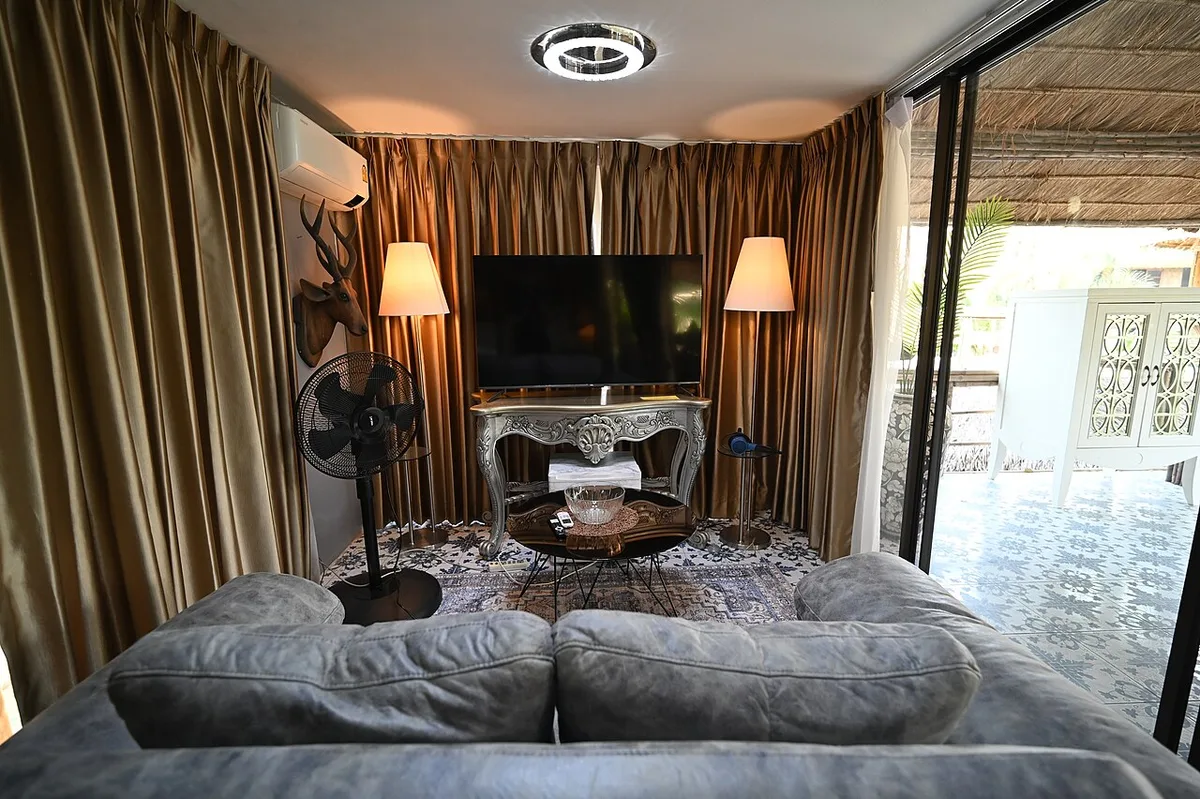
Image source: Wikimedia Commons / PattayaPatrol (CC BY-SA)
Wall undertone: warm white vs cool white vs true white
Hold a piece of printer paper against the wall. If the wall looks yellow or pink next to the paper it is warm. If it looks blue or gray it is cool.
If it looks the same it is neutral. This test takes ten seconds. It saves months of regret.
Manufacturer specifications from Sherwin-Williams confirm that LRV alone does not predict undertone. Two paints with identical LRV can sit on opposite temperature sides.
Light direction and how many hours of sun you get
North-facing rooms add blue light. South-facing rooms add gold light. East-facing rooms shift warm in the morning cool by afternoon.
West-facing rooms do the reverse. A navy sofa in a north room can read black. A mustard sofa in a south room can read neon.
Our research shows light direction shifts perceived hue by up to fifteen percent on the color wheel.
Room size, ceiling height, and how much you already own
Small rooms with low ceilings shrink visually with dark sofas. Large rooms with high ceilings swallow light sofas. Existing rugs art and window treatments lock in a palette.
If you own a Persian rug with rust and navy the sofa must bridge those tones. A neutral sofa becomes the bridge. A colored sofa becomes the star.
Choose the role before you choose the hue.
Who uses the room — kids, pets, heavy daily wear
Performance fabric changes the color calculus. A light gray boucle shows every paw print. A dark charcoal performance velvet hides them.
A household with toddlers and a dog needs stain resistance more than color perfection. Aggregate reviews report that families who prioritize durability over exact shade match report higher satisfaction at the two-year mark.
Decision Tree: Match the Sofa Color to Your Situation
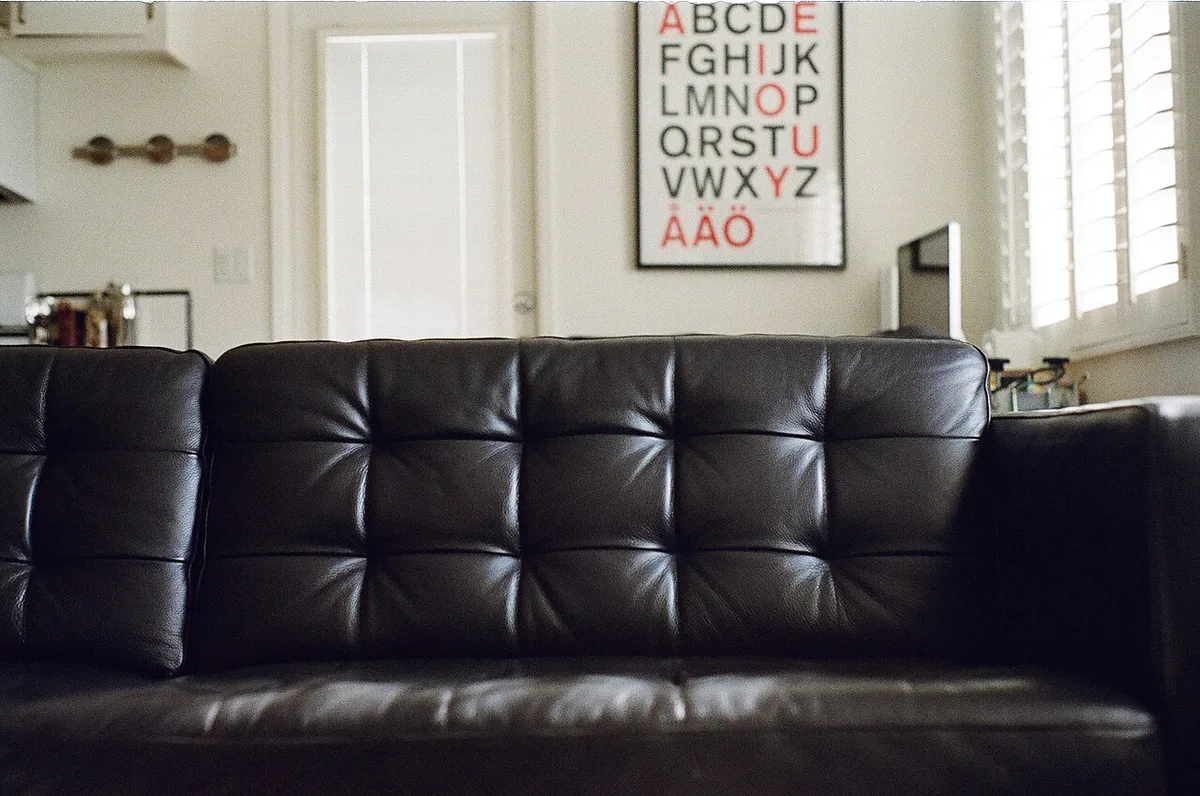
Image source: Wikimedia Commons / www.Pixel.la Free Stock Photos
Cool or blue-toned whites → charcoal, navy, slate gray, sage
If your wall reads blue-violet and your room faces north or east choose deep cool tones. Charcoal grounds the space without warmth. Navy adds classic depth.
Slate gray bridges cool and neutral. Sage adds organic softness. These colors share the blue undertone so they harmonize instead of clash.
A charcoal gray sofa works like a neutral anchor in this scenario.
Warm or creamy whites → beige, camel, tan, rust, terracotta, mustard
If your wall reads yellow-pink and your room faces south or west choose warm earth tones. Beige and camel extend the wall warmth. Rust and terracotta add contrast without cooling the room.
Mustard injects energy. These colors share the yellow-red undertone family. A beige sofa creates a seamless flow in warm-white rooms.
True neutral whites → almost anything, texture does the work
If your wall reads clean against printer paper you have a true neutral. The sofa color can follow the rug the art or your favorite hue. Texture becomes the contrast tool.
Linen reads casual. Velvet reads formal. Boucle reads tactile.
Leather reads timeless. The fabric choice carries the design weight when the walls stay quiet.
Dark floors vs light floors, and how that flips the choice
Dark floors create a heavy base. A light sofa lifts the room. A dark sofa doubles the weight.
Light floors create an airy base. A dark sofa anchors the room. A light sofa floats.
If you have dark floors and cool white walls a navy sofa balances the floor without disappearing. If you have light floors and warm white walls a rust sofa grounds the space without heaviness.
Sofa Colors That Work and What Each One Actually Does
Gray, beige, and taupe: the safe middle
Gray spans cool to warm. Choose a gray with a visible undertone that opposes your wall. Beige spans yellow to pink.
Match the beige undertone to your wall warmth. Taupe blends gray and beige so it adapts. These three colors work in ninety percent of white-wall rooms because they sit near the neutral center.
A grey sofa is the most versatile single purchase.
Navy, charcoal, and black: the anchor move
Dark sofas define the seating zone. They hide wear. They make a room feel intentional.
They demand good lighting. In a dim north room a black sofa can read as a void. Add a floor lamp with a warm bulb to keep the corner alive.
Charcoal softens the edge. Navy adds color depth.
Olive, sage, rust, mustard: the statement picks
These colors bring personality. They work best when the room has simple walls and minimal pattern. Olive and sage connect to nature.
Rust and mustard connect to warmth. They need breathing room. Keep pillows neutral.
Let the sofa carry the chroma. A velvet sofa in olive or rust elevates the saturated hue.
Cream, off-white, and white-on-white
Tone-on-tone rooms rely on texture and layering. A cream linen sofa on warm white walls reads serene. An off-white boucle on cool white walls reads modern.
A white leather sofa on true white walls reads gallery. These schemes fail without contrast in rug pillows throws and art. A white sofa demands commitment to styling.
Fabric Choice: The Part That Decides If You'll Love It in Year Two
Color gets the attention. Fabric gets the wear. A sofa that looks perfect in a showroom can feel scratchy or stained after six months of real life.
White walls amplify every mark because they reflect light without hiding anything. Your fabric choice must work harder when the backdrop stays bright.
Linen and cotton breathe and feel casual. They wrinkle and they show every spill. Performance fabrics use tighter weaves and chemical treatments to resist stains and fading.
Aggregate reviews report that households with kids and pets prefer performance weaves over natural fibers for the first two years. A fabric type guide helps you spot the weave before you buy.
Velvet and boucle add texture and depth against flat white walls. Velvet catches light and creates shadow. Boucle adds softness and hides dirt better than smooth weaves.
Both need gentle cleaning. A velvet sofa in a cool-toned room reads as luxe. In a warm room it can feel heavy.
Leather and faux leather wipe clean and resist liquid. They feel cold in winter and hot in summer. A leather sofa in a white room creates a strong contrast.
Faux leather costs less and feels more consistent. Both need conditioning to prevent cracking. Manufacturer specifications indicate that top-grain leather lasts longer than corrected grain but costs more upfront.
Step-by-Step: Test the Color Before You Buy
Don't guess. Test. A six-inch swatch tells you nothing about how a color lives in your room.
The process takes two days and saves you from a five-figure mistake.
Step one: paint a poster board with your wall color. Tape it to the wall next to the sofa. Step two: order fabric cuts from the retailer.
Most shops send free swatches. Step three: live with both for forty-eight hours. Watch them at nine am, two pm, and nine pm.
The light changes the color.
Step four: layer the fabric cuts with your existing pillows, throws, and rug. A sofa color that fights your rug will always fight. Step five: check the scale.
A sofa size guide helps you confirm the piece fits the room proportions. A sofa that is too small makes white walls look empty. One that is too large makes them look boxed in.
Mistakes That Make White Walls Look Worse
White walls are unforgiving. They expose every error. The first mistake is matching instead of contrasting.
A white sofa on white walls erases the seating zone. Add texture or tone instead. The second mistake is ignoring trim, doors, and ceilings.
If your trim is cream and your walls are cool white, the sofa must bridge that gap. The third mistake is buying by screen color. Phone images lie.
Store lighting lies. Only your own room tells the truth.
The fourth mistake is wrong scale. A reclining sofa that is too deep can block walkways. A sofa that is too shallow looks cheap against tall walls.
Measure the room. Measure the path. Measure the door width.
A moving guide helps you confirm the piece actually fits through your home. White walls make scale errors visible from across the room.
Paint undertones deserve their own warning. A Sherwin-Williams color guide explains how LRV and undertone interact. Two paints with the same LRV can read as different colors in the same room.
Test before you commit.