
Are velvet sofas in style right now? Yes, they are. Velvet has held a strong spot in living room design through 2025 and into 2026.
The fabric’s soft pile catches light in a way that makes even a simple sofa feel like a statement piece. Style is only half the question.
Buyers also worry about durability. Manufacturer specifications often list velvet upholstery with Martindale rub counts between 15,000 and 30,000. That range separates residential-grade fabric from heavier contract use.
Performance velvet can handle daily life better than traditional cotton or silk versions. Before you buy, you need to see how it stacks up against other popular fabrics.
Why the Velvet Sofa Question Comes Up Now
Velvet keeps showing up in design feeds because it changes how a room feels. The pile catches light and shifts tone as you move past it. Designers call it a texture moment, not just a color choice.
People want to know if the trend will last or fade out.
Social media has amplified the look. A single photo of a navy velvet sofa can drive searches for weeks. The fabric photographs well because it holds depth without looking flat.
That visibility feeds the question you are asking now.
Retail data shows velvet upholstery staying popular as of 2026, with jewel tones like emerald and sapphire leading the way. Neutrals sell just as well. The fabric works in both small apartments and larger sitting rooms.
That versatility keeps the question alive.
It also pairs easily with other trending pieces, from black sofas to modular layouts. You can see it in maximalist rooms and quieter spaces alike. If you are weighing a purchase, context matters as much as aesthetics.
The tactile trend plays a role too. After years of minimalist surfaces, buyers want fabric they can touch. Velvet feels soft without being slippery.
That sensory appeal explains why it keeps appearing in showrooms.
Before you buy, you should see how velvet measures up against the alternatives. The next section sets it against linen, one of its most common rivals.
Velvet vs. Linen: A Side-by-Style & Durability Comparison
Velvet and linen send different signals the moment you walk into a room. Velvet reads as formal and plush, while linen feels relaxed and lived-in. If your style leans toward modern glam, velvet fits.
If you prefer coastal or farmhouse looks, linen is the safer bet.

Image source: Wikimedia Commons / Palm Beach Police Department
The daily wear story splits the two fabrics further. Linen breathes well and does not hold heat, but it wrinkles easily and can look rumpled by afternoon. Velvet resists wrinkles, yet its pile can crush under regular use.
Seat cushions may develop a shaded path where bodies rest most often.
Cleaning also divides them. Linen usually handles spot cleaning and light washing without drama. Velvet demands gentler treatment, and water can leave rings if you do not blot quickly.
Performance velvet closes that gap, but it costs more.
Here is how they compare on the points most buyers check.
| Feature | Velvet Sofa | Linen Sofa |
|---|---|---|
| Look | Luxe, dramatic | Casual, airy |
| Texture | Soft pile, smooth | Woven, slightly rough |
| Wrinkles | Resists | Wrinkles easily |
| Pet hair | Shows some | Hides some |
| Spot cleaning | Needs care | Simpler |
| Fade risk | Moderate | Low to moderate |
For sun-drenched spaces, linen usually wins on longevity because it does not absorb light the same way. Velvet brings its own presence, though, and works well in rooms with controlled light. If you are building a room around a dark piece, balancing dark pieces matters more than fabric alone.
The choice comes down to how much upkeep you want versus the look you prefer. Next, see how velvet stands against another textured favorite.
Velvet vs. Bouclé: Texture, Look, and Lifestyle Showdown
Bouclé and velvet both rely on texture, but they deliver very different moods. Bouclé uses looped yarns that feel nubby and casual. Velvet uses a dense pile that feels smooth and rich.
If you want a sofa that invites sinking in, bouclé leans that way. Velvet sits up straighter, literally and visually.
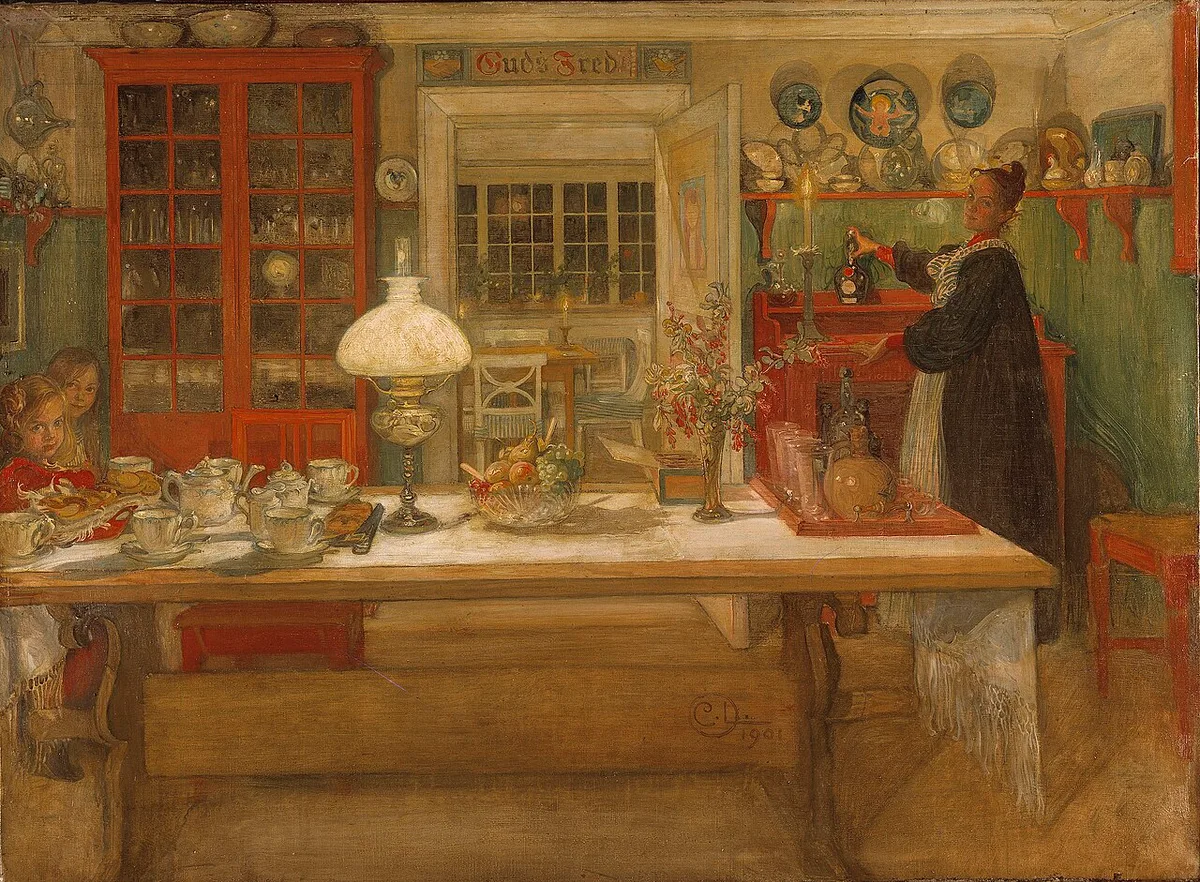
Image source: Wikimedia Commons / Carl Larsson
Daily life splits them again. Bouclé hides small stains and crumbs in its loops, which helps with kids and pets. However, the loops can snag on cat claws or jewelry.
Velvet shows crumbs more readily, but its tight weave resists some snags. Both fabrics need care, just of different kinds.
Style-wise, bouclé reads as modern and organic. Velvet reads as established and opulent. A bouclé sofa fits a relaxed living room or a bedroom nook.
A velvet sofa anchors a formal sitting area or a room with bold art.
| Feature | Velvet | Bouclé |
|---|---|---|
| Surface | Smooth pile | Looped, nubby |
| Feel | Soft, cool | Warm, cozy |
| Stain hiding | Moderate | Good |
| Snag risk | Moderate | Moderate to high |
| Style fit | Formal, glam | Casual, modern |
When you choose, think about who sits on the sofa most. A home with large dogs might favor neither, but bouclé’s forgiveness with crumbs gives it an edge. For a room centered on design impact, velvet pulls more attention.
You can also match the sofa to other seating in the room. Pairing textures without clashing starts with knowing how each fabric behaves next to the others.
Best Use Cases: When a Velvet Sofa Works — and When It Doesn't
A velvet sofa works best when it acts as a centerpiece rather than a workhorse. It shines in formal living rooms, sitting areas, and spaces where style leads the agenda. Jewel tones like emerald or sapphire make it pop, while neutral velvet adds depth without shouting.
If you entertain in a curated room, velvet earns its place.
It also fits smaller apartments that need one strong furniture statement. A single velvet loveseat can define the whole room. You do not need matching pieces everywhere because the fabric carries visual weight on its own.
However, velvet struggles in high-traffic family rooms. Daily flopping, snack spills, and roughhousing wear the pile down fast. Homes with large dogs or cats face snagging and hair issues.
Sun-drenched rooms also pose a risk because UV exposure fades dye over time.
Renters should check lease terms before buying. Some landlords treat fabric stains as damage, and velvet shows them clearly. If you move often, a darker performance velvet or a slipcovered alternative may serve you better.
| Good fit | Poor fit |
|---|---|
| Formal living rooms | Busy family rooms |
| Adult-only households | Homes with large pets |
| Low to moderate traffic | Sun-drenched spaces |
| Statement decor | Rental units with strict deposits |
If your situation lands in the poor fit column, you do not have to skip velvet entirely. Performance versions handle more than traditional weaves. Rich accent colors can also frame a velvet piece so it feels intentional rather than overwhelming.
The next section explains what to check before you pay.
What to Look For: Spotting Quality and Performance in a Velvet Sofa
Quality velvet starts with the weave, Quality starts with the weave
The first thing to check is the pile density. A tightly woven velvet will hold its shape longer. Low-density velvet feels good at first, but it flattens quickly.
You want to see subtle differences in texture, not obvious gaps.
Look at the nap direction. Some fabrics have a directional pile that catches light one way and falls flat the other. Check how the fabric is cut before you buy.
The same pattern can behave differently depending on the layout.
Then check the fill. High-resilience foam keeps cushions from sagging. The difference between cheap and good cushions shows up after a few months.
Manufacturer specs often pair foam with fiber fill, and that mix matters.
The frame is just as important. Kiln-dried hardwood frames resist warping better than softwoods. Pay attention to joint construction.
Glue and screws can loosen over time, and that failure shows up first on velvet because the fabric hides loose joints poorly.
Performance velvet usually has a higher Martindale rating. That number tells you how many rubs the fabric can take before wear shows. Per the standard, residential sofas should hit 15,000 rubs or higher.
Contract pieces often aim for 30,000 or more. You should not spend less than 15,000 on your main seating.
Color is the next trap. Rich dark velours often use less dye, which means better depth and less bleeding. That is a mark of quality, not a marketing line.
When you see deep burgundy or forest green, ask how much dye load the mill used.
Here is a quick breakdown of what to inspect before checkout.
- Pile density and weave tightness
- Nap direction and cutting layout
- High-resilience foam fill
- Kiln-dried hardwood frame
- Martindale rating of 15,000 or higher
You should also test the color in person. Some screens make velvet look lighter or darker than it is. Bring sample swatches or check photos with the actual light in the room.
If you buy online, read the care tag before you commit. Look for the fiber content. Polyester velvet is common and often more durable than cotton velvet.
Silk and viscose look richer but cost more and may need gentler care.
The final check is the warranty. Good makers offer at least five years on frame and three on fabric. Frame warranties usually cover defects, not wear.
Fabric coverage often runs with the frame, which is easier to claim.
Next, you will learn the best way to clean the piece without damaging it.
What to Look For: Spot-Cleaning and Maintenance Basics
Velvet needs specific care because the pile is delicate. Start with dry dusting only. Use a soft brush or a vacuum with a brush attachment.
Do not scrub. Scrubbing pushes dirt deeper and flattens the pile.
For spills, blot immediately. Use a clean cloth and press, do not rub. Work from the outside in to avoid spreading.
If you use a cleaning product, choose one made for velvet or an appropriate upholstery foam.
Do not use steam unless the manufacturer allows it. Steam can change the sheen or cause watermarks. Check the care code on the tag.
Codes like W mean water-based cleaning is allowed, S means solvent-based is allowed, WS means both, and X means dry cleaning only.
Routine cleaning keeps velvet looking good. Vacuum weekly in high-use areas. Brush in the direction of the pile monthly.
For pet owners, use a pet tool or a damp cloth to lift hair without tugging fibers.
If you hire a cleaner, ask about their process. Some use wet cleaning methods that are safer than agitation. Others use steam, which may not suit all velvets.
A good cleaner will follow the care tag guidance.
Keep the sofa away from direct sunlight. UV rays fade dye over time, and velvet shows fading faster than many fabrics because of the dense pile. Use curtains or blinds to protect the piece.
Here is a simple maintenance flow.
- Dust weekly with soft brush or vacuum attachment
- Spot clean spills by blotting
- Use only approved cleaning agents
- Follow care code on tag
- Vacuum monthly to maintain pile
- Avoid harsh scrubbing or steam unless approved
If stains set, professional cleaning is usually safer. Harsh methods can ruin the pile or the color. Do not mix cleaners.
Test any product in an unseen area first.
Benefits and Drawbacks of Velvet Sofas
Velvet brings real benefits when chosen well. It adds warmth and depth to a room without clutter. The fabric hides minor wear in the pile direction better than many weaves.
It also feels substantial in hand, which raises the perceived quality of the sofa.
The drawbacks are honest. Velvet can show water rings and wear faster than performance fabrics. It also costs more upfront than cotton or linen.
For busy households, the long-term cost may not justify the daily maintenance.
Here is a quick look at the trade-offs.
| Benefit | Drawback |
|---|---|
| Rich color depth | Water rings on spills |
| Soft tactile feel | Higher price |
| Resists wrinkles | Pile flattening over time |
| Performance option available | Dry cleaning needs sometimes |
If durability is your top concern, look at performance velvet. It uses polyester or nylon fibers that resist abrasion. Martindale ratings often run higher, and stain resistance is built in.
The look is slightly less matte but still luxurious.
For formal rooms, velvet still wins. For everyday rooms, a woven fabric may serve better. The right choice depends on your traffic, light, pets, and cleaning willingness.
The next section breaks down real-world scenarios to help you decide.
How Velvet Sofas Fit Modern Home Design
Modern design moves in cycles, but velvet has stayed in the mix. It fits with both traditional and contemporary interiors. The key is balance.
Pair velvet with clean lines, metal frames, or simple silhouettes. Avoid competing with too many busy textures at once.
In minimalist homes, velvet works as a single accent. A velvet sofa in a neutral tone can replace a leather or microfiber piece without feeling heavy. In maximalist spaces, velvet plays well with pattern and layered textiles.
The finish matters too. Matte velvet feels softer and more casual. Satin or high-sheen velvet reads formal and glamorous.
Pick based on the room's existing mood.
If you are updating a room, consider the sofa as part of a larger palette. Use it with natural woods, stone, or metal. Keep walls light or neutral unless you want drama.
At this point, you should know whether velvet fits your space, your lifestyle, and your budget. The final section will give you a clear verdict.
FAQs
Are velvet sofas in style?
Yes, velvet sofas are in style as of 2026. The fabric stays popular in modern and traditional interiors.
How long does velvet sofa cleaning take?
Spot cleaning takes minutes. Deep cleaning takes several hours depending on size and method.
Do velvet sofas flatten out?
Traditional velvet may flatten, but performance velvet resists wear better.
Are velvet sofas good for small living rooms?
Yes, velvet works well in small spaces when used as a statement piece.
What colors of velvet are trending?
Jewel tones and neutrals both stay popular, with emerald and sapphire leading trend reports.Quality starts with the weave, and that is the first real test of a velvet sofa. The weave determines how the pile holds up to daily pressure. A tight weave keeps the fabric firm over years of use.
A loose weave may look plush at first, but it will thin out faster.
The first thing to check is the pile density. A tightly woven velvet will hold its shape longer. Low-density velvet feels good at first, but it flattens quickly.
You want to see subtle differences in texture, not obvious gaps.
Look at the nap direction. Some fabrics have a directional pile that catches light one way and falls flat the other. Check how the fabric is cut before you buy.
The same pattern can behave differently depending on the layout.
Then check the fill. High-resilience foam keeps cushions from sagging. The difference between cheap and good cushions shows up after a few months.
Manufacturer specs often pair foam with fiber fill, and that mix matters.
The frame is just as important. Kiln-dried hardwood frames resist warping better than softwoods. Pay attention to joint construction.
Glue and screws can loosen over time, and that failure shows up first on velvet because the fabric hides loose joints poorly.
Performance velvet usually has a higher Martindale rating. That number tells you how many rubs the fabric can take before wear shows. Per the standard, residential sofas should hit 15,000 rubs or higher.
Contract pieces often aim for 30,000 or more. You should not spend less than 15,000 on your main seating.
Color is the next trap. Rich dark velours often use less dye, which means better depth and less bleeding. That is a mark of quality, not a marketing line.
When you see deep burgundy or forest green, ask how much dye load the mill used.
Here is a quick breakdown of what to inspect before checkout.
- Pile density and weave tightness
- Nap direction and cutting layout
- High-resilience foam fill
- Kiln-dried hardwood frame
- Martindale rating of 15,000 or higher
You should also test the color in person. Some screens make velvet look lighter or darker than it is. Bring sample swatches or check photos with the actual light in the room.
If you buy online, read the care tag before you commit. Look for the fiber content. Polyester velvet is common and often more durable than cotton velvet.
Silk and viscose look richer but cost more and may need gentler care.
The final check is the warranty. Good makers offer at least five years on frame and three on fabric. Frame warranties usually cover defects, not wear.
Fabric coverage often runs with the frame, which is easier to claim.
Next, you will learn the best way to clean the piece without damaging it.
What to Look For: Spot-Cleaning and Maintenance Basics
Velvet needs specific care because the pile is delicate. Start with dry dusting only. Use a soft brush or a vacuum with a brush attachment.
Do not scrub. Scrubbing pushes dirt deeper and flattens the pile.
For spills, blot immediately. Use a clean cloth and press, do not rub. Work from the outside in to avoid spreading.
If you use a cleaning product, choose one made for velvet or an appropriate upholstery foam.
Do not use steam unless the manufacturer allows it. Steam can change the sheen or cause watermarks. Check the care code on the tag.
Codes like W mean water-based cleaning is allowed, S means solvent-based is allowed, WS means both, and X means dry cleaning only.
Routine cleaning keeps velvet looking good. Vacuum weekly in high-use areas. Brush in the direction of the pile monthly.
For pet owners, use a pet tool or a damp cloth to lift hair without tugging fibers.
If you hire a cleaner, ask about their process. Some use wet cleaning methods that are safer than agitation. Others use steam, which may not suit all velvets.
A good cleaner will follow the care tag guidance.
Keep the sofa away from direct sunlight. UV rays fade dye over time, and velvet shows fading faster than many fabrics because of the dense pile. Use curtains or blinds to protect the piece.
Here is a simple maintenance flow.
- Dust weekly with soft brush or vacuum attachment
- Spot clean spills by blotting
- Use only approved cleaning agents
- Follow care code on tag
- Vacuum monthly to maintain pile
- Avoid harsh scrubbing or steam unless approved
If stains set, professional cleaning is usually safer. Harsh methods can ruin the pile or the color. Do not mix cleaners.
Test any product in an unseen area first.
Benefits and Drawbacks of Velvet Sofas
Velvet brings real benefits when chosen well. It adds warmth and depth to a room without clutter. The fabric hides minor wear in the pile direction better than many weaves.
It also feels substantial in hand, which raises the perceived quality of the sofa.
The drawbacks are honest. Velvet can show water rings and wear faster than performance fabrics. It also costs more upfront than cotton or linen.
For busy households, the long-term cost may not justify the daily maintenance.
Here is a quick look at the trade-offs.
| Benefit | Drawback |
|---|---|
| Rich color depth | Water rings on spills |
| Soft tactile feel | Higher price |
| Resists wrinkles | Pile flattening over time |
| Performance option available | Dry cleaning needs sometimes |
If durability is your top concern, look at performance velvet. It uses polyester or nylon fibers that resist abrasion. Martindale ratings often run higher, and stain resistance is built in.
The look is slightly less matte but still luxurious.
For formal rooms, velvet still wins. For everyday rooms, a woven fabric may serve better. The right choice depends on your traffic, light, pets, and cleaning willingness.
The next section breaks down real-world scenarios to help you decide.
How Velvet Sofas Fit Modern Home Design
Modern design moves in cycles, but velvet has stayed in the mix. It fits with both traditional and contemporary interiors. The key is balance.
Pair velvet with clean lines, metal frames, or simple silhouettes. Avoid competing with too many busy textures at once.
In minimalist homes, velvet works as a single accent. A velvet sofa in a neutral tone can replace a leather or microfiber piece without feeling heavy. In maximalist spaces, velvet plays well with pattern and layered textiles.
The finish matters too. Matte velvet feels softer and more casual. Satin or high-sheen velvet reads formal and glamorous.
Pick based on the room's existing mood.
If you are updating a room, consider the sofa as part of a larger palette. Use it with natural woods, stone, or metal. Keep walls light or neutral unless you want drama.
At this point, you should know whether velvet fits your space, your lifestyle, and your budget. The final section will give you a clear verdict.
FAQs
Are velvet sofas in style?
Yes, velvet sofas are in style as of 2026. The fabric stays popular in modern and traditional interiors.
How long does velvet sofa cleaning take?
Spot cleaning takes minutes. Deep cleaning takes several hours depending on size and method.
Do velvet sofas flatten out?
Traditional velvet may flatten, but performance velvet resists wear better.
Are velvet sofas good for small living rooms?
Yes, velvet works well in small spaces when used as a statement piece.
What colors of velvet are trending?
Jewel tones and neutrals both stay popular, with emerald and sapphire leading trend reports.
Final Verdict: Is a Velvet Sofa Worth It for You?
Buy velvet if you want a sofa that anchors a room with color depth and tactile presence. Choose performance velvet with a Martindale rating above 20,000 for daily use. Skip it if your space gets harsh sun, heavy pet traffic, or frequent spills.
Linen or bouclé handle those conditions better. Match the fabric to your actual lifestyle, not just the look you like.
FAQs: Quick Answers on Velvet Sofa Style and Care
Are velvet sofas in style?
Yes, velvet sofas remain in style as of 2026 across modern and traditional interiors.
How do I clean a velvet sofa?
Blot spills immediately with a dry cloth. Vacuum weekly using a soft brush attachment. Follow the care code on the tag.
Does velvet flatten over time?
Traditional velvet can flatten in high-use zones. Performance velvet resists crushing better.
Can I put a velvet sofa in a sunny room?
Direct sun fades velvet faster than most fabrics. Use window coverings or choose a fade-resistant performance version.
What colors work best?
Jewel tones like emerald and sapphire lead trends. Neutrals such as greige and charcoal stay versatile.
Is velvet pet-friendly?
Claw snags and hair visibility are common issues. Tight-weave performance velvet performs better but is not claw-proof.