
A chair dip is a bodyweight move that targets your triceps using nothing but a sturdy seat. If you have ever wondered what is a chair dip and whether it is safe for your shoulders, you are not alone. Many people skip it because they fear joint pain, but proper form makes all the difference.
Let us break down exactly how to do it without hurting yourself.
Research from the American College of Sports Medicine shows bodyweight resistance can build upper body strength with controlled reps. For a standard chair dip, use a shoulder-width grip and stop just above a ninety-degree elbow bend. As of 2026, most trainers suggest three sets of eight to twelve reps to start.
Here is how to approach the move safely.
Why Chair Dip Safety and Form Come First
The chair dip looks simple, but it places real load on your shoulder and elbow joints. Poor alignment can lead to impingement or tendon strain over time. Checking your setup matters more than the number of reps you complete.
A stable seat and correct body position protect you from common injuries.
Start by making sure your chair will not shift under your weight. If the frame wobbles or the legs feel loose, you should fix a wobbly chair before you train. A solid base lets you focus on muscle engagement instead of balance.
Your grip width and torso angle also affect joint stress. Keeping your elbows close to your sides reduces pressure on the shoulder capsule. Leaning too far forward shifts the load to your chest but increases strain on the front of the shoulder.
We recommend a slow, controlled tempo rather than bouncing at the bottom. Pause briefly at the top, lower with intention, and press back up without locking your elbows. This approach keeps the tension on your triceps where it belongs.
Most guidelines from sports medicine groups emphasize quality over quantity for bodyweight movements. The American College of Sports Medicine notes that controlled eccentric loading builds strength while sparing connective tissue. You do not need to rush through reps to see results.
If you have a history of shoulder dislocations or elbow tendonitis, speak with a clinician before adding dips to your routine. Modifications exist, but they should match your specific mobility limits.
What Is a Chair Dip
A chair dip is a bodyweight exercise that uses a sturdy seat. It targets the triceps by lowering and raising your hips. You place your hands on the edge and support your weight.
The move builds upper body strength without any special equipment.
The triceps brachii runs along the back of your upper arm and straightens the elbow. During a dip, this muscle does most of the work to push your body back up. Your chest and front shoulder muscles assist as secondary movers.
You do not need a gym to perform this movement. A stable dining chair or office chair works if it will not tip. Many home exercisers use it as part of an upper body circuit or a triceps focused finish.
Check your seating surface before you begin. If you need to confirm the height is right for your frame, you can measure a chair to find a safe starting position.
A true dip differs from a bench dip in body angle and range of motion. Parallel bars allow a deeper stretch, while a chair keeps your torso more upright. Both patterns train the same primary muscle group but with slightly different joint demands.
As of 2026, bodyweight calisthenics remains one of the most accessible ways to maintain muscle without equipment. The chair dip sits at the entry level of that progression for many people.
How a Chair Dip Works and Which Muscles It Targets
The movement splits into two clear phases. First, you lower your hips by bending the elbows until your upper arms run roughly parallel to the floor. Then you press through your palms to return to the start.
The triceps brachii carries the heaviest load during the pressing phase. Your anterior deltoids and pectoralis major help stabilize and assist, especially if you lean forward. Your core also engages to keep your torso from sagging.
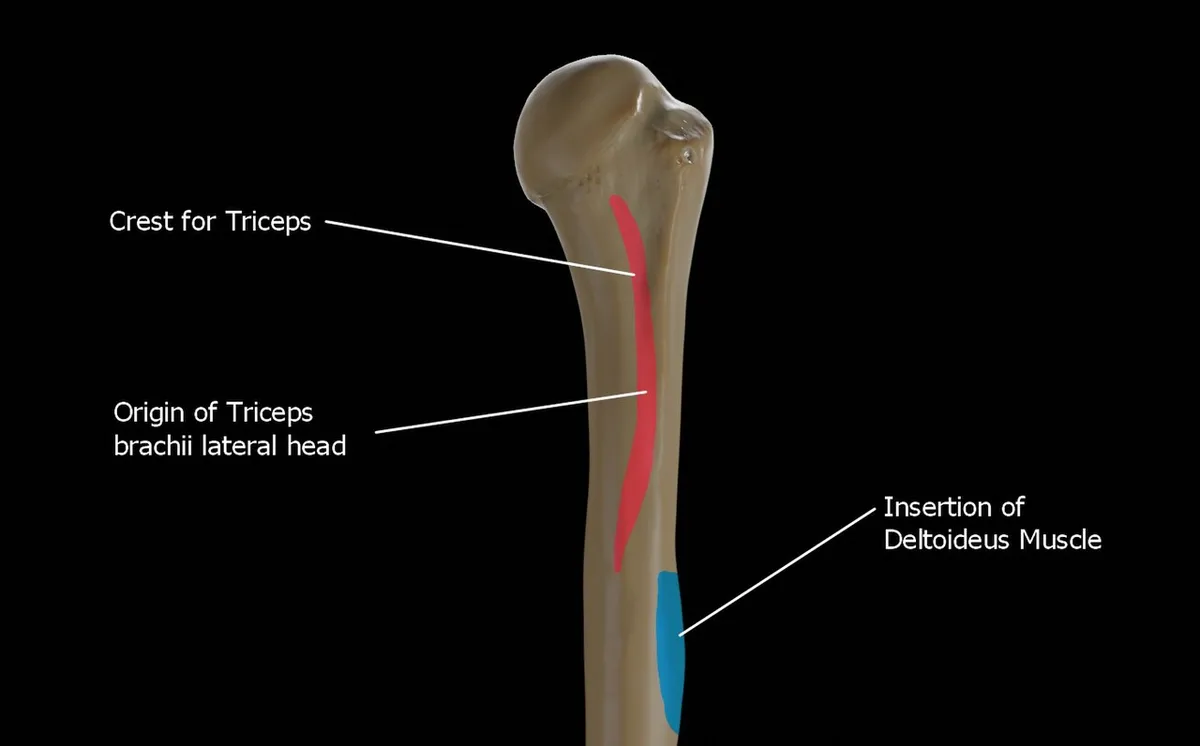
Image source: Wikimedia Commons / Doctor Jana (CC BY-SA)
Muscle activation studies show that dips produce high triceps engagement compared with many isolation exercises. The range of motion matters more than speed for recruiting the full muscle belly. Controlled lowering creates micro-tears that repair into stronger tissue over time.
Proper alignment keeps the humeral head centered in the shoulder socket. If your shoulders round forward or your elbows flare wide, you shift stress away from the triceps and toward connective tissue. That is where overuse injuries usually begin.
If you want to check how your upper body stacks up against good posture habits, you can review posture alignment principles before adding volume.
For most healthy adults, two to three dip sessions per week allow for recovery while building strength. Start with two sets of eight reps and add a third set when the movement feels smooth. If you can complete twelve reps with good form, increase the difficulty by slowing the tempo or adding a brief pause at the bottom.
Progression keeps the muscle challenged without overloading the joints.
A stable seat is non‑negotiable. If the frame shifts, you should fix a wobbly chair before you begin. A solid base lets you focus on muscle engagement instead of balance.
Keeping your elbows close to your sides reduces pressure on the shoulder capsule. Leaning too far forward shifts load to the chest but increases strain on the front of the shoulder.
We recommend a slow, controlled tempo rather than bouncing at the bottom. Pause briefly at the top, lower with intention, and press back up without locking your elbows. This approach keeps the tension on your triceps where it belongs.
Most guidelines from sports medicine groups emphasize quality over quantity for bodyweight movements. The American College of Sports Medicine notes that controlled eccentric loading builds strength while sparing connective tissue. You do not need to rush through reps to see results.
If you have a history of shoulder dislocations or elbow tendonitis, speak with a clinician before adding dips to your routine. Modifications exist, but they should match your specific mobility limits.
Benefits and Limits of Chair Dips
Chair dips offer a convenient way to train the upper body with minimal equipment. They build functional triceps strength and improve shoulder stability. The movement also engages the core to keep your torso from sagging.
| Benefit | Limit |
|---|---|
| Targets triceps with high muscle activation | Requires a stable seat to avoid injury |
| Scalable difficulty for all fitness levels | Can strain shoulders if elbows flare wide |
| No special equipment needed for home use | Limited range of motion compared with parallel bars |
| Enhances core engagement indirectly | May aggravate pre‑existing elbow or shoulder conditions |
The convenience factor is a major draw. You can perform the exercise in a living room with a sturdy dining chair. However, the lack of a fixed bar means you must rely on your own stability, which can be a challenge for beginners.
If you want to check how your upper body stacks up against good posture habits, you can review posture alignment principles before adding volume. Choosing chairs for better sitting posture can also support your training by improving daily alignment.
Safe Chair Dip Steps and Progression Basics
Start by selecting a seat that will not slide or tip. A standard dining chair or a flat bench works well. If you need to confirm the height is right for your frame, you can measure a chair to find a safe starting position.
- Sit on the edge of the chair and place your hands on the rear corners of the seat.
- Walk your feet forward until your hips are off the chair and your arms are straight.
- Lower your hips by bending your elbows until your upper arms are roughly parallel to the floor.
- Press through your palms to return to the starting position. Keep your torso upright throughout.
Begin with two sets of five to eight reps. As the movement becomes easier, add reps until you can complete twelve with perfect form. Then progress by slowing the descent or adding a three‑second pause at the bottom.
If you notice any shoulder or elbow discomfort, stop and assess your setup. A wobbly chair or wide elbow flare are common culprits. Stabilize a wobbly frame and keep your elbows tucked to protect the joints.
For a deeper challenge, you can elevate your feet on a second chair or bench. This shifts more load to the triceps and increases the difficulty. Always maintain a controlled tempo and avoid locking your elbows at the top.
As of 2026, bodyweight calisthenics remains one of the most accessible ways to maintain muscle without equipment. The chair dip sits at the entry level of that progression for many people.
For most healthy adults, two to three dip sessions per week allow for recovery while building strength. If you can complete twelve reps with good form, add a third set or slow the tempo to increase difficulty. Stop if you feel sharp joint pain, especially in the shoulders or elbows, and regress to a regression or consult a professional.
Common Mistakes, Pain Points, and Fixes
Many people perform chair dips with elbows flaring out to the sides, which shifts stress from the triceps to the shoulder joint. A wide elbow angle increases the risk of impingement and long-term wear. Keep your elbows close to your body, pointing backward, not outward.
Another frequent error is descending too low, past a ninety-degree bend at the elbow. Going deeper than parallel can compress the front of the shoulder capsule. Stop when your upper arms are parallel to the floor, or higher if mobility is limited.
Using a wobbly or unstable chair is a practical mistake that can cause falls or wrist strain. Always test the chair’s stability before loading your weight. If the legs slide or the seat tilts, choose a firmer surface or brace the chair against a wall.
Locking the elbows at the top of the movement reduces triceps engagement and places full load on the joint. Maintain a micro-bend at the top to keep tension on the muscle and protect the hinge.
Warm-up neglect is common but important. Cold muscles and tendons are less elastic and more prone to strain. Spend two to three minutes on arm circles, shoulder rolls, and light pressing motions before starting your working sets.
Final Recommendation: Who Should Do a Chair Dip
Chair dips are an accessible entry point for upper body strength training, especially for beginners without equipment. They suit people focusing on triceps development, home exercisers, and those building foundational pushing strength. The movement requires only a sturdy chair and minimal space.
Individuals with pre-existing shoulder impingement, elbow tendonitis, or limited wrist mobility should approach with caution. Those conditions can worsen if form is compromised or volume is too high. Modifications, such as bent-knee positions or reduced range of motion, can make the exercise safer.
For those progressing in calisthenics, chair dips serve as a stepping stone toward parallel bar dips or weighted variations. Master the bodyweight pattern first, then add load or decrease stability gradually. Consistency with proper alignment yields better results than chasing high rep counts prematurely.
As of 2026, bodyweight routines remain a staple in fitness programming due to their low barrier to entry and adaptable intensity. The chair dip fits that model well when performed with attention to joint safety and progressive overload.
FAQs
What muscles does a chair dip target?
A chair dip primarily targets the triceps brachii, with secondary engagement of the pectoralis major and anterior deltoids. The core stabilizes the torso throughout the movement.
Can chair dips hurt your shoulders?
They can, if form is poor. Flaring elbows, going too deep, or using an unstable seat increase shoulder strain. Keeping elbows tucked and stopping at parallel reduces risk.
How many reps and sets should I do?
Begin with two sets of eight to twelve repetitions. Increase reps or sets only when the current volume feels controlled and pain-free. Quality always outweighs quantity for joint health.
What if I don’t have a dip bar?
A sturdy chair, bench, or even the edge of a stable couch works for chair dips. Ensure the surface won’t slide or tip under your weight before starting.
Are chair dips better than bench dips?
Chair dips and bench dips are similar, but chair dips often allow a more upright torso, shifting focus toward the triceps. Bench dips may encourage more forward lean, increasing chest involvement. Choose based on your comfort and goals.


