Image source: Bing (Web (fair-use with source credit))
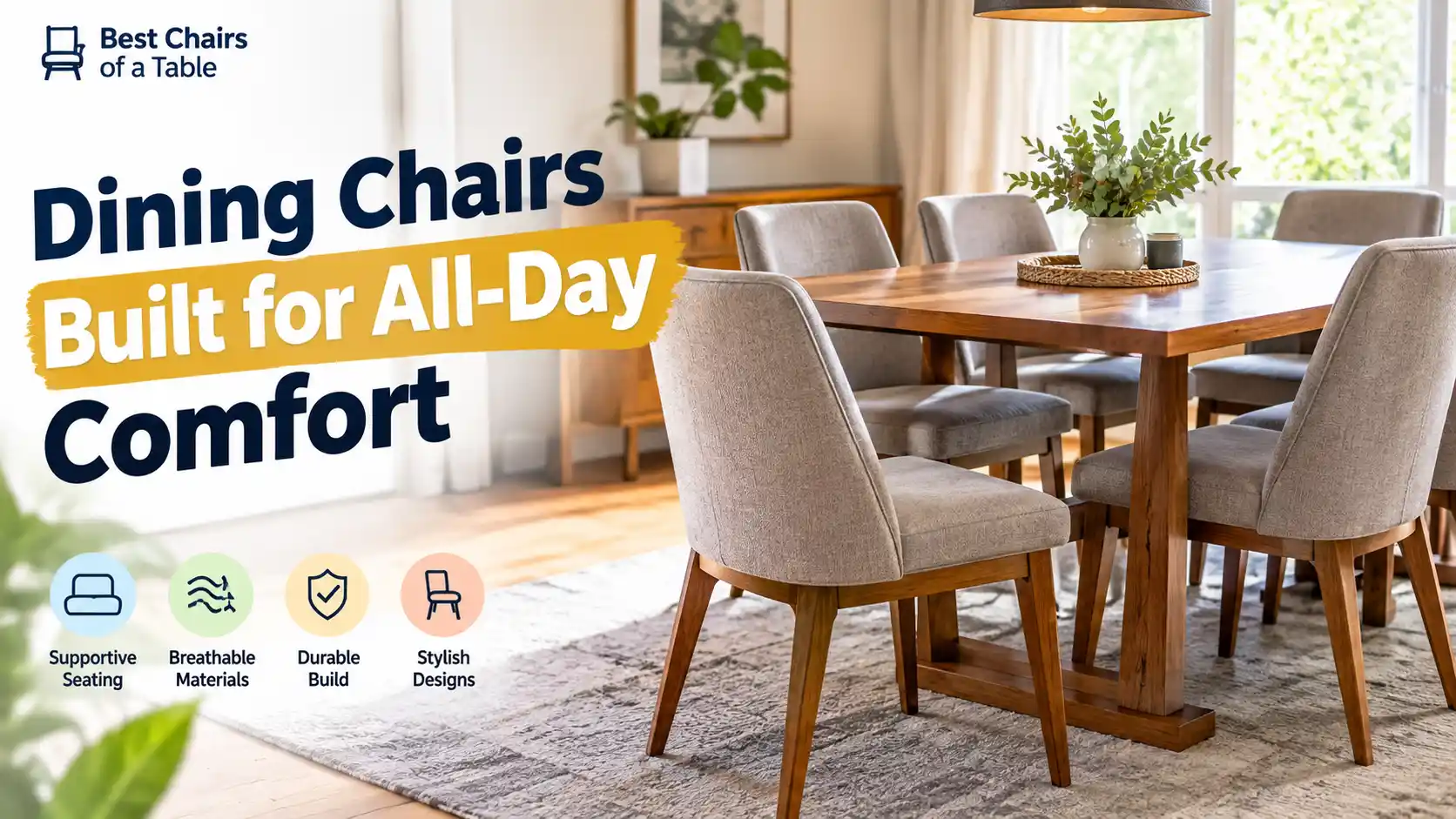
Choosing the best dining chairs for long comfortable sitting requires understanding something most shoppers miss. Restaurant-style chairs look great but often fail the real test: hours of continuous sitting around a table.
Office chairs solve this problem through adjustable lumbar support, seat depth slides, and breathable mesh. Dining chairs typically offer none of that. They prioritize aesthetics over ergonomics, which is fine for a thirty-minute meal but brutal for extended gatherings.
This disconnect creates a growing demand for dining chairs that actually support your body through long dinners, holiday entertaining, or remote work sessions at the kitchen table. As of 2026, manufacturers are finally bridging that gap with hybrid designs that borrow from office chair engineering.
Understanding what makes a dining chair truly comfortable for long durations separates smart buyers from disappointed ones. Let us break down exactly how back support, seat dimensions, and cushion materials affect your comfort over time.
Why “Comfortable” Means Different Things at Dinner vs. at the Desk
How Dining Chairs Differ from Task Chairs for Long Sits
Dining chairs lack the adjustability of ergonomic task chairs. Most offer fixed seat heights, static backrest curves, and non-replaceable cushions. This design prioritizes visual cohesion and easy table integration over personalized comfort.
Task chairs feature pneumatic height adjustment, synchro-tilt mechanisms, and multi-point lumbar support. These features accommodate different body types and sitting positions throughout the day. Dining chairs replicate neither system completely.
The Real Test: Sitting Through a Three-Course Meal or Two-Hour Work Session
Comfort fails when you shift positions constantly seeking relief. A chair that feels acceptable for twenty minutes often causes lower back fatigue within two hours. The difference lies in sustained support rather than initial plushness.
Long sitting demands continuous spinal alignment without muscular compensation. Your core and back muscles should remain relaxed while the chair maintains proper posture. If you find yourself slouching, leaning forward, or crossing legs repeatedly, the chair lacks adequate support.
What Generic “Ergonomic” Labels Miss in Dining Furniture
Many dining chairs carry “ergonomic” badges without meeting established ergonomic principles. True ergonomics addresses individual anatomical variation through adjustability and proportional fit. Generic ergonomic labels often indicate only a curved backrest.
Manufacturer marketing frequently confuses aesthetic curves with functional lumbar support. A decorative indentation at the wrong height provides zero postural benefit. Actual lumbar support must align with the natural inward curve of your lower spine between the L1 and L5 vertebrae.
What Actually Keeps Your Back Happy During Long Sits
Why Seat Depth Controls Everything
Seat depth determines whether your thighs receive proper support without pressure behind your knees. An eighteen-inch seat suits average leg lengths perfectly. Deeper seats压迫 the popliteal area, restricting blood flow and causing leg numbness within an hour.
Shallower seats leave your thighs unsupported, forcing your pelvis to tilt backward and flatten your lumbar curve.
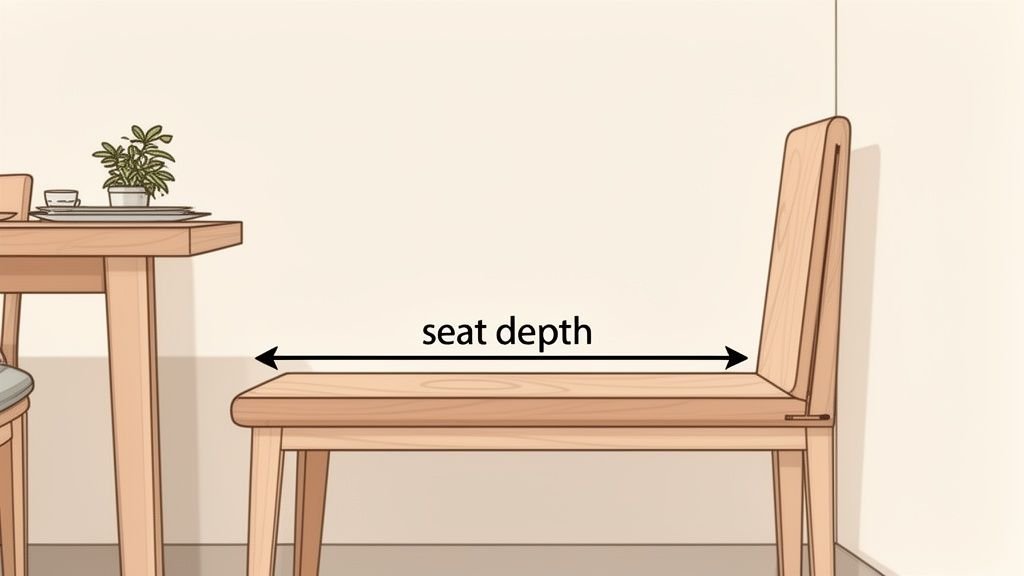
Image source: Bing (Web (fair-use with source credit))
The ideal seat depth leaves two to three inches between the front edge and the back of your knees when sitting fully back. Measure from the fullest part of your buttock to the back of your knee while standing against a wall. Subtract two inches to determine your target seat depth.
Lumbar Support Placement — Why It Matters More Than Generic Curves
Fixed lumbar curves assume all spines share identical curvature. People with lordotic lumbar curves need pronounced inward support. Those with flatter lumbar regions require gentler promotion.
One-size-fits-all curves create pressure points at the wrong vertebral levels.
Adjustable lumbar systems allow vertical positioning matching your unique spinal anatomy. Look for mechanisms permitting two to three inches of travel range. This adjustment accommodates users between five foot four and six feet two comfortably.
If you struggle with lower back pain during long sitting sessions, consider how proper back support setup works in ergonomic seating and apply those same principles to dining chair selection.
Cushion Density and Why Soft Isn’t Always Better for Hours-Long Use
Soft cushions feel inviting initially but collapse under sustained body weight. Low-density foam below fifteen ILD compresses permanently within months of regular use. Your spine loses structural support as the cushion flattens against the rigid frame beneath.
High-resilience foam maintains eighty-five percent recovery after compression cycles. This resilience preserves seat height and support characteristics for years. Look for specifications listing HR foam construction or seventy-pound density minimums.
Memory foam offers superior pressure distribution but retains heat. Dense memory foam above five pounds per cubic foot slows cooling significantly. In warm dining rooms without climate control, memory foam cushions become uncomfortable after sixty minutes despite their initial plushness.
Backrest Height and Its Role in Shoulder and Neck Relief
Backrest height determines whether your upper back receives contact support. High-back chairs extending above shoulder level support trapezius and rhomboid muscles throughout sitting periods. Mid-back chairs terminating at scapular level leave neck and shoulder muscles working continuously to maintain upright posture.
Lower back fatigue often manifests as upper back and neck tension. When lumbar support fails, your body compensates by leaning forward. Your head shifts ahead of your shoulders, increasing cervical spine load by approximately ten pounds per inch of forward head position.
The American Chiropractic Association recommends backrests supporting the entire thoracic spine for extended sitting. This translates to backrest heights of twenty-four inches or more measured from the seat surface.
Frame Materials That Decide Whether Your Chair Lasts a Year or a Decade
Solid Hardwood vs. Plywood vs. Engineered Wood
Solid hardwood frames, particularly oak, maple, and beech, demonstrate exceptional joint integrity and load-bearing capacity. These materials resist warping when properly kiln-dried to eight-to-twelve percent moisture content. Quality solid hardwood chairs often use mortise-and-tenon joinery without metal fasteners at critical stress points.
Multi-layer hardwood plywood performs adequately in budget applications but delaminates when exposed to moisture or extreme humidity changes. Particleboard and MDF cores absorb humidity rapidly, causing swelling and fastener pull-out. These engineered wood products fail within three to five years under regular household use.
Joint Construction: Mortise-and-Tenon, Dowels, and Screws Compared
Mortise-and-tenon joints createWood-to-wood connections exceeding the strength of the surrounding material itself. When properly fitted and glued, these joints actually tighten under cyclic loading rather than loosening. Look for chairs advertising traditional joinery techniques.
Dowel joints provide adequate strength when combined with corner blocking and quality adhesive. Inspect visible dowel ends for glue squeeze-out indicating proper insertion depth. Bare dowels pushed into pre-drilled holes without adhesive fail quickly under rotational forces.
Screw-only connections indicate rushed manufacturing and inferior construction. Threads strip in softwood frames, and vibration from normal use loosens screws over time. Quality manufacturers disguise fastener points inside concealed joint areas whenever metal hardware becomes necessary.
Upholstery Breakdown: Leather, Fabric, and Performance Fabrics Ranked by Comfort
Full-Grain Leather: Breathable and Long-Lasting
Full-grain leather permits air circulation reducing heat buildup against skin during extended contact. Properly conditioned leather maintains suppleness preventing cracking along flex points. These characteristics make genuine leather preferable to synthetic alternatives for warm environments.
Genuine leather requires biannual conditioning using pH-balanced leather care products. Skipping maintenance allows natural oils to evaporate, leading to stiffness and eventual surface cracking. Budget leather furniture skips this step deliberately, explaining bonded leather failure within two to three years.
Bonded leather represents recycled leather particles pressed onto fabric backing with polyurethane coating. This composite material mimics grain appearance initially but delaminates and flakes permanently once the polyurethane layer fractures. Avoid bonded leather for any chair intended for regular long-duration sitting.
Fabric Choices: Cotton, Linen, Polyester Blends, and Stain Resistance
Natural fiber upholstery offers distinct comfort profiles. Cotton breathes exceptionally well but stains easily and wrinkles under constant friction. Linen shares superior breathability while developing characteristic relaxed drape signaling casual elegance.
Both require protective treatments for practical dining room use.
Synthetic blends address natural fiber limitations effectively. Polyester-cotton combinations resist staining while maintaining reasonable breathability. Olefin fabrics provide exceptional moisture resistance ideal for households with children or pets.
Performance fabric technologies create barrier systems repelling liquids and resisting stains without compromising tactile comfort. Crypton, Sunbrella, and comparable brands develop antimicrobial treatment preventing odor and microbial growth between cleaning cycles.
| Upholstery Type | Breathability | Stain Resistance | Expected Lifespan | Maintenance Level |
|---|---|---|---|---|
| Full-grain leather | Excellent | Moderate | 15+ years | Regular conditioning |
| Bonded leather | Poor | Low | 2–4 years | Minimal but ineffective |
| Cotton fabric | Excellent | Poor | 5–8 years | Frequent cleaning |
| Polyester blend | Good | Moderate | 8–12 years | Occasional vacuuming |
| Microfiber | Fair | Good | 10–15 years | Spot cleaning |
| Performance fabric | Good | Excellent | 12–20 years | Spot clean only |
Seat Height, Width, and Clearance: How to Measure Without Guessing
Matching Seat Height to Table Height
Chair-to-table height compatibility determines whether your arms rest comfortably or strain throughout a meal. Standard American dining tables measure thirty inches from floor to tabletop surface. Pair this with chairs featuring seventeen-to-nineteen-inch seat heights for optimal arm positioning.
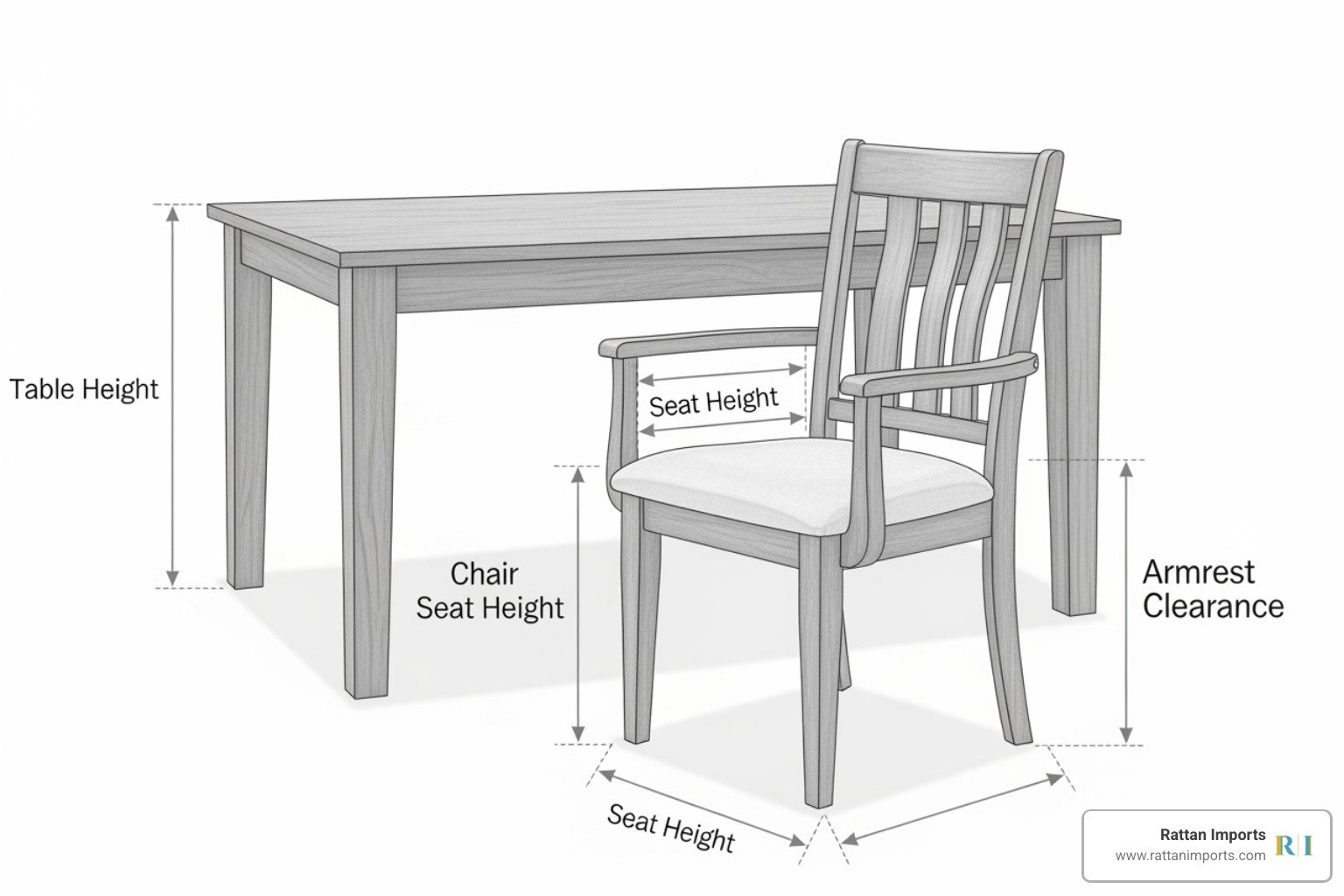
Image source: Bing (Web (fair-use with source credit))
Counter-height tables reaching twenty-four to twenty-six inches require chairs with twenty-four-to-twenty-six-inch seats. Bar-height tables extending thirty to thirty-six inches demand bar stools with二十九-to-thirty-two-inch seat elevations. Mismatched combinations force uncomfortable elbow elevation or shoulder hunching.
Seat Width and Body Type Considerations
Standard dining chair seats measure sixteen-to-eighteen inches wide between armrests or frame edges. These dimensions accommodate average hip measurements comfortably. Wider seats measuring nineteen-to-twenty-one inches suit broader body frames without creating lateral pressure points.
Seats narrower than sixteen inches concentrate body weight along inner thigh regions, reducing circulation during extended sitting. Wider individuals experience discomfort manifesting as leg numbness and restless shifting. Always verify seat width against your own hip measurement when possible.
Tall individuals benefit from extra seat depth beyond standard seventeen-to-twenty-inch ranges. People exceeding six feet often find standard depths cause problematic behind-the-knee pressure disrupting circulation during long meals. Extended-depth models prevent this common discomfort pattern entirely.
Arm Clearance and Table Integration
Armless chairs slide completely beneath most dining tables without interference. This advantage simplifies space management during entertaining when guests need flexible seating arrangements. Armless designs enable closer table proximity reducing reaching strain during meals.
Upholstered arm chairs require additional lateral clearance measurements. Standard arm-to-arm interior width measures approximately two inches narrower than overall exterior width. Verify table apron clearance against chair arm dimensions before purchasing to prevent permanent positioning compromises.
Some table designs feature thick aprons or decorative molding preventing complete chair tucking. Measure specific table configurations before committing to armchair purchases. Nothing disrupts dining room flow more than chairs protruding past table lines creating tripping hazards.
Comparison: Armless vs. Armchairs for Dining Comfort
Armless Chair Advantages for Long Sitting
Armless dining chairs eliminate spatial interference causing most comfort complaints at dining tables. Guests pull seats closer to table surfaces without armrest obstruction. This proximity reduces reaching strain while keeping elbows naturally positioned alongside torsos.
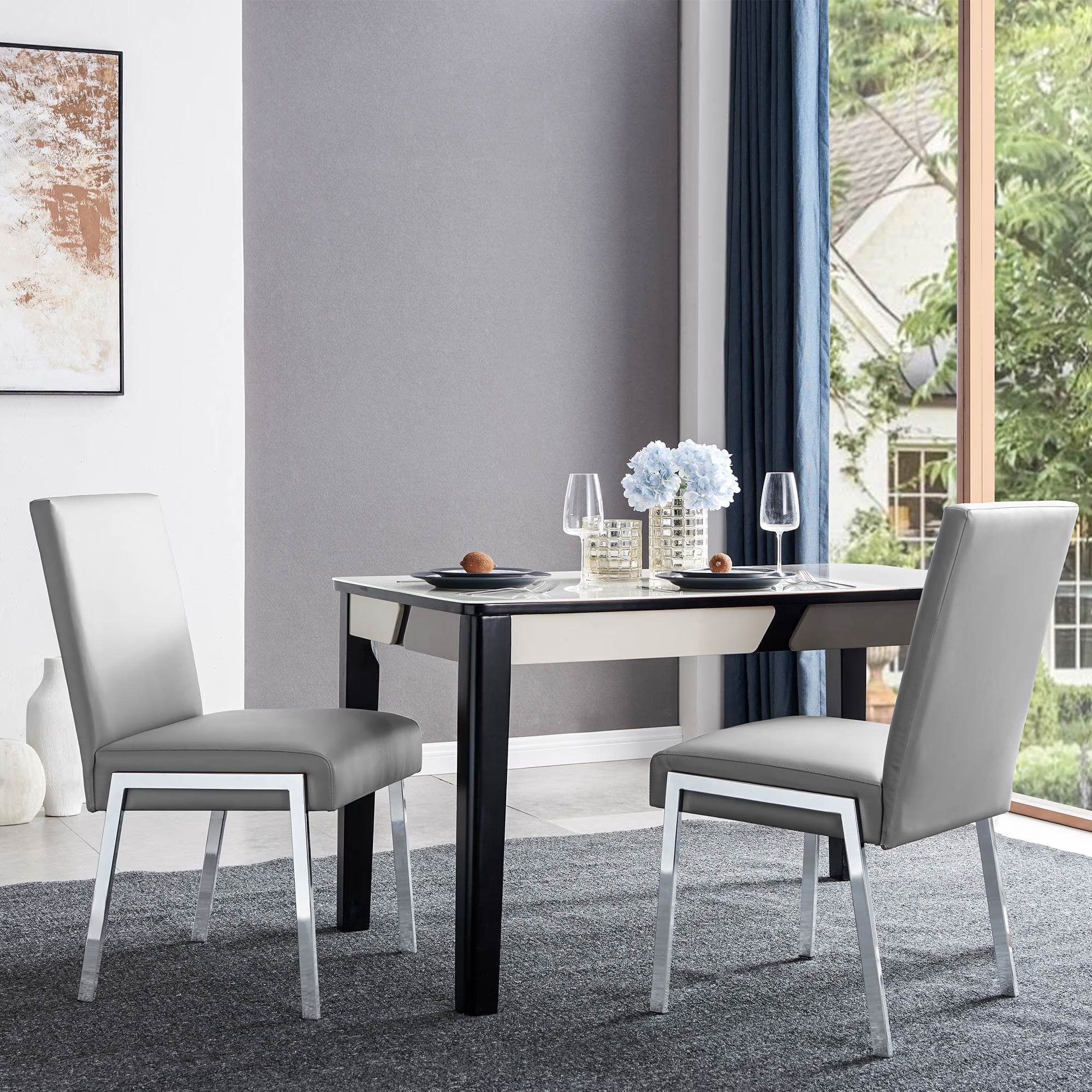
Image source: Bing (Web (fair-use with source credit))
Stacking capability represents another practical advantage. Armless chairs stack cleanly when storage space runs limited during hosting seasons. This functionality proves invaluable for occasional entertainers requiring flexible seating capacity.
Space efficiency matters significantly in compact dining areas. Armless chairs consume roughly twelve-to-fourteen inches less lateral room compared to comparable armchair models. Open floor plans and small dining nooks benefit substantially from this spatial advantage.
Armchair Dining Comfort Trade-offs
Upholstered arm chairs provide genuine upper body support armless designs cannot match. Resting forearms on padded arms reduces shoulder and neck tension during prolonged sitting. This support feature becomes noticeably valuable after the second hour of continuous seating.
Arm chairs also facilitate easier standing transitions for older adults or individuals with mobility challenges. Armrests serve as leverage points distributing rising force across stronger upper body muscles rather than relying solely on leg strength.
The space penalty and table clearance issues create real limitations. Homes with narrow dining layouts or tables featuring wide aprons may find arm chairs functionally impractical despite comfort advantages. Measure your specific arrangement before deciding.
For tall individuals navigating armchair clearance issues, exploring ergonomic solutions for taller frames can reveal alternatives maintaining comfort without spatial compromise.
When Arms Help Versus When They Hurt
Arm chairs excel during multi-hour dinner gatherings where upper body relaxation matters. Family celebrations, holiday meals, and board game nights benefit from armrest support during extended seating periods. The comfort payoff justifies spatial trade-offs in spacious dining rooms.
Armless chairs win during casual everyday dining where quick access and flexible seating matter more. Single-family daily meals, breakfast nooks, and small-space dining situations favor streamlined convenience of armless designs. Neither option inherently outperforms the other.
Context determines the right choice.
High-Back vs. Mid-Back vs. Low-Back: Which Suits Long Sitting Best?
High-Back Chairs: Full Spinal Coverage
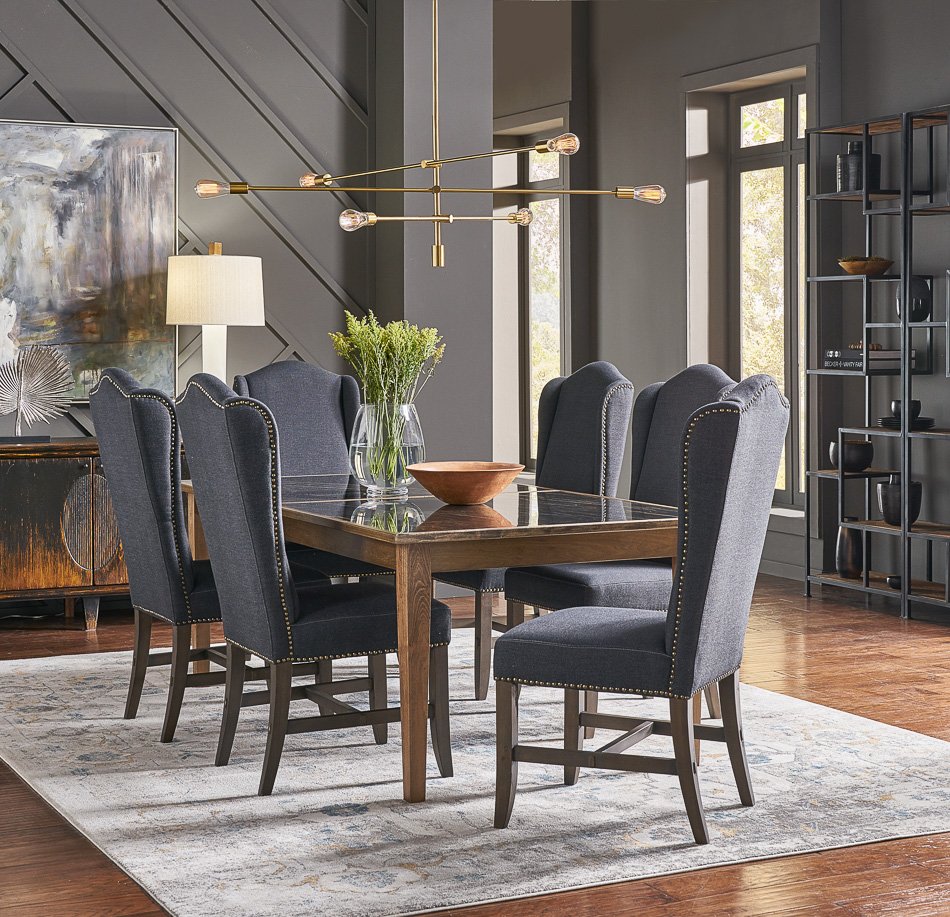
High-back dining chairs extend well above shoulder level providing comprehensive spinal support from tailbone through upper thoracic region. This full coverage distributes postural support evenly across entire vertebral column during extended sitting periods.
The structural advantage becomes most apparent during four-plus-hour gatherings. Lower back fatigue diminishes significantly when backrest supports complete spine rather than just lumbar region. Shoulder and neck tension also decrease because upper back receives consistent contact support.
High-back designs sacrifice some visual lightness compared to lower options. They read as substantial furniture pieces anchoring dining spaces visually. This bulkiness may overwhelm smaller dining rooms or clash with minimalist interior design approaches.
Mid-Back Chairs: The Balanced Middle Ground
Mid-back chairs terminate somewhere between shoulder blade level and slightly below. This height provides meaningful lumbar and lower thoracic support while leaving upper back partially exposed. Most mainstream dining chairs fall into this category.
Mid-back chairs represent the safest compromise for general household use. They deliver sufficient lower back support for typical two-to-three-hour meals without visual dominance of high-back designs. This middle-ground positioning explains popularity across residential dining settings.
Extended sitting beyond three hours reveals mid-back limitations. Upper back and shoulder muscles compensate for unsupported upper spine region. Fatigue accumulates gradually but noticeably during marathon dinner parties or extended work-from-table sessions.
Low-Back Chairs: Aesthetic Priority Over Ergonomics
Low-back dining chairs terminate well below shoulder blade region, sometimes cutting off at mid-thoracic height. These designs prioritize visual openness and space-enhancing aesthetics over prolonged seating comfort.
Low-back chairs create airy atmospheres in compact dining spaces. Their reduced visual mass makes rooms feel larger and more open. This aesthetic benefit explains prevalence in contemporary and modern interior design schemes.
The comfort trade-off proves substantial for long sitting applications. Without upper back contact support, shoulder and neck muscles work continuously maintaining posture. Two-hour meals feel manageable.
Four-hour events demand deliberate posture breaks and position changes avoiding accumulated fatigue.
Adjustable Lumbar: The Premium Differentiator
Only select premium dining chairs incorporate adjustable lumbar features. These mechanisms allow vertical repositioning of lumbar support curve matching individual spinal curvature precisely. Adjustable systems typically operate through side levers or simple push-button releases.
Fixed lumbar curves attempt accommodating average spinal geometry but inevitably miss mark for non-average body types. People shorter or taller than median height experience misplaced support failing align with actual L3-to-L5 region.
Adjustable lumbar features justify premium pricing for households with mixed-height members or individuals managing chronic back discomfort. The personalization capability transforms mediocre chair into genuinely supportive seating through proper anatomical alignment.
Weight Capacity and Stability: Why They Matter More Than You Think
Understanding Weight Rating Labels
Manufacturer weight capacity ratings indicate maximum safe loading for each chair model. Ratings typically span two hundred to four hundred pounds for standard residential dining chairs. Heavy-duty commercial-grade models frequently exceed five hundred pounds safely.
Weight capacity reflects frame construction quality and joint engineering rather than simply indicating who should avoid lighter chairs. Chairs rated three hundred pounds with proper construction often outlast cheaper chairs rated four hundred pounds built with inferior materials.
Always verify weight ratings against household members before purchasing. Underrated chairs develop frame stress fractures, joint loosening, and leg instability when loaded beyond design parameters. Exceeding capacity voids manufacturer warranties in virtually all cases.
Wobble, Leg Spread, and Structural Stability
Chair wobble originates from loose joints, uneven leg length, or inadequate cross-bracing. Quality dining chairs incorporate diagonal stretchers or horizontal crossbars between legs preventing lateral rocking forces loosening joints over time.
Splayed leg designs distribute weight more evenly across floor contact surface than straight-leg configurations. The outward angle creates wider base supporting resisting tipping forces better than parallel-legged designs. This stability advantage becomes noticeable during active seating movements.
Floor surface compatibility affects perceived stability significantly. Hardwood and tile floors expose wobble and leg-squeak issues immediately. Carpeted surfaces mask minor instability through cushioning absorption.
Verify chair stability on specific floor type whenever testing options in person.
Stability Testing Standards and Real-World Performance
ANSI/BIFMA X5.1 establishes voluntary safety standards for commercial-grade seating stability and durability. While most residential dining chairs do not carry formal BIFMA certification, chairs meeting these standards demonstrate superior structural engineering and long-term reliability.
Repeated weight cycling tests in laboratory conditions simulate years of normal use within accelerated timeframes. Chairs passing these tests without joint deformation or fastener failure indicate construction quality worth paying premium prices for. Price alone never guarantees stability performance.
Inspect leg-to-seat joint connections before purchasing any chair. Visible screw heads alone indicate inferior construction compared to dowel-and-glue or mortise-and-tenon joints. Quality manufacturers hide fastener points inside concealed joinery for both structural and aesthetic reasons.
Best Picks by Use Case and Budget
Budget Selections Under $150 Per Chair
Budget dining chairs under one hundred fifty dollars require careful specification screening. Prioritize solid hardwood frame construction over engineered wood alternatives whenever price differences remain minimal. Check seat depth specifications against body measurements before committing to online purchases.
Furniture outlet stores and seasonal clearance events frequently elevate budget options into mid-range quality territory. End-of-season dining room refreshes generate legitimate deals on previously discontinued model lines with full manufacturer warranties intact.
Mid-Range Picks Between $150 and $400
The one hundred fifty-to-four-hundred dollar range delivers strongest value proposition for long-sitting comfort investments. Quality high-resilience foam cushions, solid hardwood frames, and thoughtful lumbar integration appear consistently within this price band.
Upholstered mid-range chairs from established furniture manufacturers typically include five-to-ten-year frame warranties and one-to-three-year cushion warranties. These warranty terms signal manufacturer confidence in product longevity representing meaningful consumer protection.
Understanding realistic furniture lifespan expectations helps set appropriate purchase expectations within every price tier. Chairs priced below two hundred dollars rarely exceed seven years regular use regardless of construction quality.
Premium Options Above $400
Premium dining chairs above four hundred dollars incorporate adjustable lumbar systems, top-grain leather upholstery, and commercial-grade frame construction. These chairs bridge comfort-performance gap between residential dining furniture and professional office seating.
Italian and Scandinavian designers lead premium dining chair innovation with attention to anatomical detail and artisan construction techniques. Hand-stitched leather, hand-woven seat bases, and hand-finished hardwood frames justify premium pricing through irreplaceable craft quality.
Extended warranty coverage, complimentary maintenance services, and lifetime frame guarantees separate true premium investments from overpriced mid-range products. Verify warranty terms explicitly before committing to premium purchases above five hundred dollars per chair.
Best Picks by Specific Need
Tall individuals requiring extended seat depth should prioritize chairs offering nineteen-to-twenty-one inch seat depths with forty-inch-plus backrest heights. Standard eighteen-inch depths create problematic thigh pressure for people exceeding six feet tall.
Households managing chronic back discomfort benefit most from high-back chairs with adjustable lumbar positioning and firm high-resilience foam cushions. Soft cushioning feels comfortable initially but undermines spinal alignment during extended periods.
Older adults requiring easier sit-to-stand transitions need chairs with higher seat heights twenty-one to twenty-three inches and firm cushions resisting bottoming-out under body weight. Soft cushions compound difficulty forcing users sink deeper before rising.
Frequent entertainers should prioritize stackable armless designs with durable performance fabric upholstery. Stackability maximizes flexible seating capacity while performance fabrics simplify cleanup between hosting events.
For households seeking alternative seating options prioritizing extended sitting comfort, exploring alternative seating for extended sits reveals hybrid designs blending dining aesthetics with task-chair ergonomics.
Maintenance That Keeps Long-Sitting Comfort Alive
Regular Cushion Rotation and Flipping
Cushion rotation prevents uneven compression destroying comfort prematurely. Rotate seat cushions ninety degrees every two weeks during normal use. Flip cushions completely every three months distributing wear patterns symmetrically across both surfaces.
Heavy household members compress cushions faster than lighter users. Monthly rotation schedules prove necessary for regularly occupied chairs supporting weights exceeding two hundred pounds. Lighter occupants maintain even compression patterns through quarterly rotation alone.
Fabric Care and Deep Cleaning Routines
Vacuum upholstered dining chairs weekly using upholstery attachment settings. Removing surface dust and food particles prevents abrasive particles grinding into fabric fibers during sitting compression cycles.
Performance fabric chairs require only mild soap and water spot cleaning for routine maintenance. Standard fabric chairs benefit from professional deep cleaning every twelve to eighteen months depending on usage frequency and household conditions.
Leather chairs demand conditioning every six months minimum using manufacturer-recommended leather care products. Skipping conditioning allows natural oils evaporating from leather fibers causing premature cracking along high-flex zones like seat edges and backrest folds.
Frame Inspection and Hardware Tightening
Check all visible fastener points quarterly for loosening迹象. Tighten loose screws immediately using appropriately sized driver bits preventing stripped fastener holes. Repeated loosening-tightening cycles damage threaded inserts compromising joint integrity over time.
Wooden frame joints benefiting from periodic application of quality wood glue at visible seam lines prevent gradual separation under normal use stresses. Apply minimal glue quantities and clamp joints securely until adhesive cures completely.
For households managing worn cushions on otherwise structurally sound frames, learning refreshing old seat cushions yourself can restore comfort indefinitely without full chair replacement costs.
Floor Protection and Positioning Practices
Attach felt pads or rubber glides to chair leg bottoms preventing floor scratching and reducing unintended sliding during use. Replace worn protective pads immediately when flattening compromises effectiveness.
Lift chairs rather than dragging them across flooring surfaces. Dragging stresses leg joints and finishes far beyond normal use tolerances. Proper lifting technique preserves both chair structure and floor finish quality simultaneously.
Mistakes That Ruin Dining Chair Comfort Fast
Purchasing Based Solely on Visual Appeal
Visual appeal drives most dining chair purchases unfortunately. Attractive design photographs showcase chairs in staged environments with professional lighting and styling. Real-world comfort characteristics remain invisible in catalog imagery requiring hands-on testing to evaluate properly.
Sit-test every chair candidate before purchasing whenever physically possible. Retail showrooms enable proper testing online shopping excludes entirely. If testing proves impossible, request detailed specification documents including seat dimensions, cushion density ratings, and frame construction details from seller.
Ignoring Seat Depth Specifications Online
Online shoppers frequently overlook seat depth specifications when comparing chairs. A chair appearing comfortable through photographs may feature dangerously shallow seating eliminating thigh support entirely. Shallow seats force forward sliding postures triggering lower back strain within thirty minutes of sitting.
Always cross-reference seat depth measurements against own knee-to-hip distance before purchasing online. The two-to-three inch gap guideline behind knees serves reliable comfort benchmark determining appropriate seat depth dimensions.
Choosing Wrong Cushion Density for Intended Use
Soft cushion bias creates false comfort expectations collapsing during extended sitting. Soft polyester-fill cushions feel luxuriously yielding initially but compress permanently under sustained body weight within weeks. Firm high-resilience foam cushions feel harder initially but maintain structural support through years regular use.
Select cushion firmness based on intended sitting duration rather than initial tactile impression. Chairs supporting multi-hour daily use demand medium-firm to firm cushion density regardless feeling hard during brief showroom testing.
Overlooking Table Clearance Requirements
Many purchasers fail measuring table apron clearance before buying chairs with prominent armrests or thick cushion profiles. Chairs failing tuck beneath table aprons create tripping hazards disrupting dining room traffic flow permanently.
Measure table underside clearance dimensions before selecting armchair models. Minimum ten-inch vertical clearance between seat top and table underside ensures comfortable armchair integration without forced positioning compromises.
Safety, Certifications, and When to Care
BIFMA Seating Standards Explained
BIFMA seating standards establish voluntary performance requirements for commercial-grade furniture stability, durability, and safety testing. Residential dining chairs rarely carry formal BIFMA certification but may reference compliance with relevant standard sections marketing materials.
Chairs displaying BIFMA certification undergo rigorous laboratory testing including cyclic loading, tip-over resistance, and structural failure point identification. Certification provides measurable assurance about performance expectations far exceeding untested budget alternatives.
Flame Retardancy Requirements by Region
California TB 117-2013 establishes flame retardancy testing requirements for upholstered furniture sold within California jurisdiction. This standard restricts flame retardant chemical treatments creating indoor air quality concerns while maintaining basic fire safety performance requirements.
Other states adopt California standards voluntarily or maintain separate requirements varying chemical restrictions. Importing upholstered chairs from international manufacturers requires verification finished products comply applicable state flame retardancy regulations before purchase.
Formaldehyde Emissions in Engineered Wood
CARB Phase 2 regulations limit formaldehyde emissions composite wood products sold or manufactured in California. These thresholds protect indoor air quality residences furnishing engineered wood furniture extensively. Products meeting CARB Phase 2 standards display corresponding certification labels upon delivery.
Engineered wood components budget dining chairs frequently contain urea-formaldehyde resin adhesives releasing trace formaldehyde gas initial product aging periods. Adequate room ventilation during first seventy-two hours new furniture placement minimizes exposure concerns effectively.
Warranty Protection Realities
Manufacturer warranties range from one year budget chairs lifetime coverage premium construction. Warranty terms covering frame structural defects typically exclude cosmetic deterioration, cushion compression, and fabric fading normal use patterns.
Read warranty documentation completely before purchasing assuming coverage scope based warranty duration alone. Manufacturers frequently exclude specific failure modes coverage emphasizing broad protective language promotional materials. Warranty registration requirements often demand proof purchase documentation maintained entire warranty period.
Frequently Asked Questions
Can a dining chair really match office chair comfort for long sits?
Not automatically. Traditional dining chairs lack adjustable lumbar support and seat depth controls found ergonomic office chairs. However, premium dining chairs incorporating high-resilience foam, proper lumbar curves, and appropriate seat dimensions approach acceptable comfort levels multi-hour sitting without requiring office chair conversion.
How do I determine correct seat depth without testing chair physically?
Measure own knee-to-hip distance sitting back against wall. Subtract two-to-three inches measurement calculating ideal seat depth. Compare calculated dimension against manufacturer seat depth specifications listed product technical sheets before purchasing online.
Is firm cushioning genuinely more comfortable than soft cushioning extended sitting?
Yes, firm high-resilience foam maintains spinal alignment support throughout extended sitting periods. Soft low-density cushions compress flat sustained body weight eliminating structural support forcing compensatory postural adjustments increasing muscular fatigue rapidly during long seating sessions.
Do armless dining chairs cause back pain through extended use?
Armless chairs eliminate upper body support do not inherently cause back pain. Lower back discomfort from armless designs stems unsupported upper back and shoulder musculature working continuously maintaining posture. Adding separate lumbar cushion selecting high-back armless models addresses compensation requirement effectively.
How frequently should dining chair cushions replaced ongoing comfort?
High-resilience foam cushions typically maintain adequate supportiveness seven-to-ten years normal residential use. Polyester-fill cushions generally lose meaningful support within two-to-four years requiring earlier replacement restoring comfortable sitting performance. Visible cushion compression permanently flattening beyond original thickness indicates replacement timing arrived.
What weight capacity rating should I target household dining chairs?
Target minimum two-hundred-fifty-pound capacity ratings standard adult household use. Households containing heavier individuals should prioritize chairs rated three-hundred pounds above ensuring structural longevity preventing frame stress failures developing prematurely under repeated超载 loading conditions exceeding lower-rated chair design parameters.
How to Spot Poor Construction Before You Buy
Red Flags in Joinery and Assembly
Quality indicators appear how chairs connect rather just what materials use. Poor construction reveals itself through visible screw heads instead concealed joinery, uneven gap spacing around frame joints, and wobbly legs failing squareness checks immediately.
Chairs arriving loose hardware box require tightening before first use acceptable. Chairs shipped pre-loose joints missing corner blocks signal manufacturing shortcuts compromising long-term stability. Always inspect these details completing purchase.
Weight Distribution Testing at Home
Simple weight distribution tests separate marketing claims actual structural integrity. Place full body weight slowly onto single chair leg watching frame flex joint separation sounds. Repeat test leg systematically.
Chairs exhibiting noticeable flex creaking normal body weight during testing should raise immediate quality concerns regardless price point aesthetic appeal. Acceptable performance shows minimal deflection silent joint behavior identical testing conditions.
Leg Levelness and Floor Contact Verification
Four-legged chairs naturally develop wobble legs vary length even slightly. Place chair flat surface press down gently opposite corners simultaneously. If rocking occurs, adjustable glides levelers should compensate minor manufacturing tolerances.
Quality manufacturers include attached included leveling feet heavier dining chairs. Cheap alternatives skip feature entirely leaving manage instability through DIY shimming solutions rarely performing reliably long-term.
Finish Quality as Proxy Overall Craftsmanship
Finish application quality often correlates overall manufacturing attention detail. Look smooth sanding without visible gouges, even stain coloration without blotchy patches, protective topcoat coverage all wood surfaces including hidden undersides.
Rushed finishing processes leave sticky residue, orange peel texture, incomplete coverage high-wear areas like seat edges leg bottoms. These finish deficiencies indicate production line speed prioritization quality control standards worth avoiding.
The Hidden Costs of Cheap Dining Chairs
Replacement Frequency Adds Up Quickly
Budget dining chairs often require replacement within three-to-five years regular use. Apparent savings disappear multiplied across entire place settings needing simultaneous replacement. Six-chair set purchased eighty dollars each costs four hundred eighty dollars initially.
Mid-range chairs purchased two hundred fifty dollars each typically last seven-to-twelve years equivalent use. Over fifteen-year period, budget set requires replacement twice totaling eight hundred eighty dollars. Mid-range set requires one replacement totaling five hundred dollars achieving net savings despite higher initial investment.
Comfort Compromises Create Health Costs
Poorly supported seating contributes chronic lower back pain, circulatory issues legs, postural problems developing months years regular use. Medical expenses avoidable posture-related conditions easily exceed furniture budget differences extended timeframes.
Investing proper seat depth, adequate lumbar support, appropriate cushion density prevents health consequences proactively. Difference comfort-focused aesthetics-only purchasing decisions often determines investing health preservation medical intervention later.
Understanding long-term furniture value assessment helps contextualize upfront investment quality typically pays dividends reduced replacement frequency better daily comfort outcomes.
Warranty Voidance From Improper Use
Many budget chair warranties void coverage customers assemble units incorrectly exceed stated weight capacities. Misassembly damages often result rushed instructions following proper torque specifications sequence adherence.
Reading assembly instructions completely before beginning construction prevents common mistakes voiding warranty protection. Using appropriate tools following manufacturer sequences preserves warranty coverage legitimate defects appearing purchase.
Seasonal Considerations for Dining Chair Purchases
Timing Purchases Around Sales Cycles
Furniture retailers follow predictable seasonal sales patterns throughout year. Memorial Day, Fourth of July, Labor Day, Black Friday historically offer deepest discounts dining room furniture collections. End-of-season clearances late summer early winter clear floor models new inventory arrival.
Planning purchases around timing windows reduce costs twenty-to-forty percent compared buying during peak demand periods spring early fall. Patience off-peak shopping periods yields meaningful savings identical products.
Climate Effects on Material Performance
Humid climates accelerate wood warping fabric mildew development dining chairs. Selecting moisture-resistant materials like properly sealed hardwood, powder-coated metal frames, performance fabrics antimicrobial treatments counters humidity damage effectively.
Dry climates heating systems present different challenges. Wood frames contract joints loosen low-humidity environments winter months. Maintaining consistent indoor humidity levels between thirty-five-to-fifty percent protects wooden chair investments year-round regardless regional climate variations.
Indoor Air Quality and New Furniture Off-Gassing
New upholstered engineered wood furniture releases volatile organic compounds initial aging periods. Proper ventilation during first seventy-two hours delivery reduces indoor air concentration levels significantly. Opening windows running exhaust fans creates effective air exchange critical off-gassing window.
Individuals chemical sensitivities respiratory conditions should prioritize low-VOC certified products allowing extended airing-out periods placing chairs frequently occupied dining spaces. Manufacturer specification sheets sometimes list formaldehyde emissions ratings helpful sensitive purchaser decision-making.
Mixing Chair Styles: When It Works and When It Fails
Intentional Mixing for Visual Interest
Mixing chair styles single dining setting creates visual interest executed thoughtfully. Combining upholstered arm chairs head foot table simpler side chairs along sides establishes hierarchy maintaining cohesive design shared material palettes finish coordination.
Successful mixing requires unifying elements like matching wood tones, coordinated cushion colors, consistent leg profiles across otherwise different chair designs. Random style combinations without deliberate cohesion appear haphazard intentionally curated.
Functional Considerations When Mixing
Mixed chair selections must address functional consistency regarding seat height, depth, cushion firmness. Differences exceeding half inch seat height create noticeable discomfort during extended sitting guests adjust positioning repeatedly throughout meals.
Width variations matter less functionally affect spatial planning around table placement. Wider arm chairs require additional clearance space compared narrower side chair equivalents. Verify adequate walking space around complete seating arrangement finalizing mixed selections.
For households considering alternative seating arrangements beyond traditional dining chairs, exploring diverse seating categories reveals unexpected compatibility options blending different furniture types coherent functional arrangements.
Final Recommendations: Building Your Ideal Dining Chair Set
Prioritizing Comfort Features by Household Need
Households hosting frequent extended gatherings should prioritize high-back upholstered chairs adjustable lumbar support firm high-resilience foam cushions. These features directly address multi-hour sitting comfort requirements casual dining chairs neglect entirely.
Single-family daily dining situations benefit most quality mid-range chairs featuring appropriate seat depth adequate lumbar support without requiring premium pricing adjustments. The comfort-performance sweet spot exists comfortably within one hundred fifty-to-three hundred dollar range per chair most household applications.
Tall individuals absolutely must verify seat depth specifications before purchasing. Standard eighteen-inch depths create problematic behind-the-knee pressure people exceeding six feet height. Extended depth options starting nineteen inches prevent common tall-person discomfort pattern.
Creating Cohesive yet Functional Collection
Matching all chairs identically provides safety cohesion traditional dining settings. Uniform seating eliminates confusion proper positioning ensuring consistent comfort characteristics across all place settings. Approach suits formal dining rooms families prioritizing coordinated aesthetics.
Strategic mixing works effectively unified shared design elements like wood finish, cushion color, leg profile consistency. Two upholstered host chairs paired four matching side chairs creates visual hierarchy maintaining functional uniformity matters most.
Final Selection Checklist Before Purchase
Verify seat depth matches body measurements appropriate knee clearance. Confirm seat height aligns table underside clearance comfortable arm positioning. Inspect frame construction quality focusing joint integrity material selection.
Review warranty terms understanding exactly coverage includes excludes. Calculate total project cost including additional accessories like matching tables protective floor glides needed complete successful integration dining space.