
You've probably asked yourself why are sofas so low after sinking into one and feeling your hips drop below your knees. The trend toward low profiles comes from modern design, compact living, and a shift toward lounging over formal sitting. Seat heights have dropped from the traditional 18 inches to 15 inches or lower on many current models.
That change alters posture, sight lines, and how a room feels.
Manufacturer specifications confirm the average low sofa now sits around 15 inches at the seat with a back height near 28 inches. Standard sofas still measure 17 to 18 inches at the seat and 34 to 38 inches at the back. Understanding those numbers helps you decide what works for your body and your space.
Why Are Sofas so Low
Design trends favor low profiles for visual lightness. Compact apartments drive demand for smaller footprints. Lounging postures work better with deeper seats and lower backs.
Mid-century modern revivals keep the aesthetic alive. Lower frames cost less to ship and assemble.
Why Low Sofas Feel Low: Comfort, Space, and Design Reasons
Low-back sofas and low-seat sofas change how you sit. The seat height drops your pelvis below your knees. That opens the hip angle beyond 90 degrees.
Some people find it relaxing. Others feel stuck when trying to stand.
The low back removes shoulder support. You lean back against the cushion instead of a structured frame. That encourages a curled posture.
It works for reading or TV. It fails for upright conversation or laptop work.
Visual weight matters in small rooms. A low sofa shows more wall above it. The ceiling looks higher.
The floor looks larger. That trick helps studio apartments feel less cramped. Designers use it intentionally.
Mid-century modern pieces popularized the look in the 1950s. Designers like Florence Knoll and Charles Eames lowered the silhouette. They paired it with tapered legs and tight upholstery.
The style returned in the 2010s with direct-to-consumer brands. Today's versions often add deeper seats and softer foam.
If you prefer sinking in, a low sofa delivers. If you need to push up from armrests, the low arms won't help. Test before you buy.
Sit for ten minutes. Stand up without using your hands. That tells you everything.
Low Sofa Specs: Seat Height, Back Height, Arm Height, and Clearance
Key measurements and support factors drive comfort. Seat height is the vertical distance from floor to compressed cushion top. Low sofas measure 14 to 16 inches.
Standard sofas measure 17 to 19 inches. The difference changes your knee angle.
Back height measures from seat deck to top of back cushion. Low backs land at 24 to 30 inches. Standard backs reach 34 to 40 inches.
A 26-inch back hits mid-shoulder on a 5'8" adult. That leaves the head unsupported.
Arm height on low sofas often matches seat height. Track arms sit flat at 14 to 16 inches. They offer no leverage for standing.
Rolled arms add two to three inches. They help slightly but stay low.
Under-sofa clearance ranges from 4 to 7 inches. Robot vacuums need at least 3.5 inches. Most low sofas clear that.
Dust buildup stays hidden. Cleaning requires bending or a low-profile tool.
Cushion construction affects perceived height. High-resilience foam compresses less than soft foam. Sinuous springs add bounce.
Eight-way hand-tied coils feel deeper. Ask for the compressed seat height, not the frame height.
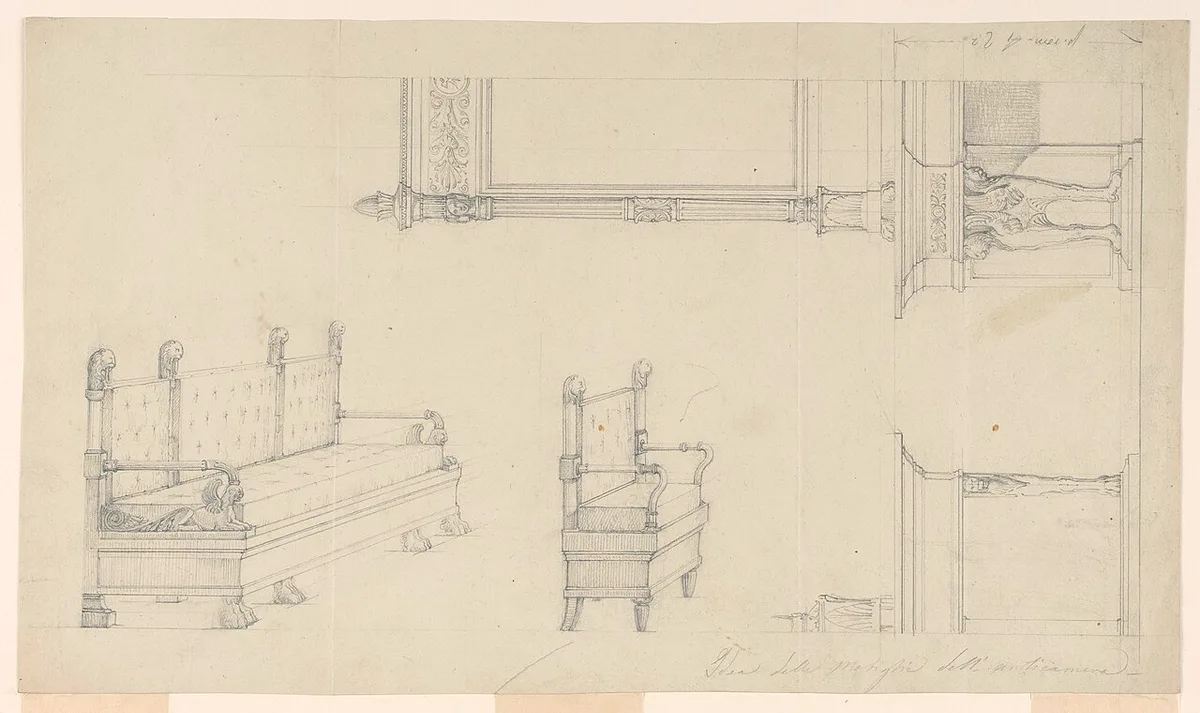
Image source: Wikimedia Commons / Unknown artistUnknown artist
Weight capacity varies by frame. Kiln-dried hardwood frames hold 250 to 300 pounds per seat. Engineered wood frames rate lower.
Check the spec sheet. Overloading causes sag within months.
Who Should Choose a Low Sofa—and Who Shouldn't
Small-space buyers gain the most. A 72-inch low sofa fits where an 84-inch standard blocks traffic. The visual openness makes a 400-square-foot living room feel larger.
Renters moving frequently appreciate lighter frames.
Urban apartment dwellers face narrow stairwells. Low sofas often ship in boxes that fit tight turns. Some assemble inside the room.
That saves removal fees at move-out.
Loungers and nappers prefer the deep seat. The low back lets you stretch out fully. Add a bolster pillow for neck support.
Movie nights and afternoon naps work well.
Taller users struggle. A 6'2" person sits with knees well above hips. Standing requires momentum.
Hip and knee joints take the load. If you have arthritis or limited mobility, avoid seats below 17 inches.
Older adults need higher seats. The Americans with Disabilities Act suggests 17 to 19 inches for accessible seating. Low sofas fall short.
Consider a standard sofa with a firm cushion instead.
Families with young children find low sofas accessible. Toddlers climb on and off easily. Falls from 15 inches hurt less than from 19 inches.
Stain-resistant fabric matters more than height here.
Low Sofa vs. Standard Sofa: Decision Guide
Low-profile vs. mid-century lounge vs. standard sofa comparisons reveal tradeoffs. Use this framework to match your priorities.
| Factor | Low Sofa (14–16") | Standard Sofa (17–19") |
|---|---|---|
| Seat height | 14–16 in | 17–19 in |
| Back height | 24–30 in | 34–40 in |
| Visual weight | Light | Substantial |
| Ease of standing | Harder | Easier |
| Lounging comfort | Better | Good with ottoman |
| Small room fit | Excellent | Tight |
| Accessibility | Poor | Meets ADA |
| Shipping size | Compact | Larger |
Mid-century lounge sofas sit between the two. Seat height often hits 16 to 17 inches. Back height reaches 30 to 34 inches.
Arms slope lower than standard. They suit average-height adults who want style plus some support.
If you prioritize room flow, choose low. If you prioritize easy sitting and standing, choose standard. If you want both, test a mid-century lounge.
Measure your favorite chair at home. Match that seat height.
Delivery matters too. Low sofas often ship compressed in boxes. Standard sofas may need a freight elevator.
Measure your doorway, hallway, and stair clearance. Add four inches for maneuvering.

Image source: Wikimedia Commons / Roman Eisele (CC BY-SA)
Mistakes to Avoid When Choosing or Using a Low Sofa
Comfort, support, safety, getting up, these areas trap buyers. First mistake: buying on aesthetics alone. A beautiful low sofa that leaves your back aching becomes an expensive mistake.
Sit for fifteen minutes minimum.
Second mistake: ignoring user height. A 5'4" person fits a 15-inch seat. A 6'0" person does not.
Shop for the primary user. Compromise with a 16-inch seat if heights differ.
Third mistake: skipping lumbar support. Low backs offer none. Add a dedicated lumbar pillow.
Look for one with a removable cover. Memory foam holds shape better than fiber.
Fourth mistake: assuming all foam feels the same. Soft foam bottoms out in six months. High-resilience foam (2.5 lb density or higher) lasts years.
Ask for the foam spec. Reputable brands publish it.
Fifth mistake: forgetting clearance for cleaning. Four inches blocks most vacuums. Seven inches fits upright cleaners.
Measure your cleaning tools. Plan for dust bunnies.
Sixth mistake: overlooking weight limits. Two adults on a 300-pound-rated loveseat stress the frame. Check per-seat ratings.
Distribute weight evenly. Avoid jumping or concentrated loads.
Seventh mistake: pairing with mismatched seating. A low sofa beside a high armchair creates visual disjoint. Keep seat heights within two inches.
Use matching ottoman height to bridge the gap.
Eighth mistake: expecting formal posture support. Low sofas encourage slumping. They work for casual living rooms.
They fail in home offices or formal sitting areas. Choose the right tool for the room's purpose.
Costs, Sizing, and Comfort Tradeoffs Before You Buy
Low sofas usually cost less than standard models. Less foam, less fabric, and a smaller frame all trim material costs. You'll often save 15 to 30 percent on a comparable low-profile piece.
Shipping drops too, since compressed boxes weigh less and ride standard couriers.
Cheap isn't the same as smart value, though. A budget low sofa with soft, low-density foam sags inside a year. Then you're shopping all over again.
Spending a little more on high-resilience foam pays you back over time.
Sizing is where most buyers slip up. Measure your walkways first and leave at least 30 inches of clear path around the piece. If the room is tight, a two-seater often beats a cramped three-seater.
That's why loveseats win in tight rooms.
Here's a rough price-and-fit snapshot:
| Sofa type | Typical width | Seat height | Price range |
|---|---|---|---|
| Low loveseat | 48-60 in | 14-16 in | $400-$900 |
| Low 3-seater | 72-84 in | 14-16 in | $700-$1,800 |
| Standard 3-seater | 78-90 in | 17-19 in | $800-$2,200 |
Comfort comes down to your body and habits. If you lounge often, a low seat with a deep cushion feels great. If you sit upright to work, add a firmer cushion and a lumbar pillow.
And if standing up from a low seat feels like a workout, a lift recliner may serve you far better. As of 2026, most direct-to-consumer brands list compressed seat height on the spec sheet, so check it before you commit.
Frequently Asked Questions
Are low sofas comfortable?
Low sofas can be very comfortable for lounging. The deep seat and low back encourage a relaxed, reclined posture. They're less comfortable for upright sitting or long work sessions.
If you like curling up with a book or the TV, you'll probably enjoy one.
How low should a sofa seat be?
Aim for a height that lets your feet rest flat on the floor. Most adults sit comfortably at 16 to 18 inches. Below 15 inches suits shorter users or dedicated loungers.
For easier transfers, the ADA Standards for Accessible Design point toward 17 to 19 inches.
Can you add height to a low sofa?
Yes, but the options are limited. A firm topper or thicker cushions add a small lift. Furniture risers under the legs raise the whole frame a few inches.
Both change the look, so test before committing. Reupholstering gives the cleanest result but costs more.
Do low sofas hurt your back?
They can, if you sit upright for hours. Low backs offer little lumbar support, so your spine tends to slump. A firm lumbar pillow fixes most of that.
If you already deal with back pain, a supportive leather recliner sofa might be the smarter pick.
Are low sofas good for small rooms?
Low sofas are ideal for small rooms. They open up the space and leave more wall showing. A compact frame also frees floor room in a studio.
And if you like putting your feet up, you can learn how power reclining sofas work before pairing one with your setup.