
What makes a sofa comfortable? Most people assume it's plush cushions or a high price, then get let down months later when the seat goes flat and their back aches. The truth is far more specific than that.
Comfort comes from a few measurements and materials that fit your body.
Manufacturer specs point to one number above the rest: foam density, measured in pounds per cubic foot. Anything under about 1.8 lb/ft³ tends to sag quickly, while 2.0 and up holds its shape. Comfort gets built from the inside out.
Let's look at what actually drives it.
What Makes a Sofa Comfortable?
A comfortable sofa supports your body in a neutral sitting position. Seat depth and height matter most. The backrest should reach your lower spine.
Foam density around 1.8 to 2.5 lb/ft³ resists sagging. A sturdy frame keeps it all stable for years.
Why Sofa Comfort Is Personal, Not One-Size-Fits-All
The same sofa can feel perfect to your partner and miserable to you. That's not bad luck. Comfort depends on your height, weight, and how you really sit.
Aggregate buyer reviews show one pattern again and again. Most comfort complaints are really fit complaints. A seat that's too deep leaves a shorter person slouching with no back support.
A seat that's too shallow leaves a tall person perched on the edge.
Your body isn't average, and neither is anyone else's. So the goal isn't the "best" sofa in some ranking. It's the one that fits you.
Different shapes and styles suit different bodies and rooms.
Here's how the variables stack up:
- Height decides whether your feet reach the floor.
- Weight decides how dense the foam needs to be.
- Sitting style decides the seat depth you'll love.
- Any back trouble raises the bar on lumbar support.
Use these four to filter everything else. If you're tall, start with depth and back height. If you're petite, put seat height first.
If your back complains, don't even look at cushions until you've checked the support underneath.
Comfort isn't one feature you shop for. It's a match between the sofa and the person in it. Once you see it that way, the rest of this turns into a simple checklist.
The Four Seat Measurements That Decide Your Comfort
Four numbers tell you almost everything about how a sofa will feel. Skip the total width of the piece for now. Focus on the seat itself.
These are the four that matter, with typical ranges as of 2026:
| Measurement | Typical range | Why it matters |
|---|---|---|
| Seat height | 17 to 21 in (43 to 53 cm) | Feet flat on floor, easier to stand |
| Seat depth | 20 to 24 in (50 to 60 cm) | Thigh support without slouching |
| Back height | 18 to 22 in above seat | Where support meets your spine |
| Seat width per person | ~22 in (56 cm) | Room to shift without feeling cramped |
Start with seat height. If your feet dangle, no cushion fixes that. Aim for a height where your knees sit near 90 degrees.
Then check depth. This is the one people get wrong. Sit all the way back.
If there's a big gap behind your knees, the seat is too deep for you. A pillow helps, but the right depth beats a workaround.
Back height decides where support lands. A lower back wants a taller rest that reaches the lumbar curve.
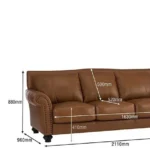
For tighter rooms, sizing matters even more. If you need the full picture, this complete size rundown lays out standard and sectional dimensions side by side.
Measure twice, then tape the numbers on your floor. Sit inside that outline and feel how it really works.
What's Inside: Frame, Suspension, Foam, and Fill
Comfort is a stack. The frame sits at the bottom, then suspension, then foam or fill, then fabric on top. Each layer either supports you or lets you sink.
If you want every part clearly named, start there. Here's what each layer does for comfort.
The frame is the skeleton. Kiln-dried hardwood holds up for decades. Cheap engineered wood flexes, creaks, and sags.
Always ask what the frame is made of.
Suspension is the hidden hero. Eight-way hand-tied springs feel the most supportive and last the longest. Sinuous zigzag springs are common and fine for most people.
Elastic webbing costs less and softens over time.
Then comes the cushion core. This is where foam density matters most. Foam gets measured under standards like ASTM D3574.
Density in pounds per cubic foot predicts how long it holds its shape.
The way foam gets tested isn't glamorous. But it's why two sofas can feel identical in a store and age completely differently.
Fill on top of the foam changes the whole feel:
- High-resilience foam: supportive, springs back, holds shape.
- Memory foam: soft, slow to rebound, sleeps warm.
- Down or feather: sink-in plush, needs constant fluffing.
- Fiberfill: soft and cheap, flattens fastest.
The best seats pair a supportive core with a softer top layer. Support below, softness above. That combo is the quiet secret behind a sofa that feels great today and still feels great in year five.
Firm vs Soft, Foam vs Down vs Fiberfill
Firm and soft aren't better or worse. They're right or wrong for a specific body and habit. Here's the honest breakdown.
Firm cushions (higher density, less give):
- Best for heavier people who need support.
- Hold their shape for years.
- Feel too hard if you love to sink in.
Soft cushions (lower density or a down topper):
- Best for lighter people and nappers.
- Feel plush right away.
- Sag and need fluffing sooner.
Now the fill debate. It comes down to feel versus maintenance.
Foam is the low-fuss choice. It springs back and needs almost no care. Density is the whole story: above 1.8 lb/ft³ is decent, and 2.0 to 2.5 is the sweet spot for daily use.
Down and feather feel luxurious. You sink in and it hugs you. The tradeoff is constant fluffing and cushions that flatten if ignored.
Great for a formal room, annoying in a busy family space.
Fiberfill sits in the middle. It's soft and affordable but packs down fastest. Fine for a guest room, less ideal for the sofa you live on.
Memory foam divides people. Some love the slow, cradling sink. Others find it too warm.
If you run hot, skip it.
Match the pick to your body and habits. Heavy and busy? Go firm foam.
Light and love lounging? Try a foam core with a down topper. That gives support below and softness above, the combo most people end up happiest with.
Always sit for a full five minutes in the store. Thirty seconds tells you nothing.
The Right Sofa for Your Body and Your Daily Life
This is where it all comes together. Take your measurements and habits, then follow the branch that fits.
If you're tall (over 6 feet):
- Prioritize seat depth of 22 to 24 inches.
- Look for a taller backrest that reaches your shoulders.
- Skip shallow, upright styles that leave you perched.
If you're petite:
- Choose a shallower seat around 20 inches.
- Aim for a lower height, near 17 to 18 inches, so feet rest flat.
- Watch the back height, since a tall one can swallow you.
If you have back pain:
- Firm lumbar support is non-negotiable.
- Sit fully back with your spine against the rest.
- Avoid ultra-soft seats that let you sink into a slouch.
If you lounge and nap:
- Lean toward deeper seats and softer tops.
- Consider seating that reclines for you if you love putting your feet up.
If your space is small:
- A divan's slim profile saves room without killing comfort.
- Still check depth, so you don't trade space for slouching.
Now layer in daily life. Kids and pets point to tougher, higher-density foam and forgiving fabric. A formal sitting room can get away with softer down fill.
The pattern is simple. Match depth and height to your body first. Then match fill and fabric to your habits.
Do that, and comfort stops being a gamble. It becomes something you can predict before the sofa even reaches your door.
Sofa Comfort FAQs
How long does a sofa break-in period last?
Most seats need two to four weeks to soften slightly. Firm foam feels hardest on day one. Aggregate reviews show the fibers relax after regular use.
If it stays rigid after a month, the density may just be higher than you prefer.
Can sagging cushions be fixed without replacing the sofa?
Sometimes. Foam inserts or new fiberfill can revive a flat seat. But if the frame or springs failed, new cushions won't fix the root problem.
Check the suspension first before spending money on inserts.
What foam density works best for daily use?
Aim for 1.8 to 2.5 lb per cubic foot. Anything below 1.8 tends to bottom out fast. Higher density costs more but holds its shape for years under regular sitting.
Manufacturer specs list density on the tag or product page.
Does seat depth matter more than back height?
Depth decides whether your back touches the support. Back height decides where that support lands. Tall sitters need both measurements right.
Shorter sitters usually feel depth first because their legs don't reach the floor otherwise.
Are down cushions worth the extra upkeep?
Only if you don't mind plumping cushions often. Down feels plush and soft against your back. Foam and fiberfill hold their shape with almost no effort.
Match the fill to your tolerance for maintenance.
How do I know if a seat is too deep?
Sit all the way back. If your knees hover off the front edge, the seat is too deep. You will either slouch or perch on the edge.
That gap tells you everything about the fit. A pillow can hide the gap, but it won't fix the geometry.
Your Sofa Comfort Decision Guide
Start with your body, not the showroom.
Measure your ideal seat height. Sit on a chair where your feet rest flat and knees bend near 90 degrees. Note that height.
If the sofa seat is higher, standing gets harder. Lower, and your thighs press awkwardly.
Test depth next. Sit all the way back on your current sofa or a store model. A fist-sized gap behind your knees means the seat runs too deep.
No gap means it fits.
Match depth to your height:
- Over 6 feet: choose 22 to 24 inches. A shallow seat leaves you perched.
- Under 5 feet 4 inches: choose 20 inches or less. Deep seats force a slouch.
- Between those heights: 21 to 22 inches usually works.
Pick fill based on habits:
- Daily heavy use: firm high-resilience foam, density above 2.0 lb/ft³.
- Lounging and napping: foam core with a down topper. Support below, softness above.
- Guest room or light use: fiberfill is fine.
Check the hidden layers before buying. Ask about the frame and suspension. Hardwood and eight-way springs last longest.
Webbing softens over time.
Sit for five full minutes. Thirty seconds tells you nothing. If your back, hips, or thighs protest in the store, they will protest at home too.
If every number lines up with your body, you've found the right sofa. Comfort stops being a guess when you measure first.