

Your baby is grabbing at your spoon, leaning forward at dinner, and suddenly mealtimes feel like a wrestling match. The real question behind when do babies use high chair isn’t really about the calendar. It’s about whether your little one can sit up steadily and hold their head high without wobbling.
Most babies are ready somewhere between 4 and 6 months, once solid foods enter the picture. The U.S. Consumer Product Safety Commission sets mandatory safety rules for every high chair sold in the country, covering stability and restraints.
Let’s break down exactly what “ready” looks like, so you’re never guessing.
When Do Babies Use High Chair
Most babies start using a high chair around 4 to 6 months old. By then, they usually sit up on their own. Their head and neck stay steady too.
Most have also started solid foods by this stage. If your baby still wobbles or slumps, wait a few more weeks.
Why Babies Need a High Chair

A high chair does three jobs at once. It holds your baby upright, keeps them safe during meals, and gives them a stable spot to practice eating. That sounds simple, but the details matter more than most parents expect.
Good seated posture is the foundation of safe eating. When a baby sits upright with their feet supported, they swallow more safely and tire less quickly. Slumping or leaning back raises the choking risk.
If you’ve ever shopped for adult seating with supportive seat design in mind, the same principle applies here, just scaled way down.
The Consumer Product Safety Commission treats high chairs as a serious safety category. Per CPSC testing standards, every chair sold in the U.S. must meet rules for stability, restraint, and tip-over resistance. That’s why the flimsy hand-me-down in the attic deserves a hard second look.
Here’s the simple logic we’d use before anything else:
- If your baby sits steadily and shows real interest in food, a high chair makes sense now.
- If they still slump or need constant support, hold off and focus on floor play and tummy time.
- If mealtimes have turned chaotic and unsafe, the chair earns its place right away.
Think of it less as furniture and more as a tool that supports a milestone. The right seat grows with your child, from those first messy spoonfuls to confident self-feeding.
Readiness Checklist: Age, Weight, and Sitting Ability
Age alone won’t tell you when your baby is ready. Physical signs will. Run through this checklist before that first meal in the chair.
Can your baby sit up without help?
If your baby can sit upright for several minutes without toppling, they’re likely ready. This skill is called trunk control, and it’s the biggest green light. A baby who still folds sideways needs more time.
Is head and neck control solid?
Your baby needs to hold their head level and steady before any chair meal. Weak neck muscles plus a reclined seat is a choking setup waiting to happen. Steady head control matters even more than sitting for a moment.
Has solid food started?
Once solids are on the menu, a high chair becomes genuinely useful. Most babies begin solids around 6 months, and the chair pairs naturally with that shift. If solids haven’t started, the chair can usually wait too.
What about weight and seat height?
Check the seat height so their feet rest flat on a footrest, not dangling in the air. Dangling legs make it harder to sit steadily. For sizing the chair to your child, checking seat measurements helps more than eyeballing it.
As of 2026, most standard high chairs list a maximum weight between 33 and 50 lbs and a starting age around 6 months, though exact numbers vary by brand. Always confirm the figures printed on your specific model.
Types of High Chairs and When Each Fits
Not all high chairs are built the same, and the type you pick shapes how long you’ll use it. Here’s how the main options stack up.
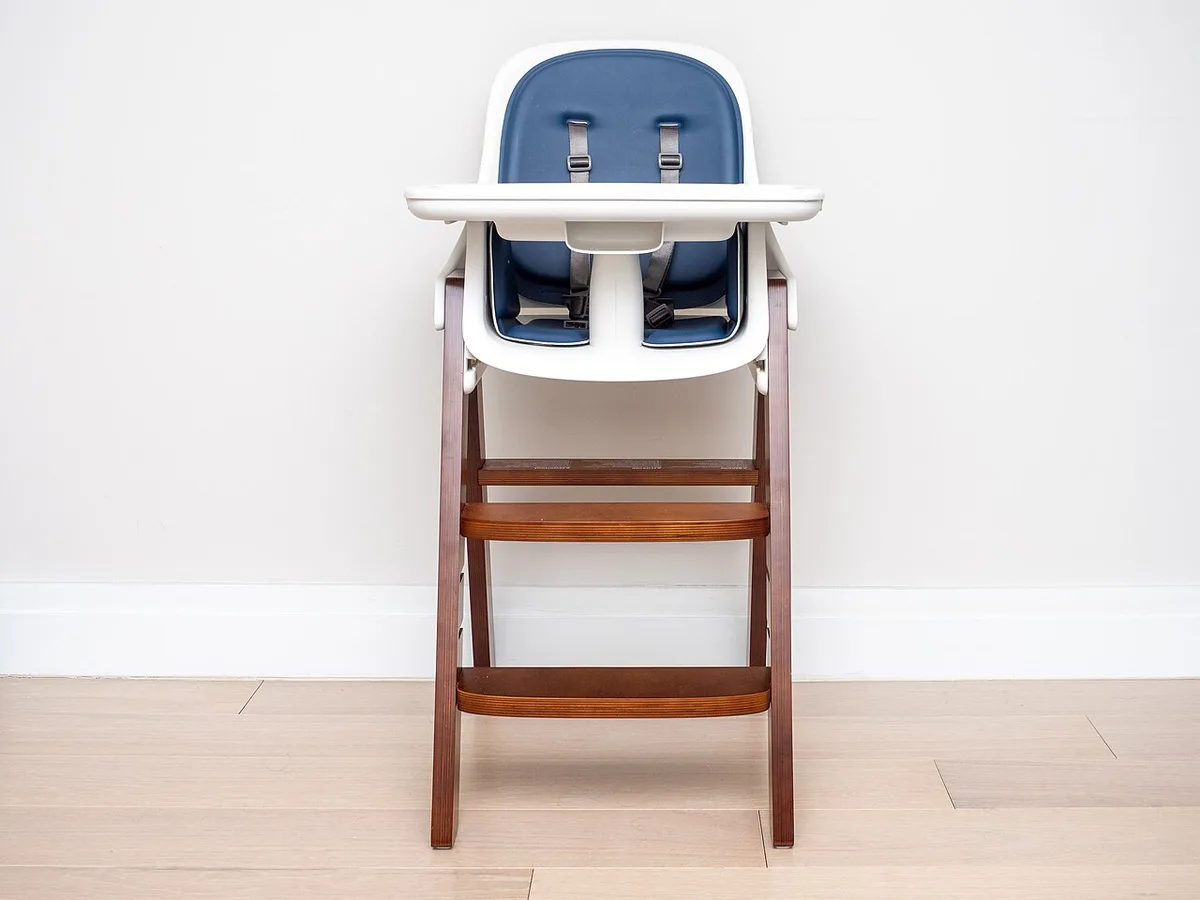
Image source: Wikimedia Commons / ajay_suresh (CC BY)
Traditional high chairs
These are the classic tall chairs with a tray and a five-point harness. They suit babies from around 6 months to age 3. Best for families who want a dedicated, stable feeding spot.
Convertible high chairs
Convertible models adjust as your child grows, often shifting from high chair to toddler seat to a regular chair. Manufacturers like Stokke build these to last for years. Best if you’d rather buy once and skip the upgrade cycle.
Booster seats
A booster straps onto a regular dining chair and raises your baby to table height. It’s compact and travel-friendly. Best for small spaces, restaurants, and babies who’ve outgrown the tall-chair stage.
Space-saving and travel chairs
These fold flat or clamp onto a table edge. They’re great for tight kitchens and trips. Best for on-the-go families, though they usually offer less padding and support.
Special-needs seating
Some kids need extra postural support to eat safely. Adaptive chairs, including seating built for medical needs, offer headrests, firm positioning, and secure trays. Best for children working with a feeding therapist or occupational therapist.
A quick rule of thumb: tight on space, a booster or travel chair wins. Want longevity, a convertible earns its price. Extra support needs, skip the standard models entirely.
Step-by-Step Setup and Adjustment
Once you know your baby’s ready, getting the chair dialed in takes about ten minutes. Follow these steps for a safe, comfortable fit.
1. Place the chair on a flat surface
Set it on level ground, away from walls the baby can push off. Keep it clear of cords or tablecloths they could grab. A stable base prevents most tip-over accidents.
2. Adjust the seat height and footrest
Raise or lower the seat so your baby sits at a comfortable table height. Then set the footrest so their feet rest flat and supported. Don’t skip this, since dangling legs lead to slouching.
3. Fit the harness snugly
Buckle the five-point harness every single time, even for a two-minute snack. You should be able to slip only two fingers under each strap. Loose straps do nothing.
Overly tight ones dig in.
4. Position the tray correctly
Slide the tray in until it clicks, leaving a small gap at your baby’s tummy. Too tight and it crowds them. Too loose and food ends up on the floor.
If crumbs build up, taking the tray off makes cleaning far easier.
5. Stay within arm’s reach
Never leave your baby unattended in the chair, even when strapped in. Keep hot food and drinks well back from the edge. Park the chair away from stairs or counters they could kick off.
Do a quick wobble test before each meal. Push gently on the chair. If it rocks or shifts, fix the surface before you buckle your baby in.
Common Mistakes and How to Avoid Them
Most high chair problems come down to a handful of avoidable slip-ups. Here’s what to watch for.
Starting too early
Propping a wobbly baby in a chair before they can sit up is the most common error. It strains their back and raises the choking risk. If they can’t sit unsupported on the floor, they’re not ready for the chair.
Leaving the harness loose or unbuckled
A loose or skipped harness is how babies slip, slide, or climb out. Buckle the five-point every time, snug enough for just two fingers of slack. Consistency matters more than convenience.
Ignoring the footrest
A footrest isn’t decoration. Feet dangling in the air make it harder to sit steadily and can lead to slouching. If your model’s footrest is stuck or uncomfortable, recovering worn cushions or checking the height settings can fix the fit.
Parking the chair on a soft or sloped surface
Rugs, cushions, and uneven floors make any chair wobble. Always set it on a firm, flat spot. This one habit prevents a surprising number of tip-overs.
Skipping the weight and age check
Every chair has limits. Once your child tops the maximum weight or starts climbing out, it’s time to move on. For knowing when to size up, how tall the seat sits and your child’s height are your guides.
Forgetting daily cleaning
Trays and straps trap food fast. Wipe them down after every meal so mold and sticky buildup don’t set in.
Fix these and you’ve cleared nearly every risk the CPSC flags in its injury reports.
Transitioning to a Booster Seat or Regular Chair
Most kids outgrow the high chair somewhere between 18 months and 3 years. The calendar isn’t the real trigger, though. Fit and behavior are.
Signs your child has outgrown the chair
Watch for these:
- Their shoulders sit above the top edge of the tray
- They’ve hit the maximum weight, usually 33 to 50 lbs
- They unbuckle the harness or climb out
- Their knees no longer bend comfortably at the seat edge
Any one of those and it’s time to move on. If your child still slides sideways without the harness, keep them in the high chair a while longer.
Booster or regular chair next?
If your child sits steadily but still needs containment, a booster bridges the gap. It straps onto a dining chair and raises them to table height. Best for tight kitchens, restaurants, and travel.
If they can sit through a whole meal without sliding around, skip straight to a firm seat cushion at the table. Their feet should rest flat, either on the floor or a footrest.
One safety detail people miss: a booster needs two points of attachment, a strap around the chair back and one under the seat, plus the child’s own harness. One strap alone won’t hold.
Frequently Asked Questions
At what age do babies stop using a high chair?
Most children move on between 2 and 3 years old. Judge the shoulder height and weight limit, not the birthday. A toddler who climbs out unassisted is telling you they’re done.
Can a 3 month old use a high chair?
No. A 3 month old doesn’t have the head or trunk control to sit safely. Waiting for independent sitting, usually around 6 months, protects their airway and their spine.
Is a booster seat as safe as a high chair?
A booster is safe when both attachment straps are secured and the harness is snug. It offers less structure than a full chair, so it suits kids who already sit steadily on their own.
How long should a baby stay in a high chair per meal?
Aim for 20 to 30 minutes. Longer stretches make babies restless and encourage slouching. When they’re finished, they’re finished.
Are secondhand high chairs safe to use?
Search the model in the CPSC recall database first. Then check for cracks, missing parts, and a working five-point harness. Older chairs predate current stability testing, so when in doubt, buy new.


