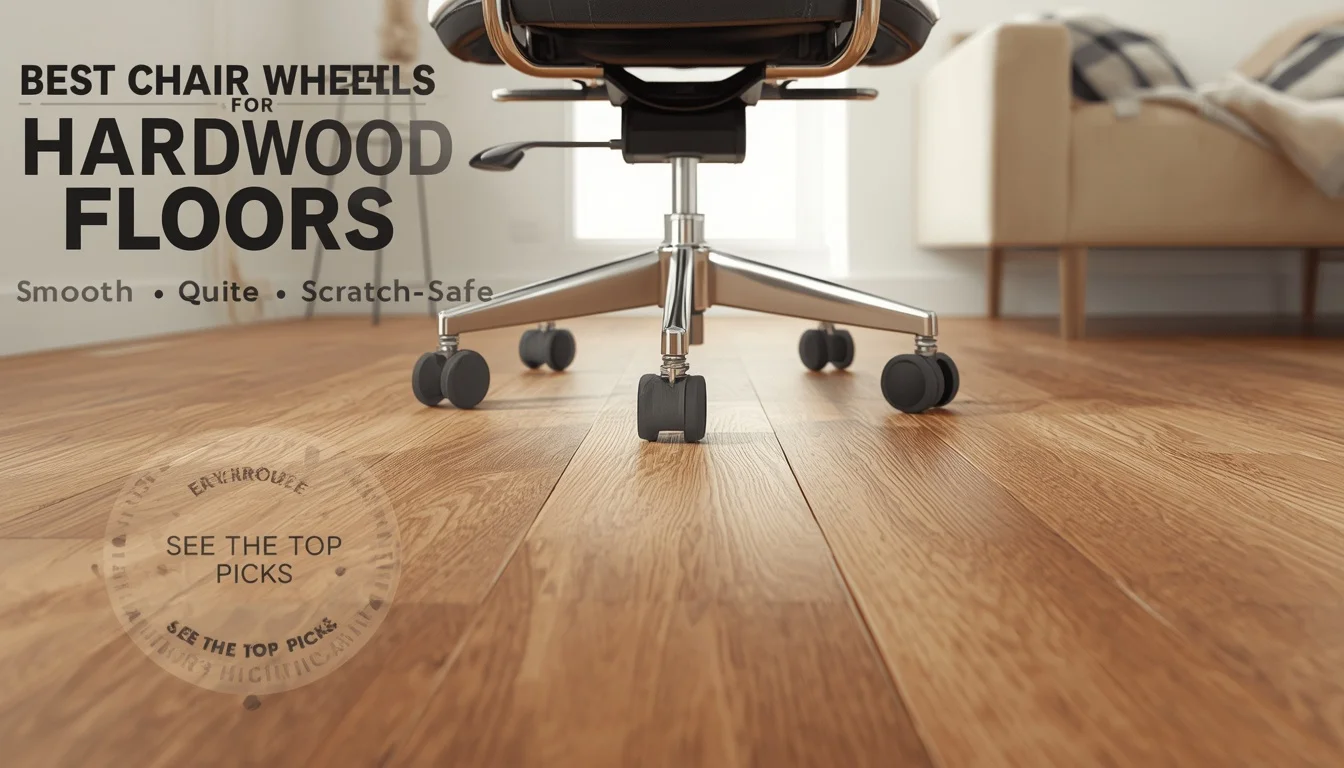

Image source: Bing (Web (fair-use with source credit))
You’ve probably noticed your office chair groaning and scratching every time you roll on those pristine hardwood floors. Finding the best chair wheels for hardwood floors can feel overwhelming because so many options claim to protect your floors while few actually deliver. Most cheap plastic casters leave ugly gouges, and some “soft” rubber wheels still discolor your finish over time.
According to BIFMA (Business + Institutional Furniture Manufacturers Association) testing, caster wheels for hard floors must meet specific rolling resistance and load capacity standards to avoid damaging wood surfaces. Before we dive into materials and designs, let’s explore why getting this detail right matters so much for your floors and your chair’s performance.
Quick Answer
The best chair wheels for hardwood floors are polyurethane casters with a soft durometer rating. Look for a Shore A hardness around 85A. Choose a grip-ring stem for a secure fit.
Always match stem diameter to your chair tube, typically 3⁄8 inch or 1⁄2 inch. Verify the load rating covers your chair plus occupant weight.
Why Hardwood-Floor-Safe Chair Casters Actually Matter
Your hardwood floor is likely one of the most valuable surfaces in your home. Even minor scratches accumulate quickly, especially under a frequently moved office chair. Hard plastic casters act like tiny chisels, digging into softer woods like pine or oak.
Rubber wheels can smear and stain certain finishes, leaving behind dark marks that are nearly impossible to buff out.
Wrong caster choices don’t just affect aesthetics. They increase rolling effort, which raises fatigue and can worsen posture during long work sessions. A chair that drags instead of glides smoothly undermines the ergonomics you paid for.
If you recently upgraded your [Best Office Chair for Back Pain in 2026], matching the right casters ensures you get the full comfort and support you intended.
Switching to floor-safe casters is usually a quick fix. You simply pop out the old stems and press in the new ones. The payoff is immediate.
Your chair rolls quieter and smoother, and your floors stay unmarked.
What Happens With Wrong Casters?
- Hard plastic or nylon casters scratch, gouge, and dull finishes.
- Cheap rubber compounds can chemically react with urethane or wax sealants.
- Small-diameter wheels sink into floor imperfections, causing bumps and vibrations.
- Loose or worn stems wobble, making the chair feel unstable.
Investing in proper casters protects both your flooring and your chair’s performance. It also preserves your home’s value. Refinishing hardwood floors is expensive and disruptive.
Preventive care through the right wheels is far simpler.
The Quick Answer: What Type of Caster Protects Hardwood Best
If you want a straightforward recommendation, the answer is polyurethane caster wheels with a soft durometer rating and a grip-ring stem. Polyurethane combines resilience with a slight give, allowing the wheel to absorb minor floor irregularities without marring the surface. The grip-ring stem locks securely into the chair’s caster tube, preventing accidental dislodgement.
Many users mistakenly choose dual-wheel casters for extra stability. While dual wheels do spread load better, they can be overkill for light office chairs. They also raise the chair height slightly, which may interfere with desk clearance.
For most home offices, a single wide-track polyurethane wheel in the correct stem size is sufficient.
Another common error is assuming all “soft” wheels are safe. Some soft rubber wheels are designed for carpet, not hard floors. Their tread patterns can trap debris and scratch wood.
Always check the manufacturer’s label or product description for “hard floor” or “laminate safe” designations.
Key Selection Criteria at a Glance
| Feature | What to Look For | Why It Matters |
|---|---|---|
| Material | Polyurethane (PU) with ~85A Shore A hardness | Balances grip, smoothness, and floor safety |
| Stem Type | Grip-ring (pull-out) for secure retention | Prevents stem loss and caster wobble |
| Stem Diameter | Match chair tube: 3⁄8″ (standard) or 1⁄2″ (heavy-duty) | Ensures proper fit and load transfer |
| Wheel Width | Wide track (≈1″ or more) distributes weight | Reduces pressure points that can indent wood |
| Locking Option | Non-locking for daily rolling; locking for stability | Choose based on whether you need fixed positions |
These criteria form the foundation of your search. Next, we’ll unpack how different materials interact with your floors so you can make an informed choice.
How Caster Wheel Materials Interact with Hardwood Floors
Not all soft-looking wheels are created equal. The material composition determines how a caster will behave on hardwood. Some materials prioritize quiet rolling but compromise on durability.
Others offer long life but risk chemical reactions with floor finishes. Understanding these interactions helps you avoid hidden costs down the line.
Hardwood floors come with various finishes: polyurethane, wax, oil, or acrylic. Each finish has different tolerances for abrasion and chemical exposure. A caster that’s safe on sealed oak might still mark a freshly oiled walnut floor.
Therefore, material selection should consider both the wheel compound and your floor’s topcoat.
Polyurethane remains the industry standard for a reason. It resists abrasion better than most rubbers while maintaining a flexible contact patch. This flexibility allows the wheel to conform microscopically to floor texture, reducing point-load stress.
Over time, high-quality PU shows minimal wear and rarely leaves residue.
Material Interaction Breakdown
- Hard Plastic / Nylon: Highest durability but highest scratch risk. Can crack under heavy loads. Avoid on finished hardwood.
- Standard Rubber: Softer, quieter, but prone to flattening and chemical staining. Many formulations contain sulfur compounds that oxidize and discolor wood.
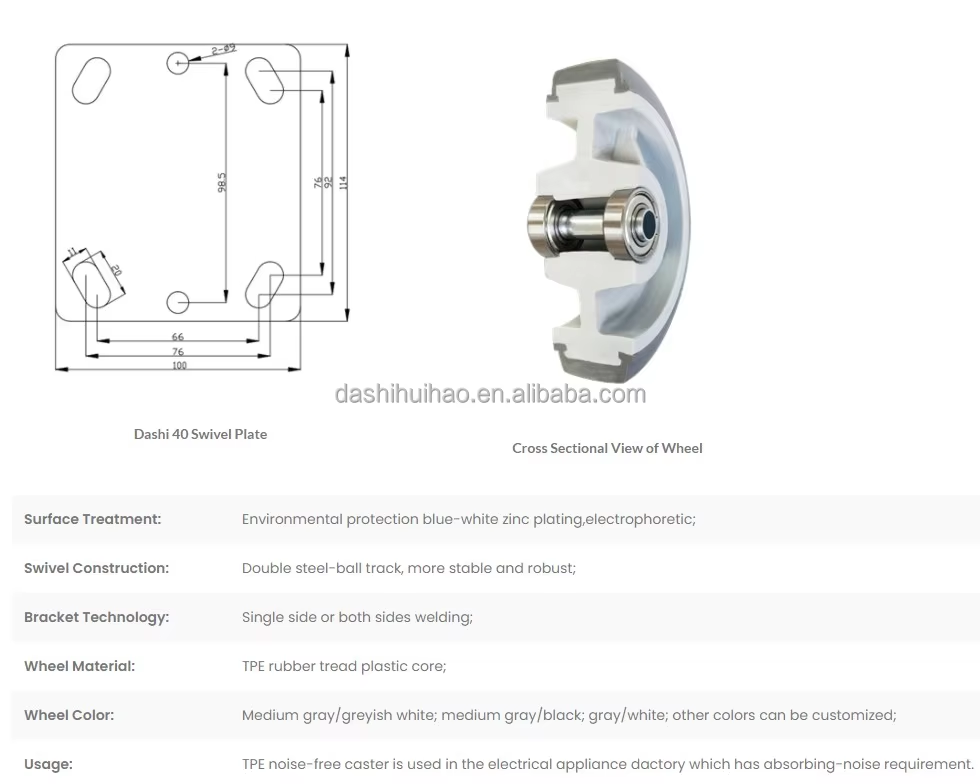
- Thermoplastic Elastomer (TPE): Often marketed as “eco-friendly.” Offers good floor safety but may degrade faster under constant rolling loads.
- Polyurethane (PU): Optimal balance. Resists oils, chemicals, and abrasion. Available in controlled durometers for specific floor types.
For the best results, choose PU casters specifically labeled for hard floors. Verify the durometer rating (Shore A) falls within the 80, 90 range for typical residential hardwood. Lower numbers indicate softer wheels, which are gentler on delicate finishes but may wear quicker under heavy weights.
Source: Bing (Web (fair-use with source credit))
Polyurethane vs. Rubber vs. TPE Caster Materials Compared
When replacing caster wheels, the material choice often comes down to polyurethane, rubber, or thermoplastic elastomer (TPE). Each offers distinct trade-offs in floor safety, durability, noise, and cost. Rubber was once the default for “soft” casters, but many modern formulations have improved or been replaced by PU blends.
TPE is a newer entrant that aims to combine eco-friendliness with moderate performance.
Polyurethane generally outperforms both alternatives in side-by-side comparisons for hardwood floor applications. Its resistance to cutting and gouging is superior to standard rubber. Rubber tends to compress and tear over time, especially on uneven floors.
TPE, while non-marking, often lacks the structural integrity needed for daily heavy rolling. It can deform under concentrated weight, leading to uneven wear and potential floor marking from exposed internal components.
Weight capacity and environmental factors also influence material selection. Rubber can become brittle in cold temperatures and soft in heat, altering its floor interaction. Polyurethane maintains consistent properties across a broader temperature range.
This stability makes it a reliable choice for homes without climate-controlled offices.
Performance Comparison Table
| Material | Floor Safety | Durability | Noise Level | Cost Range (per set of 5) | Best For |
|---|---|---|---|---|---|
| Polyurethane (PU) | Excellent | High | Low | $15–$40 | Most hardwood floors; daily office use |
| Rubber | Good to Moderate | Moderate | Very Low | $10–$25 | Lightweight chairs; occasional use |
| TPE | Good | Low to Moderate | Low | $12–$30 | Eco-conscious buyers; light rolling |
| Hard Plastic/Nylon | Poor | Very High | High | $5–$15 | Carpeted areas only; not recommended for hardwood |
Note that prices vary by brand, stem type, and wheel diameter. Budget options may compromise on bearing quality, leading to rough rolling despite a soft exterior. Investing in a reputable brand often yields smoother operation and longer lifespan.
If you’re considering a complete chair upgrade rather than just new casters, reviewing guides on [Best Desk Chairs] or [Best WFH Chairs] can help you match new wheels to your overall seating strategy.
Single-Wheel vs. Dual-Wheel Caster Design
Caster wheels come in two primary configurations: single-wheel and dual-wheel (tandem). Single-wheel designs feature one central rolling element. Dual-wheel designs have two parallel wheels mounted on a single axle, creating a wider contact footprint.
Both styles can be made from floor-safe materials, but their performance characteristics differ significantly.
Single-wheel casters are simpler and lighter. They tend to roll more freely on smooth surfaces because there’s less rotational mass. However, they concentrate all the chair’s weight onto a narrower strip of the floor.
On softer hardwoods, this higher pressure can lead to denting over time. Single wheels also offer less stability when moving laterally, which can cause wobble on uneven floors.
Dual-wheel casters distribute load across two contact points. This reduces psi (pounds per square inch) on any given spot of flooring, lowering the risk of indentation. The wider stance also improves lateral stability, making the chair feel more planted when you’re leaning or shifting sides.
The trade-off is slightly increased rolling resistance and higher initial cost. Additionally, dual-wheel assemblies are bulkier, which may not fit under low-clearance desks or certain chair bases.
When to Choose Each Design
- Single-wheel: Lighter chairs (under 200 lbs combined), smooth and level floors, limited desk clearance, budget-conscious replacements.
- Dual-wheel: Heavier chairs (200+ lbs), frequent movement, slightly uneven floors, desire for maximum floor protection and stability.
Many premium office chairs now ship with dual-wheel polyurethane casters as standard. This suggests manufacturers recognize the benefit for hard-floor environments. If your chair currently has single-wheel plastic casters, upgrading to dual-wheel PU can transform both comfort and floor safety.
As you evaluate options, remember that the [Best Office Chairs] often pair high-quality bases with compatible caster systems. Matching the caster design to your chair’s weight and usage pattern ensures optimal performance.
Best Caster Wheels for Hardwood Floors by Chair Type and User Need
Selecting the right caster depends heavily on what kind of chair you have and how you use it. A lightweight task chair used occasionally in a home office has different requirements than a heavy ergonomic chair for a 250-pound professional who rolls constantly. Similarly, gaming chairs, standing desk converters, and even certain [Best Gaming Chairs] models may need specialized casters to maintain their floor safety and rolling performance.
Below is a practical guide broken down by common chair categories and user profiles. Each recommendation considers stem type, material, wheel design, and load capacity.
| Chair Type / User Profile | Recommended Caster Specs | Why These Specs Work |
|---|---|---|
| Standard office chair (light duty) | 2″ PU, 85A Shore A, 3⁄8″ grip-ring stem, single wheel | Matches common tube size; soft enough for finished wood; easy glide |
| Heavy ergonomic chair (200–300 lbs) | 2.5″ PU, 90A Shore A, 1⁄2″ grip-ring stem, dual wheel | Larger diameter reduces rolling effort; dual wheel spreads load; sturdy stem prevents bending |
| Gaming chair (frequent reclining) | 2.5″ PU, 85–90A Shore A, 3⁄8″ or 1⁄2″ stem, dual wheel | Supports dynamic movement; dual wheels handle side-to-side shifts without tipping |
| Standing desk converter base | 2″ PU, 90A Shore A, 1⁄2″ straight or grip-ring stem, single or dual | Higher load capacity; stable platform; often heavier units need robust stems |
| Wheelchair or mobility aid | 8″–10″ PU or solid rubber, 1⁄2″ stem, locked swivel | Larger diameter navigates thresholds; solid construction prevents flats; lock prevents drift |
| Lift chair (recliner with casters) | 2″–2.5″ PU, 85A Shore A, 1⁄2″ stem, non-locking or optional brake | Compatible with heavy base; soft roll reduces strain when adjusting position |
If you own a [Best Lift Chair], verifying caster compatibility is essential because these chairs often have larger stem sizes and higher weight capacities. Using the wrong caster can void warranties or create safety hazards.

Source: Bing (Web (fair-use with source credit))
Beyond chair type, consider your floor’s condition. Newly finished hardwood requires the gentlest possible casters (softer durometer, wider track). Older, well-worn floors can tolerate slightly harder wheels but still benefit from PU.
If you rent or are concerned about deposit returns, err on the side of maximum floor protection.
Finally, always compare the caster’s load rating to your total chair weight plus occupant weight. A caster rated for 15 lbs per wheel might fail under a 300-lb user if the chair already weighs 40 lbs. Distribute total weight across the number of casters (usually five) to ensure each unit operates within its safe limit.
Understanding Caster Stems: Grip-Ring vs. Push-In and Size Match
The stem is the part of the caster that inserts into your chair’s base. Getting the stem type and size right matters just as much as choosing the wheel material. A mismatched stem can cause wobbling, unexpected caster loss, or damage to the chair’s thread sockets.
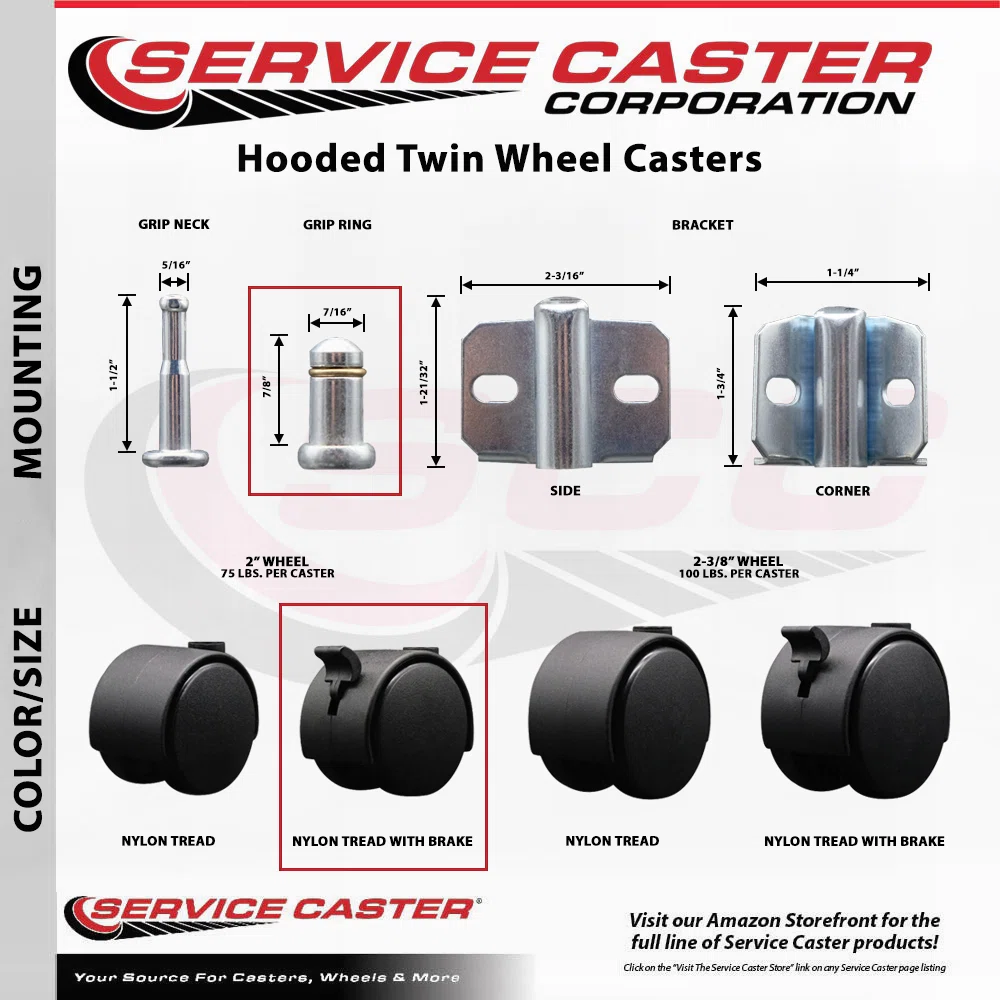
Most office chairs use one of two stem styles: grip-ring or push-in (also called friction-fit). Grip-ring stems feature a metal ring that snaps into a groove on the stem. This ring locks into the caster tube when you pull it back before insertion.
The result is a secure connection that resists pulling out during normal use. Push-in stems rely solely on friction and typically have a smooth shaft. They slide into place but can work loose over time, especially on chairs that see heavy rolling.
Which Stem Type Fits Your Chair?
Source: Bing (Web (fair-use with source credit))
- Grip-ring stem: Preferred for most hardwood floor applications because it stays secure during active rolling. Requires a simple removal tool or pliers to install.
- Push-in stem: Common on budget chairs and some gaming models. Easier to install but more prone to accidental detachment.
Diameter is the other critical measurement. The two standard sizes are 3⁄8 inch (about 9.5 mm) for most task chairs and 1⁄2 inch (about 12.7 mm) for heavier-duty furniture. Some specialty chairs use different sizes, so always measure before buying.
How to Measure Your Current Stem
Remove one existing caster from your chair. Measure the diameter of the stem shaft with a ruler or caliper. If the measurement falls between 3⁄8 and 1⁄2 inch, count how many turns it takes to fully remove it.
A stem that requires twisting to pull out is likely a grip-ring type. A smooth shaft that slides straight out is probably push-in.
Manufacturer specifications from brands like [Best Office Chairs] often list compatible stem types. Checking these specs before purchasing replacements saves time and prevents returns.
How to Remove Old Casters and Install New Floor-Safe Ones
Replacing your chair casters is a straightforward process that takes about ten minutes per wheel. You do not need special tools beyond a pair of pliers or a dedicated caster removal tool. Follow these steps to swap your old casters safely and efficiently.
Step-by-Step Removal and Installation Guide
- Flip the chair upside down on a soft surface like a carpet or towel. This prevents scratches on the base and gives you clear access to all stems.
- Identify your stem type. Check whether each caster uses a grip-ring or push-in design.
- Remove the old caster. For grip-ring stems, grip the stem base firmly and pull straight up. You may need to compress the grip ring slightly with pliers first. For push-in stems, simply pull upward with steady force. If they resist, rock them gently side to side while pulling.
- Clean the caster socket. Wipe inside the tube with a dry cloth to remove dust and debris. Vacuum the area if needed.
- Insert the new caster. For grip-ring stems, compress the ring by squeezing the sides together, insert into the socket, and release. You should hear a click. For push-in stems, align the stem straight and press firmly until it seats fully.
- Test each caster. Turn the chair upright and apply gentle weight to each wheel. Ensure they roll smoothly and do not wobble.
Tips for Stubborn Casters
Old casters can become fused to the socket, especially if plastic has deformed or debris has accumulated. Here are some troubleshooting approaches:
- Apply a small amount of silicone spray or cooking oil around the stem base to loosen corrosion or dirt buildup.
- Use a rubber mallet to gently tap the caster head while pulling the stem.
- For completely seized stems, cut the caster body away with a hacksaw and file the remaining stem piece smooth before inserting the new one.
- Never use excessive force on the chair base itself. This can crack nylon bases or damage weld points.
If your chair is part of a setup where you value overall comfort and support, consider reviewing resources like [Best Gaming Chairs] for guidance on matching accessories to your seating system.
Common Mistakes That Damage Hardwood Floors (And How to Avoid Them)
Even well-intentioned chair upgrades can harm hardwood floors if certain pitfalls are overlooked. Many homeowners replace broken casters without considering floor compatibility. The result is often new wheels that still cause damage, just in different ways.
Mistake #1: Assuming All Soft Wheels Are Floor-Safe
Not every wheel labeled “soft” protects hardwood. Carpet casters have deep treads designed to dig into fibers. On smooth wood, those treads act like tiny teeth that scrape and score the finish.
Always verify that replacement casters are rated for hard floors, not carpet or dual-surface use only.
Mistake #2: Ignoring Stem Compatibility
Installing a push-in caster in a chair designed for grip-ring stems creates instability. The loose fit allows the wheel to shift during rolling, which concentrates stress on small areas of the floor. This wobble can also accelerate wear on the caster socket itself.
Mistake #3: Choosing Oversized Wheels for Low Clearance
Large 3-inch wheels look impressive but may catch on desk edges or floor transitions. When a wheel jams suddenly, the chair lurches forward. This impact can dent softer woods near the impact point.
Match wheel size to your under-desk clearance and typical movement patterns.
Mistake #4: Skipping Load Rating Checks
Underrated casters deform under heavy loads. Deformed wheels develop flat spots that create vibration and impact forces with every roll. These repeated impacts transfer more energy to the floor surface than smooth rolling would.
Calculate your total weight (chair plus occupant) divided by the number of casters to ensure adequate capacity.
Mistake #5: Using Hard Plastic or Nylon on Finished Wood
Some users keep original plastic casters because they look clean and professional. Hard plastics are extremely durable but lack the yielding properties needed for wood protection. Over months of rolling, even light scratches accumulate into visible haze across high-traffic areas.
| Mistake | Consequence | Prevention |
|---|---|---|
| Wrong wheel material for floor type | Scratches, scuff marks, discoloration | Choose polyurethane rated for hard floors |
| Incorrect stem type | Wobbling, uneven rolling pressure | Match grip-ring or push-in to chair design |
| Oversized wheels | Desk clearance issues, impact damage | Select 2 to 2.5 inch diameter for most homes |
| Insufficient load rating | Wheel deformation, impact forces | Calculate total weight ÷ caster count |
| Hard plastic casters retained | Accumulated micro-scratches | Replace all plastic wheels with PU alternatives |
Avoiding these mistakes preserves both your flooring and your chair’s rolling performance. Taking an extra five minutes to verify compatibility pays off immediately.
Maintaining Your Chair Casters to Keep Hardwood Floors Safe
New casters protect your floors on day one. Ongoing maintenance ensures that protection lasts for years. Dust, hair, and debris accumulate around caster stems and wheel axles over time.
This buildup increases rolling resistance and can grind particles into your floor finish.
Regular cleaning prevents these issues. Remove the chair from its primary location once a month. Inspect each caster for visible debris wrapped around the axle or packed into the wheel tread.
Use compressed air or a soft brush to clear the openings. For stubborn fiber wrap, carefully cut it away with scissors or a utility knife.
Check caster rotation periodically. Each wheel should spin freely when lifted slightly off the ground. If a wheel feels gritty or sticks, the internal bearing may need lubrication or replacement.
Most polyurethane casters use sealed bearings that do not require regular lubrication. However, a tiny drop of silicone spray on the stem can prevent corrosion and ease future removal.
Signs Your Casters Need Replacement
- Visible cracking or flattening of the wheel
- Excessive wobble in the stem or swivel joint
- Persistent noise despite cleaning
- Wheel no longer rolls in a straight line
- Visible residue or discoloration on the floor after rolling
Most quality polyurethane casters last three to five years with normal home office use. Heavier usage or larger occupants may shorten that lifespan. Keeping spares on hand reduces downtime when replacements become necessary.
If you’re planning a broader home office upgrade, exploring options like [How Much Does a Chair Cost?] can help you budget for both new seating and proper casting accessories.
Pricing Breakdown: Budget, Mid-Range, and Premium Caster Options
Caster prices vary widely based on material quality, brand reputation, and feature set. Understanding these tiers helps you allocate your budget effectively without overspending on unnecessary extras.
Budget casters typically range from $5 to $15 for a set of five. These options often use basic polyurethane or TPE compounds with simple sleeve bearings. They work adequately for light chairs and occasional use but may wear within a year under daily heavy rolling.
Quality control varies significantly in this price range, so read verified buyer feedback before committing.
Mid-range casters fall between $15 and $35 per set. This tier offers reliable polyurethane formulations with better durometer consistency and ball-bearing assemblies. Many mid-range options include grip-ring stems and dual-wheel designs.
Aggregate reviews indicate these provide the best value for most hardwood floor environments, balancing durability and cost.
Premium casters cost $35 to $80 or more for a set. These typically feature industrial-grade bearings, superior PU compounds, and specialized designs like locking mechanisms or braided cable anti-theft systems. Some premium brands offer lifetime warranties against manufacturing defects.
If you operate a high-traffic home office or expect to use the same chair for many years, investing in premium casters reduces long-term replacement costs.
Price-to-Performance Expectations
| Price Tier | Expected Lifespan (Normal Use) | Typical Features | Best For |
|---|---|---|---|
| Budget ($5–$15/set) | 1–2 years | Basic PU or TPE, sleeve bearings | Light duty, temporary solutions |
| Mid-Range ($15–$35/set) | 3–5 years | Quality PU, ball bearings, grip-ring stems | Daily home office use; best value |
| Premium ($35–$80+/set) | 5+ years | High-density PU, precision bearings, locking options, warranty | Heavy use, commercial settings, maximum protection |
Consider the cost of floor repair when comparing these tiers. A single refinishing job for an average room can exceed $500. Spending an additional $20 on quality casters prevents that expense entirely.
When evaluating total project costs, check resources like [How Much Does a Wheelchair Cost?] or [How Much Does a Lift Chair Cost?] to understand how accessory pricing fits into broader furniture budgets.
Locking vs. Non-Locking Caster Options
Not all chair casters roll freely. Some models include built-in brakes that lock the wheel in place when engaged. Understanding when to choose locking versus non-locking casters helps you match your setup to actual usage patterns.
Non-locking casters are the default for most office chairs. They allow smooth, unrestricted movement in any direction. If you frequently reposition your chair throughout the day, non-locking wheels reduce friction and make rolling effortless.
They also tend to have fewer moving parts, which can mean lower maintenance over time.
Locking casters feature a brake mechanism that prevents rotation when activated. This is useful in scenarios where you need the chair to stay stationary. Standing desk converters, medical equipment carts, and certain ergonomic chairs benefit from locking capability to prevent unwanted drift.
When Locking Casters Make Sense
- Situations requiring stability: If you frequently lean forward or shift weight dramatically, locked casters prevent the chair from rolling away.
- Uneven or sloped floors: Locking mechanisms keep the chair from slowly drifting due to gravity.
- Shared workspaces: When multiple people use the same chair, brakes prevent accidental movement during transfers.
- Specific therapeutic use cases: Certain posture-correcting chairs require fixed positioning during use.
For typical home office use on level hardwood floors, non-locking polyurethane casters are usually sufficient. Locking features add cost and complexity without delivering proportional benefits unless your workflow demands it.
How Locking Mechanisms Work
Most locking casters use one of two designs:
- Swivel lock: Brakes rotation around the vertical axis while allowing the wheel to still roll forward and backward.
- Full lock: Engages both swivel and rolling motion, effectively turning the caster into a fixed wheel.
To engage a lock, you typically press a lever or treadle located near the stem. A second press disengages it. Some premium models use foot pedals for easier operation without bending down.
If you’re comparing complete seating solutions, reviewing guides on [Best Desk Chairs] or [Best WFH Chairs] often reveals which models include optional locking caster upgrades.
Safety, Warranty, and Floor-Finish Compatibility Warnings
Choosing the right casters involves more than just floor protection. Incorrect selections can void chair warranties, create safety hazards, or damage expensive floor finishes. Understanding these risks helps you avoid costly mistakes.
Weight Rating and Structural Safety
Every caster carries a maximum load rating. Exceeding this limit deforms the wheel, damages bearings, and increases stress on your chair’s base. Over time, overloaded casters can crack or detach unexpectedly, causing the chair to tip.
Calculate total weight by adding your body weight to the chair’s own weight. Divide by the number of casters (usually five) to determine minimum required capacity per wheel. Always select casters rated for at least 20 percent above your calculated requirement.
This safety margin accounts for dynamic loads when leaning or shifting positions.
Manufacturer specifications for [Best Office Chair for Back Pain] models typically list compatible caster weights and types. Using unauthorized replacements may void structural warranties.
Floor Finish Compatibility
Not all polyurethane compounds behave identically on every floor finish. Some formulations contain plasticizers that can react with polyurethane sealants, causing temporary discoloration or stickiness. Others may leave residue on waxed surfaces.
Before committing to a full set replacement, test one caster on an inconspicuous area. Roll it back and forth several times, then wipe the area with a clean cloth. Wait 24 hours to observe any finish changes.
If discoloration appears, switch to a different manufacturer’s formulation.
The National Wood Flooring Association (NWFA) provides guidelines on protective accessories for finished hardwood. Following their recommendations helps maintain warranty coverage on both flooring and furniture.
Warranty Considerations
Many chair manufacturers specify approved caster types in warranty documentation. Installing non-approved casters can void coverage for base damage, bearing failure, or structural defects. Always check your chair’s warranty terms before purchasing replacements.
If you’re budgeting for new seating, resources like [How Much Does a Chair Cost?] often include notes about warranty-covered accessory compatibility.
| Risk Category | Potential Consequence | Prevention Strategy |
|---|---|---|
| Overloaded casters | Wheel deformation, base damage, chair instability | Calculate total weight ÷ caster count × 1.2 safety factor |
| Chemical incompatibility | Floor finish discoloration, stickiness, residue | Test single caster on hidden area before full installation |
| Warranty violation | Denied claims for base or structural failures | Consult manufacturer specifications before purchasing |
| Incorrect stem type | Wobbling, premature wear, accidental detachment | Measure existing stem diameter and retention mechanism |
Being proactive about these warnings protects your investment in both chair and flooring. A few minutes of verification now prevents expensive repairs later.
Frequently Asked Questions
Can I use carpet casters on hardwood floors if I add floor protectors?
Carpet casters have deep treads designed to grip soft surfaces. Even with protective pads underneath, those treads concentrate pressure on small points. This creates higher psi on the floor surface than smooth hard-floor casters would.
Floor protectors also introduce an additional layer that can trap debris and cause scratching. For genuine hardwood protection, invest in polyurethane casters rated specifically for hard surfaces rather than relying on intermediate barriers.
How do I know if my chair has a 3⁄8-inch or 1⁄2-inch stem?
Remove one caster and measure the stem diameter with a ruler or caliper. A standard pencil lead is roughly 3⁄8 inch. If the stem fits snugly into a 3⁄8-inch hole and stays without wobbling, that’s your size.
Heavy-duty office chairs and commercial furniture more commonly use 1⁄2-inch stems. Manufacturer specification sheets for chairs listed in [Best Gaming Chairs] or [Best Office Chairs] reviews usually document stem dimensions before purchase.
Will dual-wheel casters make my chair roll slower?
Dual-wheel designs distribute weight across two contact patches, which can increase rolling resistance slightly. However, modern polyurethane formulations with sealed ball bearings minimize this effect. Most users report no noticeable slowdown compared to single-wheel equivalents.
The trade-off is improved stability and reduced floor pressure, which often outweighs minor rolling resistance differences on smooth hardwood.
Are locking casters worth the extra cost for home offices?
Locking casters add $10 to $30 per set depending on quality. They’re worthwhile if you frequently lean forward, work on uneven floors, or need the chair to stay positioned during tasks. For typical desk work on level flooring, non-locking casters provide ample stability through proper seat design and base geometry.
Evaluate your actual movement patterns before paying premium prices for features you won’t use regularly.
How often should I replace chair casters on hardwood floors?
Quality polyurethane casters typically last three to five years under normal home office use. Signs indicating replacement include visible flattening, excessive wobbling, persistent noise despite cleaning, or wheel drag. Heavier occupants or frequent rolling accelerate wear.
Inspect casters monthly during routine cleaning. Replace the entire set simultaneously rather than individually to maintain balanced rolling performance across all five contact points.
Can I mix brand names when replacing all five casters?
Mixing brands is acceptable if stem type, diameter, and load ratings match exactly. However, different manufacturers may use slightly different durometer ratings or bearing tolerances. This can create uneven rolling characteristics between wheels.
For optimal performance, purchase matching sets from the same manufacturer whenever possible. If replacements are unavailable, verify all specifications align before mixing components across your chair base.