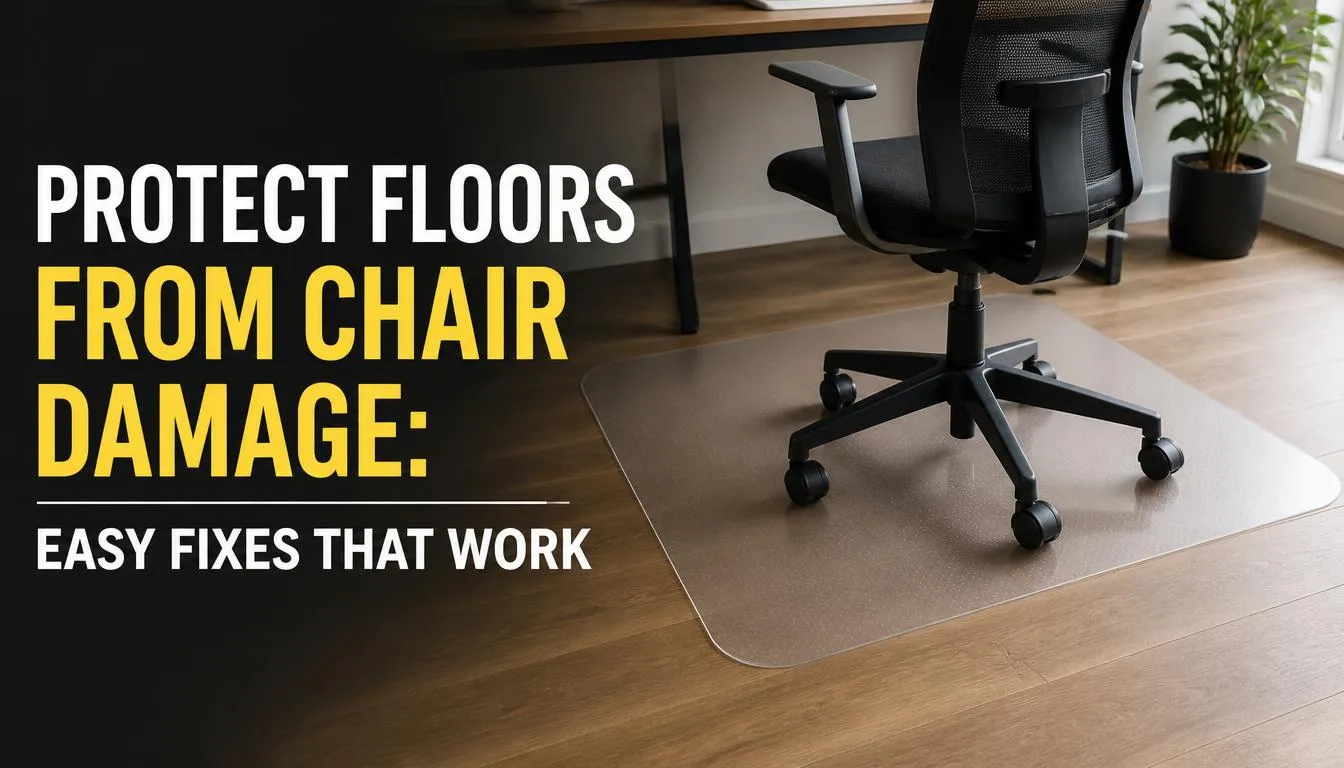
How to Protect Floors From Chairs doesn’t require fancy products or a professional installer. It requires matching the right guard to your specific floor type and chair weight. Get that pair wrong and you could trade scratches for sticky residue or void your flooring warranty within months.
Aggregate reviews and manufacturer specifications show that a large chunk of permanent floor damage comes from trapped grit, adhesive failure, and choosing protectors meant for the wrong surface. The good news is that the solution branches clearly once you know what you’re working with. Let’s walk through the real problem, the physics behind protectors, and exactly what to measure before you spend a dime.
The Real Problem: How Chair Traffic Actually Damages Your Floors
You might think chair damage only happens when legs scrape hard across a finish. That assumption leaves out the slow wear that actually causes most warranty claims and costly repairs. Three mechanics combine to degrade floors over time: abrasion, point loading, and chemical interaction.
Abrasion comes from grit that sits under protector edges or between a wheel and the floor. Even fine dust acts like sandpaper with every chair shift. Point loading happens when a narrow leg or small caster concentrates your body weight onto a tiny area.
That concentrated pressure can dent soft vinyl, press into laminate wear layers, or leave permanent marks on hardwood. Chemical interaction often gets ignored until it’s too late. Adhesives, rubber compounds, and plasticisers can react with urethane, wax, or oil finishes.
The result is discoloration, clouding, or softened finish that chips under normal use.
Most DIY fixes fail because they treat one symptom instead of the system. People slap felt pads on rolling chairs, ignore how humidity changes adhesive performance, or choose protectors that look safe but contain unknown dyes. Those shortcuts create new problems while pretending to solve the old ones.
Understanding the damage chain lets you pick solutions that address root causes instead of just covering scuffs. The next section breaks down exactly how different guards intervene in that chain, so you can make informed choices rather than guesswork.
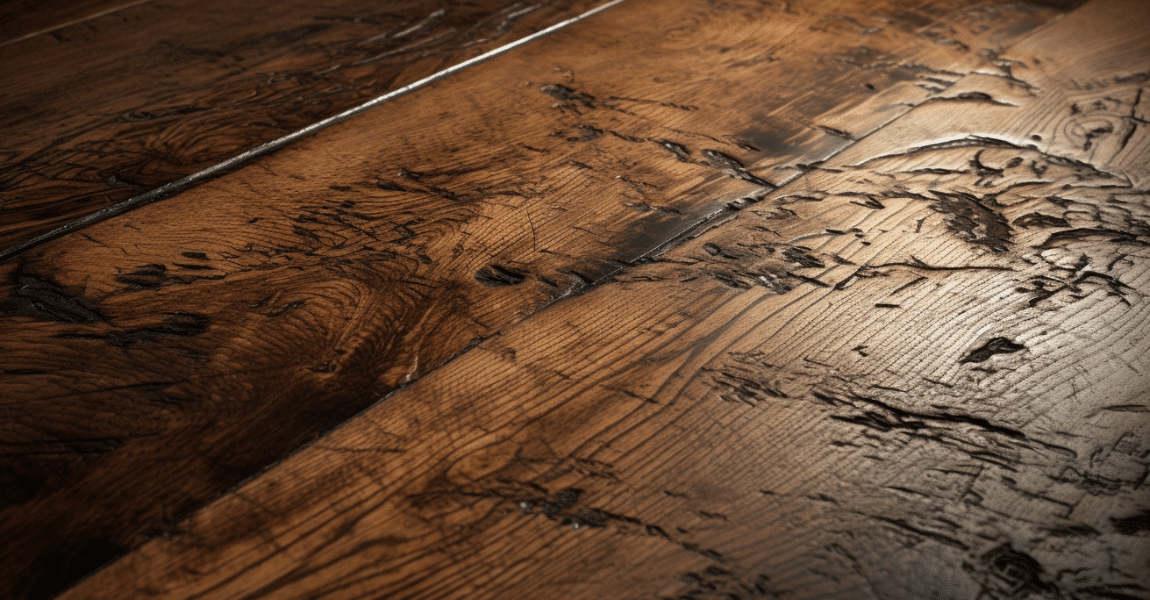
Image source: Bing (Web (fair-use with source credit))
Quick Answer
Choose protectors based on your floor material first, not your chair style. Hardwood needs silicone caps or low-pile felt. Vinyl flooring works best with smooth polypropylene glides or soft-roll casters.
Laminate benefits from non-marking rubber cups designed to avoid seam lifting. Tile tolerates harder materials but still requires scratch prevention. Stone demands certified non-staining options due to porosity.
Rolling office chairs need dual-surface wheels paired with appropriate mats. Static dining chairs rely on slip-on cups or adhesive pads sized precisely to leg shape. Avoid thick shaggy felt on any rolling application.
Skip heavy rubber on waxed or sensitive finishes. Match weight ratings to your chair load. Clean legs and floors before installation to remove embedded grit.
Test adhesives on hidden areas first. Follow manufacturer guidance to preserve warranties. This approach prevents most common damage patterns before they start.
How Floor Protectors Actually Work
Protectors succeed or fail based on how they manage force, friction, and debris. They are not just soft bumpers you stick to the bottom of a leg. Their geometry and material chemistry determine whether they protect your floor or accelerate wear.
Force distribution spreads your combined body weight over a larger contact area. A narrow wooden leg concentrates pressure and can dent softer surfaces. A wide silicone cup or braided jute pad lowers that pressure per square inch.
Lower pressure means less risk of permanent indentation, especially on luxury vinyl plank and engineered wood. Friction control decides whether the protector stays put or drags microscopic particles across the finish. Too much grip can cause the protector to bind and lift the floor edge.
Too little grip lets the chair slide unpredictably and scuff nearby surfaces. The goal is balanced traction that allows smooth movement without grinding debris into the floor.
Debris management separates good guards from bad ones. Flat adhesive pads trap grit under their edges. That grit stays in contact with the floor whenever you roll or shift weight.
Open-cell felt absorbs dirt like a sponge until it hardens. Dome-shaped cups and smooth plastic glides shed particles more easily. Rounded profiles also reduce the chance of catching on rug edges or mat lips.
Adhesive chemistry matters just as much as shape. Pressure-sensitive acrylic bonds well to cured urethane. Hot-melt adhesives can soften certain wax finishes if applied warm.
Some rubber compounds release plasticisers that stain porous stone or react with oil-based coatings. Matching adhesive type to finish prevents the kind of damage that looks like wear but is actually a chemical bond failure.
Image source: Bing (Web (fair-use with source credit))
The interaction of these three factors explains why one protector never fits all situations. A hard plastic glide might roll beautifully on tile but gouge LVP. Thick shaggy felt could protect solid hardwood from static legs yet pack with dust under a rolling office chair.
That’s why your next step should be identifying exactly what you’re protecting before shopping for solutions. Your floor type, finish age, and chair usage pattern will dictate which balance of force, friction, and debris control makes sense. You can think of this as tuning a system rather than buying a single product.
Once you calibrate those variables, installation becomes straightforward and long-term maintenance stays simple.
What You Need Before Buying Anything
Buy the wrong protector and you waste money and risk damage. Buy the right one after proper assessment and replacement cycles stretch years instead of months. This prep phase takes about fifteen minutes and saves you from three common regrets.
First, identify your floor accurately. Finish name matters more than colour. A white oak floor with matte polyurethane behaves differently than the same wood with penetrating oil.
Look for manufacturer labels, installation receipts, or inspector markings near baseboards. If you cannot verify the finish, assume it is sensitive and test any protector in a closet corner first. Second, measure leg shape and diameter precisely.
Tape measures miss tapered legs and rounded bottoms. Use calipers if available, or wrap a strip of paper around the leg and mark overlap length. Third, note chair weight and movement pattern.
An ergonomic task chair with a dense foam seat and metal frame weighs far more than a solid wood dining chair. Rolling frequency determines whether static pads or caster wheels make sense. Fourth, check room conditions.
High humidity weakens many adhesives within weeks. Radiator proximity can soften certain rubbers. High foot traffic demands more durable materials than guest rooms.
| Factor | What to Measure | Why It Matters | Common Mistake |
|---|---|---|---|
| Floor finish type | Polyurethane, wax, oil, acrylic | Determines adhesive compatibility and scratch resistance | Assuming all hard surfaces react the same |
| Leg shape and diameter | Round, square, tapered, exact width | Dictates protector style and secure fit | Measuring only the widest part of a taper |
| Chair total weight | Seat, frame, occupant, moving force | Sets minimum load rating for protectors | Ignoring dynamic load when rolling |
| Movement pattern | Rolling vs lifted, frequency, direction | Decides between wheels, glides, or pads | Using static pads on high-traffic rolling chairs |
| Room conditions | Humidity range, temperature swings, sunlight | Affects adhesive cure and material longevity | Skipping climate impact on bond strength |
Once you gather those details, cross-reference them against protector specifications. Reputable manufacturers list compatible floor types, weight ranges, temperature operating windows, and adhesive chemistry notes. You should also verify warranty requirements from your flooring installer.
Many warranties become void if unapproved adhesives contact the finish. That single document can prevent thousands in unexpected repair costs. Taking this preparation seriously turns protector selection from a guessing game into a calculated decision.
Your choices will align with actual conditions instead of marketing claims. Next you’ll apply that research to a clear workflow for each major floor category, so you can match solutions with confidence.
Floor-Type Decision Workflow
This section branches decisions by floor material because each surface tolerates different pressures, adhesives, and abrasion levels. Hardwood and engineered wood respond differently to static pads versus rolling systems. Vinyl and laminate demand smooth migration paths that don’t trap grit in seams.
Tile handles harder materials but still suffers surface scratching. Natural stone requires the highest caution due to porosity and staining risk. Use this workflow to land on the right protector category before narrowing to specific styles.
Solid & Engineered Hardwood
Hardwood protects best with silicone cups, low-pile felt discs, or screw-in glides. Silicone offers reliable grip without adhesive residue when you choose finish-safe formulations. Low-pile felt works for static dining chairs but packs quickly under rolling weight.
Screw-in glides distribute load evenly and avoid adhesive entirely, making them ideal for valuable floors. Avoid thick shaggy felt on any surface where chairs move frequently. Rubber compounds containing plasticisers can migrate into pores and cause clouding over time.
Match protector diameter to leg width so pressure spreads evenly across the contact patch.
| Protector Style | When to Choose | Key Limitation | Replacement Indicator |
|---|---|---|---|
| Silicone slip-on cups | Tapered or round legs, mixed traffic | Slips off perfectly smooth factory finishes | Hardening, cracking, or flattening |
| Low-pile felt discs | Static chairs, low daily movement | Traps grit fast under rolling load | Matting, darkening, edge lift |
| Screw-in glides | Heavy chairs, walnut or expensive floors | Requires pilot drilling; risks splitting thin legs | Loose fit, stripped threads |
| Adhesive rubber domes | Occasional-use rooms, temporary fixes | Residue removal can damage sensitive finishes | Loss of tack, discolouration |
Test any new protector in a closet or under a table leg for forty-eight hours before committing to visible areas. Check for finish softening, discolouration, or adhesive bleed. That short trial prevents the most common warranty disputes reported by flooring inspectors.
If your hardwood has a glossy polyurethane topcoat, smoother silicone or polished nylon glides reduce friction marks. For hand-scraped or wire-brushed textures, slightly textured pads help prevent sliding without sacrificing protection.
Luxury Vinyl Plank (LVP) & Vinyl Sheet
Vinyl flooring thrives with soft-roll casters, smooth polypropylene glides, or thin silicone caps. These materials migrate cleanly across flexible surfaces without embedding grit into plank seams. Avoid hard plastic wheels and heavy-duty rubber domes because they concentrate point loads and can permanently indent plasticised surfaces.
Smooth migration beats aggressive grip on vinyl since excessive friction drags micro-debris along the wear layer.
| Protector Style | When to Choose | Key Limitation | Replacement Indicator |
|---|---|---|---|
| Soft-roll caster wheels | Rolling office chairs, high daily use | Requires compatible stem type and chair modification | Wheel flat-spotting, bearing noise |
| Smooth polypropylene glides | Static chairs, occasional movement | Less effective on textured vinyl surfaces | Cracking at stress points |
| Thin silicone caps | Rounded legs, low-to-moderate traffic | May shift on perfectly smooth finishes | Flattening, loss of elasticity |
| Adhesive felt pads | Temporary use, light furniture | Grit trapping accelerates wear layer damage | Matting, adhesive failure |
Pay attention to wheel diameter and durometer. Two-inch soft-roll wheels typically distribute weight better than one-and-a-half-inch hard variants. Lower durometer ratings mean quieter rolling and gentler contact, which matters significantly on resilient vinyl.
Keep underlayment condition in mind as well. Older foam underlay that has compressed reduces shock absorption and increases impression risk from concentrated loads. If your vinyl sits over concrete, thermal expansion and contraction cycles can affect protector adhesion over time.
Choose products rated for indoor residential use and verify they meet low-VOC standards when possible. That protects both your floor and indoor air quality during extended occupation.
Laminate Flooring
Laminate demands non-marking rubber cups, dual-surface caster wheels, and low-profile glides. The wear layer resists surface scratching well but remains vulnerable to seam disruption and denting from point loads. Adhesive-backed pads can lift plank edges if they pull strongly on the surface.
Rough-felt discs grind against the wear layer and accelerate gloss loss over repeated motion. Managing seam vulnerability around protector edges prevents the most expensive laminate failures.
| Protector Style | When to Choose | Key Limitation | Replacement Indicator |
|---|---|---|---|
| Non-marking rubber cups | Static chairs, direct laminate contact | Can stick slightly to textured surfaces | Hardening, cracking, edge curl |
| Dual-surface caster wheels | Rolling chairs, mixed hard-floor use | Requires compatible stem and chair upgrade | Wheel wobble, debris accumulation |
| Low-profile glides | Light chairs, occasional shifting | Limited load capacity for heavy frames | Visible flattening, detachment |
| Adhesive-backed pads | Temporary protection, low traffic | Risk of edge lifting on glued seams | Adhesive residue, padding separation |
Inspect plank edges before installation. Raised or micro-bevelled seams catch protector rims and can lever planks upward over time. Smooth-edged laminate accepts most protector styles more readily.
Keep chair mats in mind for high-traffic workstations. A properly rated rigid polycarbonate mat spreads rolling loads across multiple planks and reduces point stress dramatically. If you choose a mat, ensure it includes a non-slip backing and bevelled edges to maintain safety while protecting the underlying surface.
Ceramic & Porcelain Tile
Tile tolerates harder materials better than wood or vinyl because porcelain bodies resist indentation well. Hard-surface wheels, braided jute pads, and metal-reinforced glides all perform reliably on dense tile. Full chair mats remain sensible for desk areas where rolling frequency would otherwise abrade grout lines and polish glazed surfaces over months.
Tile still scratches though, so focus on preventing abrasive contact rather than relying solely on material hardness.
| Protector Style | When to Choose | Key Limitation | Replacement Indicator |
|---|---|---|---|
| Hard-surface caster wheels | Rolling office chairs, commercial use | Noisy on hard tile without mat support | Bearing wear, wheel flat spots |
| Braided jute pads | Static dining chairs, rustic aesthetics | Absorbs moisture and can harbour bacteria | Fraying, odour retention, staining |
| Metal-reinforced glides | Heavy furniture, frequent repositioning | Risk of chipping tile edges on impact | Corrosion, loose fittings |
| Full chair mats | High-rolling zones, desk setups | Trip hazard if edges curl or shift | Cracking, delamination, edge lift |
Consider grout condition alongside tile protection. Degraded grout accepts protector debris more easily and shows wear faster than intact surrounds. Sealing grout periodically reduces staining and makes cleaning simpler.
If you install a chair mat over tile, verify that the mat underside won’t chemically react with sealed grout or leave persistent discolouration. Some cheap vinyl mats contain plasticisers that migrate and dull certain grout colours over extended contact. Premium polypropylene or polycarbonate mats generally avoid that problem while offering superior clarity and durability.
Natural Stone (Marble, Granite, Limestone)
Stone requires the most cautious approach because porous surfaces absorb stains and react to chemicals easily. Premium silicone caps, certified non-staining rubber, and sealed-backing felt protectors minimize risk. Avoid any protector with unknown dyes, volatile adhesives, or high plasticiser content.
Stain risk from protector chemicals on porous finishes can appear within weeks and prove nearly impossible to reverse completely. Sealed granite behaves more predictably than honed limestone, but both benefit from conservative protector selection.
| Protector Style | When to Choose | Key Limitation | Replacement Indicator |
|---|---|---|---|
| Premium silicone caps | All stone types, high visibility areas | Higher cost than basic alternatives | Hardening, tearing, adhesive failure |
| Certified non-staining rubber | Honed or lightly sealed stone | Must verify certification documentation | Discolouration transfer, surface softening |
| Felt with sealed backing | Low-traffic occasional seating | Sealant degradation exposes fibres over time | Unsealed fibre exposure, matting |
| Adhesive polymer glides | Temporary protection, rental properties | Residue removal may require professional assistance | Loss of adhesion, staining |
Always request manufacturer documentation confirming non-staining and low-VOC status before purchasing. Keep a small spare protector on hand for immediate replacement if you notice any finish change after initial installation. That quick response prevents deep penetration into porous stone.
For heavily trafficked stone floors, consider combining lightweight static protectors with area rugs in high-movement zones. Rugs absorb impact and trap debris before it reaches the stone surface directly. This layered strategy extends both floor life and protector effectiveness while maintaining aesthetic cohesion.
Image source: Bing (Web (fair-use with source credit))
This workflow gives you a decision path grounded in material behaviour rather than marketing promises. Once you select a protector category aligned with your floor, installation becomes a matter of careful preparation and correct sizing. The next sections cover chair mats, detailed protector comparisons, and step-by-step setup so you can execute with confidence.
You’ll also learn how to maintain those protectors over time, which stretches their useful life significantly and keeps floors looking sharper longer.
Chair Mats: When They’re the Right Call
Chair mats deserve serious consideration when rolling frequency exceeds what static protectors can manage alone. A mat spreads point loads across multiple square inches and contains debris that would otherwise migrate across bare flooring. Rigid polycarbonate and flexible vinyl dominate the market, but they serve different floor environments.
Polycarbonate offers superior clarity and crush resistance for hard surfaces. Vinyl flexes better over slight unevenness and remains quieter underfoot. Thickness benchmarks matter significantly for hard-floor applications.
Mats below zero-point-one-two-five inches tend to warp, trap wheels unevenly, and increase tripping risk over time.
| Mat Type | Best For | Minimum Thickness | Key Limitation |
|---|---|---|---|
| Rigid polycarbonate | Hardwood, tile, laminate high-traffic zones | 0.190 inches | Brittle in extreme cold; higher cost |
| Flexible vinyl | Carpet, uneven subfloors, budget-conscious setups | 0.125 inches | Prone to yellowing; lower crush resistance |
| Hybrid composite | Mixed hard/carpet transitions, moderate rolling | 0.150 inches | Limited clarity; moderate price point |
Edge safety distinguishes responsible products from hazardous ones. Bevelled profiles reduce trip risk substantially compared with sharp square cuts. Ensure the mat lip faces away from walking paths or tucks securely under fixed furniture.
Weight ratings should exceed your chair’s maximum loaded weight by at least twenty percent. That buffer accounts for dynamic forces when leaning back or accelerating rolls. Caster compatibility also influences mat choice.
Smooth-polished wheels require flatter surfaces and smaller contact patches. Textured or dual-surface wheels interact differently with mat grooves and may prefer specific tread patterns.
Mat positioning deserves deliberate planning. Place the mat so the lip rests firmly against a wall or cabinet base. Verify full surface contact without bubbles or raised corners that catch wheeled bases.
Use non-slip underlay only when the manufacturer explicitly approves it, since some adhesives react poorly with certain backing materials. The mat should extend beyond your chair’s outermost wheel reach in every direction. That coverage prevents wheels from riding partially on floor and partially on mat, which creates instability and uneven wear.
When selecting mats, prioritise products tested for stain resistance and UV stability if sunlight exposure exists. Those qualities preserve both appearance and structural integrity over years of use rather than months.
Protector Types Compared
This section breaks down every protector style with honest strengths and weaknesses. You need to understand what each option delivers before investing time and money. Wrong choices waste resources and still leave floors vulnerable.
| Protector Style | Best For | Lifespan | Installation Difficulty | Common Failure Mode |
|---|---|---|---|---|
| Adhesive felt pads | Low-traffic dining chairs | 6–18 months | Easy (peel-and-stick) | Edge lift, debris packing |
| Slip-on silicone cups | Tapered hardwood legs | 2–4 years | Easy (stretch-and-seat) | Slipping off rounded legs |
| Screw-in glides | Heavy office chairs | 3–5+ years | Moderate (pre-drill required) | Wood splitting, thread stripping |
| Hard-surface caster wheels | Rolling task chairs | 2–5 years | Moderate (wheel replacement) | Caster bearing failure |
| Dual-surface wheels | Mixed hard floor and carpet | 2–4 years | Moderate (wheel replacement) | Wheel wobble, debris catch |
| Full chair mats | High-rolling office zones | 5+ years | Easy (lay flat) | Mat shift, edge curl |
Adhesive felt pads remain the most popular entry-level choice. They cost pennies per unit and install in seconds. Aggregate reviews consistently flag two recurring problems though.
Edge lifting lets dirt wedge underneath and transform the pad into abrasive sandpaper. Debris packing fills fibre matrices with fine dust that hardens over repeated compression cycles. Once either problem appears, the pad shields nothing.
It simply drags grit across your finish during every chair movement.
Slip-on silicone cups eliminate adhesive dependency entirely. They stretch over legs and resist displacement through normal sitting and rising cycles. The main limitation involves fit precision on perfectly smooth factory finishes.
Round legs without texture sometimes reject cups because friction alone cannot maintain positioning. Lightly scuffing the contact zone with fine sandpaper improves retention measurably. That simple preparation step extends useful lifespan from twelve months to three or more.
Screw-in glides deliver the most permanent mechanical attachment available. They bypass adhesive chemistry completely and transfer structural loads directly through wood into the floor interface. Installation demands correctly sized pilot holes matching your specific wood species density.
Hard oak requires different pilot dimensions than soft pine. Skipping this detail splits expensive legs during driver engagement and ruins both the protector and the furniture piece.

Image source: Bing (Web (fair-use with source credit))
Caster wheel upgrades serve rolling chair applications specifically. Hard-surface polypropylene wheels glide efficiently on tile and sealed hardwood but dig into uncarpeted surfaces excessively. Dual-surface models combine one polished rolling face with one softer outer ring.
Those hybrid designs handle both hard floors and low-pile carpet without requiring hardware swaps between rooms. Weight ratings deserve careful attention because dynamic forces exceed static calculations during rapid stopping or leaning motions.
Full chair mats function as system-level protection rather than individual leg treatment. They excel in workstations where constant rolling would overwhelm any static protector within months. A properly specified mat distributes point loads across dozens of square inches instead of concentrating them under four tiny wheel contacts.
The upfront investment typically returns through extended floor life and reduced replacement frequency over comparable time periods.
Your selection among these six styles hinges on three measurable variables: floor type, chair loaded weight, and daily movement intensity. Static dining chairs on sealed hardwood pair naturally with silicone cups. High-mileage ergonomic setups on laminate demand dual-surface casters plus appropriate mat coverage.
Heavy bar stools on ceramic tile benefit from screw-in glides rated well above anticipated loads. Cross-reference those variables methodically and your protector choice performs reliably for years instead of failing within weeks. You can also learn more about chair longevity expectations to help gauge how often you might need to refresh your protection strategy.
Step-by-Step Installation Guide
Proper installation separates lasting protection from premature failure. Rushed setups cause more protector problems than inferior product quality ever will. Follow these procedures methodically and you avoid the vast majority of common mistakes reported by flooring specialists.
Preparing Legs and Floor Contact Points
Surface preparation determines adhesion success more than any other single factor. Wipe each leg contact area thoroughly with a finish-appropriate cleaner. Mineral spirits work reliably on cured polyurethane systems.
Avoid ammonia-containing products near wax or penetrating oil coatings because they dissolve protective layers gradually. Dry every surface completely before proceeding to attachment steps. Residual moisture weakens adhesive bonds and promotes organic growth beneath pads over extended periods.
Inspect every leg for existing damage before attaching anything new. Splintered wood holds screws poorly and tends to split further under torque loading. Cracked plastic or composite legs cannot safely support heavy protector assemblies.
Repair or replace compromised legs before beginning installation. A weakened structural member defeats every protector you attempt to mount on it.
Remove old protectors deliberately rather than tearing them off carelessly. Adhesive remnants respond best to gentle heat applied with a standard hair dryer on medium setting. Warm each pad for approximately thirty seconds before peeling slowly at a shallow angle away from the leg surface.
Vertical pulling often lifts finish layers when adhesive bonds have penetrated deeply into porous coatings. Test any chemical remover on a concealed area first to confirm finish compatibility before full application.
Fitting Static Protectors
Adhesive pads require centrelined placement for even load distribution. Mark each leg centre point lightly with a pencil before removing the backing liner. Press firmly from the middle outward to expel trapped air pockets completely.
Maintain steady contact pressure for at least ten seconds after positioning. Cure times vary by product formulation but typically require twenty-four hours minimum before any weighted use. Always verify exact cure windows on manufacturer labels because ambient temperature significantly affects bonding chemistry.
Slip-on cups demand accurate diameter measurement at the leg’s widest contact zone. Select a cup rated slightly above that measured dimension for secure seating. The assembly should stretch over the leg without requiring forcible stretching tools.
If you need pliers or excessive hand force to position the cup, the selected size creates stress concentrations that lead to premature detachment. Seat the cup fully around the leg circumference and rotate it manually to confirm stable positioning during simulated movement.
Screw-in glides require disciplined pilot hole execution. Drill pilot holes at roughly two-thirds the threaded screw diameter and maintain strict perpendicular alignment to the leg face. Drive screws straight using hand-controlled fastening tools rather than high-speed drivers.
Excessive rotational force strips internal threads and reduces structural load capacity dramatically. Stop driving when the glide head sits flush against the leg underside surface. Slight countersinking prevents protrusion that catches on adjacent furniture or rug edges during normal repositioning.
Installing Caster Wheels
Correct stem identification precedes every caster replacement project. Grip-ring stems require downward ring compression during wheel insertion. Plug-style stems slide directly into precisely matched socket openings.
Threaded stems engage via internal nut securing mechanisms inside the wheel hub. Purchasing mismatched stem types guarantees immediate mechanical failure under normal chair loads.
Extract worn casters by grasping the wheel hub firmly and pulling straight outward along the stem axis. Stubborn stuck stems respond to gentle oscillating motion rather than hammer impacts. Never strike wheel assemblies forcefully because impact energy travels through chair frames and creates microfractures in structural joints.
Clean stem channels thoroughly with compressed air or stiff-bristled brushes before inserting replacement hardware.
Validate each newly installed wheel individually before returning the chair to regular service. Roll each wheel independently across clean smooth flooring and listen attentively for bearing rumble, lateral wobble, or irregular resistance patterns. A defective wheel identified post-installation wastes significant time removing the entire chair from use for correction.
Replace any questionable wheel immediately rather than accepting marginal performance in critical rolling applications.
Laying Chair Mats Properly
Orient mats with the protective lip pressed firmly against walls or immovable furniture bases. This placement direction prevents lip edges from catching caster wheels during typical forward and backward motion patterns. Confirm complete surface conformity across the entire mat footprint before permitting regular foot traffic.
Elevated corners create genuine trip hazards and permit mat migration under repeated wheel loading cycles.
Apply non-slip underlay products only when explicitly approved by both mat and flooring manufacturers together. Certain adhesive-backed mats develop permanent discolouration when contacting natural rubber underlay compounds. When documentation remains unavailable regarding compatibility, skip the underlay entirely and depend solely on engineered grip features integrated into the mat underside.
Verify mat coverage extends sufficiently beyond maximum chair wheel reach in every operational direction. Your chair’s outermost wheel contact point must never encounter bare flooring during unrestricted normal movement patterns. Measure your specific chair’s maximum deployment radius and add at least eight inches of clearance margin around all perimeter boundaries.
Undersized mats create exactly the unprotected transition zones that defeat their intended protective function entirely.
Cost Breakdown & Value Expectations
Financial planning matters when safeguarding valuable floor surfaces. Understanding true lifetime costs prevents both wasteful overspending and dangerous false economy decisions. Price ranges differ considerably across material tiers and protection scope configurations.
Per-Unit Protector Pricing
Basic adhesive felt pads average approximately fifty cents to two dollars per individual unit. Mid-range silicone cups typically cost between one and four dollars depending on diameter and durometer specifications. Premium screw-in glide assemblies range from two to eight dollars per piece based on load ratings and corrosion-resistant coatings.
Quality five-wheel caster replacement sets span fifteen to one hundred dollars for professional-grade polyurethane constructions. Complete heavy-duty chair mats run thirty to two hundred fifty dollars according to thickness, material composition, and dimension specifications.
| Protector Category | Budget Selection | Mid-Range Choice | Premium Option | Typical Replacement Interval |
|---|---|---|---|---|
| Adhesive felt pads | $0.50–$1.50 | $1.50–$3.00 | $3.00–$5.00 | 6–18 months |
| Slip-on silicone cups | $1.00–$2.50 | $2.50–$4.00 | $4.00–$7.00 | 2–4 years |
| Screw-in glides | $2.00–$4.00 | $4.00–$6.00 | $6.00–$12.00 | 3–5+ years |
| Caster wheel sets | $15–$35 | $35–$60 | $60–$100 | 2–5 years |
| Chair mats | $30–$80 | $80–$150 | $150–$300 | 5+ years |
These figures represent aggregated retail pricing data available as of 2026 across major home improvement channels. Store-brand equivalents frequently match name-brand performance specifications at substantially lower price points when technical data sheets align with your specific application requirements. Brand name premiums rarely justify threefold price increases for fundamentally identical protector functions.
Annualised Cost Analysis
Replacement frequency determines actual yearly expenditure far more meaningfully than purchase price alone. Fifty-cent felt pads requiring biannual replacement generate ten dollars in annual protection costs. Four-dollar silicone cups lasting three full years equate to roughly thirteen dollars yearly for comparable single-leg coverage.
Premium screw-in glides costing eight dollars each yet delivering five years of reliable service drop below two dollars annualised per attachment point. This mathematics strongly favours durable solution categories despite elevated initial acquisition costs.
Chair mat financial comparisons follow equivalent analytical patterns. A hundred-dollar rigid polycarbonate mat persisting seven years of daily rolling use averages fourteen dollars annually. Repeatedly replacing forty-dollar flexible vinyl mats every two years accumulates one hundred forty dollars across the identical timeframe.
The higher upfront investment yields clear long-term savings whenever usage intensity justifies the initial outlay.
Accounting for Hidden Expenses
Adhesive removal supplies represent frequently overlooked peripheral costs. Dedicated remainder solvents range from five to fifteen dollars per container but prevent costly finish damage during protector type transitions. Correct pilot drill bit sets for screw-in installations cost three to twelve dollars depending upon included size ranges and carbide coating quality.
Overlooking these supporting materials generates installation delays and increases risk of accidental leg damage during hurried corrective attempts.
Professional floor repair represents the ultimate hidden expense category. Single deep scratch correction requiring spot refinishing runs two hundred to eight hundred dollars depending upon room dimensions and matching finish complexity. Individual laminate plank replacement demands specialized extraction tools and replacement inventory sourcing.
Comparing modest protector investments against these potential repair figures eliminates hesitation about allocating appropriate protective budgets consistently. You might also want to explore chair pricing options to understand how your overall furniture investment compares to protection spending.
Maintenance & Replacement Schedule
Protectors degrade predictably whether inspection occurs regularly or not. Systematic maintenance routines catch deterioration phases before floor surfaces experience direct exposure. Quarterly fifteen-minute checks prevent emergency thousand-dollar repair scenarios consistently.
Scheduled Inspection Timelines
High-traffic rolling chair arrangements require monthly visual condition assessments at minimum. Low-traffic static dining setups need only quarterly evaluations under normal residential conditions. Guest room occasional-use furniture warrants biannual inspection intervals at the absolute longest.
Environmental conditions materially influence degradation speeds. Humid climate regions weaken adhesive chemistries faster through sustained moisture exposure. Rooms near heating vents or direct solar gain experience accelerated thermal cycling that stresses rubber and silicone compound integrity more aggressively than stable-temperature environments.
Monitor for these specific deterioration indicators during every scheduled check:
- Protector edge separation exceeding one millimetre from leg contact surfaces
- Visible particulate accumulation lodged beneath or around protector perimeter margins
- Noticeable material hardening or surface crack formation in elastomer compounds
- Adhesive residue exposure revealing original leg finish material underneath removed pads
- Caster wheel lateral bearing play exceeding two millimetres during manual rotation testing
- Chair mat edge curlation rising above three millimetres clearance from supporting floor plane
Each documented warning sign signals declining protective performance readiness. Address detected issues promptly rather than awaiting visible floor damage manifestation. Early corrective intervention costs mere minutes of active time.
Deferred correction escalates quickly into hours of labour or substantial dollar expenditures depending upon resulting damage severity levels.
Routine Protector Cleaning Procedures
Vacuum protector-facing surfaces weekly utilizing soft bristle brush attachments mounted on standard household units. This routine removal prevents loose particulate settlement deep into protector textures where compaction transforms acceptable dust into abrasive grinding media. Damp-wipe silicone and rubber protector assemblies monthly using finish-safe cleaning solutions diluted precisely per manufacturer label directions.
Avoid saturating adhesive bond interfaces during cleaning procedures because sustained moisture exposure progressively weakens molecular attachment chains over successive wet-dry cycles.
Felt-based protectors resist meaningful deep-cleaning restoration once particle integration occurs. Surface vacuuming represents the sole effective maintenance pathway for retained felt assemblies. Address localized embedded particle clusters gently with soft brushing and minimal moisture application only.
Permit absolutely complete drying beneath replaced protectors before returning associated furniture to active service. Trapped residual moisture beneath felt barriers accelerates wood substrate swelling and creates persistent finish clouding problems on moisture-sensitive coated surfaces.
Chair mat surface maintenance combines weekly vacuuming with monthly damp mopping using only manufacturer-approved pH-neutral cleaning formulations. Aggressive ammonia solutions or abrasive scrubbing compounds degrade optical clarity and compromise integrated nonslip underside properties through repeated unnecessary chemical exposure. Restrict all mat cleaning operations to products explicitly documented as compatible with vinyl, polypropylene, and polycarbonate material families respectively.
Replacement Trigger Criteria
Exchange adhesive pads immediately upon detecting perimeter edge lifting that exposes underlying floor contact zones. Even minimal exposed perimeter allowance permits unrestricted grit migration pathways beneath installed protection layers and accelerates progressive finish abrasion rates exponentially compared to properly seated configurations. Selective individual pad replacement functions adequately without requiring complete set renewal unless all installed units demonstrate commensurate aging indicators simultaneously.
Substitute silicone cups whenever noticeable material stiffening occurs or surface crack networks become visible through routine inspection. Progressive compound hardening reduces effective shock absorption capacity and increases direct point-load transmission magnitude to protected floor surfaces beneath installed assemblies. Fresh softer elastomer alternatives frequently deliver superior protective performance compared to deteriorated hardened variants currently mounted on active furniture pieces.
Retire caster wheel assemblies displaying audible bearing rumble, measurable lateral play exceeding specification tolerances, or visible wheel surface flat-spot development from prolonged static loading. Degraded internal bearings transmit operational vibration loads directly through chair structural frames and concentrate repetitive impact energies onto diminishingly small floor contact patch areas. Fresh wheel installations restore equitable load distribution patterns and reestablish smooth effortless rolling capability across protected surface zones consistently.
Exchange chair mats when structural cracking penetrates through the complete material thickness or when documented edge curl measurements exceed established safe clearance thresholds permanently. Complete structural integrity degradation simultaneously compromises protective functionality performance and introduces unacceptable personal trip injury hazard probabilities into occupied workspace environments. Continuing operational deployment of structurally compromised mats invites both accelerated floor deterioration and potential occupant safety incidents equally.
Common Mistakes That Wreck Floors Anyway
Recognizing frequent errors prevents them from becoming your own unfortunate experiences. These installation and selection mistakes appear consistently throughout professional flooring repair documentation and warranty denial analyses worldwide. Learning from others’ mistakes saves considerable time, money, and floor finish preservation.
Assuming Universal Floor-Safe Certification Applies Everywhere
Product labeling containing phrases like floor-safe or finish-friendly carries wildly varying underlying chemical formulations across different manufacturer brands. One company’s certified-safe pressure-sensitive adhesive may contain aggressive solvent carriers capable of softening standard polyurethane topcoats within seventy-two hours of continuous contact application. Another manufacturer’s purportedly harmless rubber compound might release migrating plasticiser molecules that permanently stain unsealed natural stone surfaces irreversibly upon prolonged contact exposure periods.
Generic safety terminology provides absolutely no reliable assurance without accompanying specific finish compatibility documentation charts directly referencing your exact floor coating system. Demand manufacturer-provided chemical compatibility specifications matching your confirmed floor type before purchasing any protector product regardless of generic marketing safety language used prominently on packaging displays.
Deploying Thick Pile Felt Beneath Constantly Moving Chair Frames
Oversized shaggy felt protector variants absorb extraordinary quantities of ambient household dust and microscopic abrasive particulates during normal atmospheric settling periods. Those collected particles become deeply embedded within dense fibre matrices where normal mechanical compression actions compact them permanently into firmly packed abrasive bed layers. Subsequent chair relocation movements then drag those embedded particle beds systematically across exposed finished floor surfaces with sandpaper-like abrasive efficiency.
Thin low-pile felt constructions capture significantly reduced particle volumes while maintaining adequate foundational cushioning protection qualities for comparable stationary seating applications. Reserve generously thick pile felt protector selections exclusively for completely stationary decorative furniture pieces positioned in low-traffic guest areas where absolutely no sliding or rolling repositioning activities ever occur intentionally.
Skipping Surface Degreasing Before Protector Attachment Processes
Mounting adhesive-backed protectors directly onto dirty, contaminated, or moisture-present substrate surfaces guarantees predictably premature bond failure regardless of advertised adhesive strength specifications. Factory-applied floor finish processes routinely deposit invisible residual polishing compounds, temporary installation wax deposits, and handling lubricant traces across newly treated surface areas before consumer occupancy begins. Full surface degreasing using appropriately selected preparatory cleaning solutions removes these invisible contaminant layers completely before any protector attachment procedure initiates.
Permit adequate solvent evaporation and complete surface drying periods according to product datasheet recommendations before proceeding with protector installation sequences. Attempting accelerated installation timelines directly wastes purchased protector materials financially while simultaneously creating dangerously false confidence regarding actual installed bond strength durability performance levels achieved.
Combining Fundamentally Different Protector Materials Across Single Chair Assemblies
Mixing silicone cup protectors on front chair legs while simultaneously employing adhesive felt pad varieties on rear legs produces severely unequal load distribution characteristics throughout entire chair frame contact systems. Chairs tilt predictably and permanently toward whichever protection zone offers minimum resistant force characteristics during normal sitting position establishment phases. Uneven protector hardness combinations also generate dramatically inconsistent friction coefficient profiles across different wheel or glide contact pathways simultaneously.
Standardize protector material selection uniformly across all individual leg attachment points belonging to every single chair installed within any unified space environment. Consistent protector application ensures genuinely balanced operational force distribution patterns and eliminates unpredictable preferential directional sliding tendency behaviors during normal everyday chair usage activities performed regularly.
Selecting Economy Caster Replacements Inadequate for Assigned Dynamic Load Requirements
Budget-priced replacement caster wheel assemblies frequently utilize unsealed interior bearing constructions, excessively thin structural wheel wall geometries, and underspecified stem connection interface dimensions entirely unsuitable for sustained residential chair loading conditions over extended operational lifespans. These economically manufactured components typically exhibit catastrophic bearing failure within three to six months under normal adult occupancy weight loading parameters while maintaining superficially acceptable rolling performance characteristics during initial brief testing periods immediately after purchase installation completion events. Quality-engineered steel ball bearing constructions paired with properly injection-molded polyurethane wheel compounds cost moderately greater initial acquisition amounts upfront but demonstrably deliver five to seven times longer functional service lifespan equivalencies under comparable documented usage intensity levels.
Compare calculated total cost-per-protected-year metric outcomes rather than merely comparing individual unit purchase price sticker amounts displayed prominently at point-of-sale retail display locations when selecting appropriate rolling hardware component replacements confidently. You can also read about the best desk chairs to find one that pairs well with proper floor protection solutions.
Completely Overlooking Published Maximum Weight Rating Specifications
Every legitimate floor protector product carries explicitly published maximum allowable weight rating specifications established through standardized engineering testing protocols. Exceeding those documented rating thresholds reliably causes immediate protective material deformation, adhesive bond catastrophic failure events, or complete structural protector assembly collapse phenomena during normal dynamic loading operational scenarios encountered routinely throughout daily chair use activity cycles. A standard two-hundred-pound human occupant utilizing a heavy ergonomic office chair generates instantaneous dynamic force peak values potentially exceeding triple their static resting body weight measurements during abrupt stopping maneuvers or aggressive backward leaning action performance events occurring spontaneously without warning.
Always select and procure protector products officially rated substantially above combined chair structure weight plus anticipated maximum occupant weight values incorporating appropriate dynamic safety margin factor application multiples minimum. This calculated safety factor accommodation practice prevents unexpected catastrophic protector mechanical failure occurrences happening unexpectedly during perfectly normal everyday chair usage situation contexts experienced routinely by standard residential occupants performing ordinary daily activities continuously throughout ongoing occupied living space environments utilized regularly every single day without exception whatsoever.
Safety, Warranty & Compliance Notes
Protector choices carry legal and financial consequences beyond simple aesthetics. Ignoring manufacturer specifications can void floor warranties and create personal injury risks. These considerations matter especially in rental properties, commercial workspaces, and homes with young children or elderly occupants.
Preserving Flooring Warranties
Most flooring manufacturers require specific protector types to maintain warranty coverage. Using unapproved adhesives or rubber compounds often becomes grounds for warranty denial when damage claims arise. Review your installation documentation before purchasing any protector product.
Look for explicit statements about approved guard materials and prohibited adhesive chemistries.
National Wood Flooring Association guidelines recommend using only protectors specified by the floor finish manufacturer. Following those recommendations creates a documented chain of custody if warranty disputes emerge later. Keep original purchase receipts, protector product data sheets, and installation photographs together in a single file.
That organized record set simplifies warranty claim processes significantly when questions surface years after initial installation.
Indoor Air Quality & VOC Considerations
Some protector products release volatile organic compounds during initial curing periods. Low-VOC and Greencertified options minimize indoor air quality impacts significantly. The U.S.
Environmental Protection Agency recommends choosing products meeting third-party emission certification standards for enclosed residential and commercial spaces.
Look for Greenguard Gold certification when selecting chair mats and adhesive protectors for occupied living areas. That certification indicates emissions testing against strict chemical thresholds established for sensitive populations including children and adults with respiratory conditions. Avoid products with strong chemical odours during initial installation periods because those smells indicate ongoing solvent off-gassing activity.
Slip and Trip Hazard Prevention
Chair mat edges create genuine tripping hazards when improperly selected or installed. Flat-edged mats sitting flush against hard flooring present minimal risk compared with bevelled-edge designs engineered specifically to reduce catch-points. Ensure all mat edges remain securely seated against flooring surfaces after installation completion.
Recheck positioning periodically because mat migration occurs gradually over months of normal chair rolling activity.
Non-slip backing selection requires careful consideration. Some backing compounds react chemically with vinyl and laminate finishes causing permanent discolouration. Choose backing materials explicitly approved as safe for your specific floor type.
Natural rubber underlays frequently cause dark staining on light-coloured luxury vinyl plank installations over extended contact periods.
Commercial Workspace Compliance Requirements
Office environments face additional regulatory considerations beyond residential settings. Occupational safety guidelines typically require clear walking pathway dimensions around workstation areas. Chair mats extending into primary traffic lanes may violate workplace safety clearance requirements depending on local jurisdiction rules.
Commercial flooring installations often must meet accessibility standards requiring smooth transition surfaces without abrupt height changes. Raised chair mat edges exceeding quarter-inch clearance frequently trigger compliance issues under accessibility modification requirements. Consult facility management documentation or local building code authorities when outfitting commercial workspaces with floor protection systems to ensure full regulatory adherence throughout all occupied areas.
Final Decision Guide: Which Protector Fits Your Exact Situation
Making the right choice comes down to answering three straightforward questions systematically. Your answers determine whether static pads, rolling casters, screw-in glides, or full chair mats make the most sense for your specific setup. This decision framework eliminates guesswork and points directly to the optimal protector category.
Question One: What Is Your Floor Type?
Your floor material sets non-negotiable boundaries on compatible protector options. Hardwood accepts silicone cups, felt discs, and screw-in glides. Luxury vinyl demands smooth polypropylene glides or soft-roll casters avoiding abrasive textures.
Laminate requires non-marking rubber cups preventing seam interference. Tile tolerates harder materials but still needs scratch prevention. Natural stone demands certified non-staining protectors exclusively due to porosity and chemical sensitivity.
| Floor Type | Recommended Protector Category | Avoid Completely |
|---|---|---|
| Solid hardwood | Silicone cups, low-pile felt, screw-in glides | Thick shaggy felt under rolling chairs |
| Engineered wood | Same as solid hardwood with added adhesive caution | Unverified adhesive formulas |
| Luxury vinyl plank | Soft-roll casters, smooth polypropylene glides | Hard plastic wheels, heavy rubber domes |
| Laminate | Non-marking rubber cups, dual-surface casters | Adhesive pads near plank seams |
| Ceramic tile | Hard-surface wheels, braided jute pads, chair mats | Unknown abrasive materials on glazed surfaces |
| Porcelain tile | Same as ceramic with higher durability tolerance | Rough-textured protectors on polished finishes |
| Natural stone | Premium silicone, certified non-staining rubber | Any protector with unknown dyes or plasticisers |
| Vinyl sheet | Thin silicone caps, smooth glides | Aggressive adhesives on seamed installations |
Question Two: How Does Your Chair Move?
Movement patterns determine whether static or rolling solutions suit your application. Static dining chairs rarely shift position after seating. Task chairs in home offices roll continuously throughout work hours.
Kitchen stools slide forward and backward frequently at countertops. Bar stools rotate on swivel bases repeatedly during daily use. Each movement pattern creates different protector requirements.
Rolling chairs always need caster wheels regardless of floor type. Static chairs benefit most from slip-on cups or adhesive pads sized precisely to leg dimensions. Swivel stools require protectors resisting rotational shear forces without rotating around legs independently.
Heavy reclining chairs generate substantial dynamic loads during operation and need high-weight-rated solutions accordingly.
Question Three: What Is Your Combined Load?
Total chair weight plus occupant weight determines minimum load rating requirements. A lightweight wooden side chair with a fifty-pound occupant generates different point loads than a bulky ergonomic task chair supporting a two-hundred-pound adult. Dynamic forces during sitting, standing, and leaning multiply static weight values significantly.
| Chair Category | Typical Loaded Weight Range | Minimum Protector Rating |
|---|---|---|
| Light dining chair | 15–25 lbs + 120 lbs occupant | 50 lbs per leg minimum |
| Standard task chair | 30–40 lbs + 150 lbs occupant | 75 lbs per caster minimum |
| Heavy ergonomic chair | 50–70 lbs + 200 lbs occupant | 100+ lbs per caster minimum |
| Commercial office chair | 40–60 lbs + 250 lbs occupant | 125+ lbs per caster minimum |
| Bar stool (static) | 15–30 lbs + 180 lbs occupant | 60 lbs per leg minimum |
Always select protectors rated above combined maximum loads. Twenty percent safety margin above calculated maximum prevents premature protector failure under dynamic loading conditions experienced during normal daily use activities performed routinely throughout occupied living spaces. You might also want to learn about the cost of lift chairs to understand how heavier medical-grade seating affects protector requirements differently than standard furniture.
Decision Flow Summary
Follow this simplified sequence to land on your optimal protector choice quickly:
Start with floor type. If your floor is natural stone, skip directly to premium silicone or certified non-staining rubber options only. If your floor is tile or hardwood, proceed to movement assessment.
If your chair rolls, choose caster wheels or chair mats appropriate to your floor type. If your chair stays static, choose slip-on cups, adhesive pads, or screw-in glides matched to leg shape and weight ratings. Verify manufacturer warranty requirements before finalizing your selection.
Test your chosen protector on a concealed area first when finish sensitivity remains uncertain. That systematic approach consistently produces optimal protector-floor-chair combinations performing reliably throughout extended usage periods without unexpected failures.
Frequently Asked Questions About Protect Floors From Chair Damage
Can I use felt pads on vinyl floors without damaging them?
Yes, but only thin low-pile felt designed for resilient flooring. Thick shaggy felt traps grit against vinyl wear layers and accelerates scratching over time. Always verify manufacturer compatibility statements before applying adhesive-backed felt directly to luxury vinyl plank surfaces.
What is the best protector for heavy ergonomic office chairs?
Dual-surface caster wheels rated well above combined chair-and-occupant weight represent the optimal solution. Pair those wheels with a properly sized rigid polycarbonate chair mat on hard flooring. This combination distributes dynamic loads across multiple planks while maintaining smooth rolling functionality throughout extended daily use periods.
How do I remove adhesive residue without stripping my finish?
Apply gentle heat with a hair dryer on medium setting to soften adhesive polymers gradually. Peel slowly at a shallow angle away from the leg surface while warming each section incrementally. Remaining residue responds to finish-safe adhesive removers applied sparingly with soft cloths.
Always test removal methods on concealed areas first before full-scale application across visible floor surfaces.
Do chair mats work on all types of hardwood?
Rigid polycarbonate mats perform reliably on sealed hardwood when thickness meets minimum half-inch specifications. Flexible vinyl mats risk trapping moisture against wood substrates and causing localized finish clouding over extended contact periods. Verify mat underside compatibility with your specific floor finish type before permanent deployment in occupied living spaces.
How often should I replace chair leg protectors?
Inspect protectors quarterly for high-traffic rolling chair applications and biannually for static seating arrangements. Replace adhesive pads showing edge lift or hardened debris packing immediately. Substitute silicone cups displaying visible cracking or significant material stiffening.
Rotate or flip reusable protectors periodically to distribute wear patterns evenly across contact surfaces during continued service life utilization.
Are silicone cups safe on matte-finish floors?
Premium silicone cups formulated without plasticiser additives generally prove safe on cured matte polyurethane finishes. Always conduct small-area compatibility testing in concealed locations before full deployment across visible floor surfaces. Mat formulations vary considerably between manufacturers, so verification remains essential before committing expensive floor protection decisions based solely on general product category assumptions.