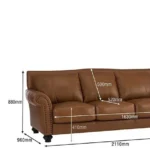
What is a settee sofa? It is a compact upholstered seat with a back and arms designed for two to three people. The term often overlaps with loveseat but usually implies a more formal silhouette.
You will see settees in entryways bedrooms and small living rooms. They bridge the gap between a chair and a full-size sofa.
Manufacturer specifications indicate a typical overall length of 50 to 70 inches and a seat depth of 20 to 24 inches. Per CPSC 16 CFR Part 1633 all upholstered furniture sold in the US must meet open-flame resistance standards. Let's break down the details so you can decide if a settee fits your space.
What Is a Settee Sofa?
A settee sofa is a small-scale upholstered seating piece built for two to three adults. It features a full back two arms and a single seat cushion or two separate cushions. The silhouette reads more upright than a lounge sofa.
You get formal presence in a footprint that fits tight quarters.
Most models range from 48 to 72 inches wide. Seat height sits at 17 to 20 inches. Frame construction varies from kiln-dried hardwood to engineered wood with corner blocks.
Suspension systems include sinuous springs or eight-way hand-tied coils. Cushion fill options span high-density foam down-blend and polyester fiber. Upholstery choices cover linen cotton velvet leather and performance fabrics.
The category sits between an armchair and a standard three-seater sofa. It serves as primary seating in studios or secondary seating in larger rooms. Aggregate reviews indicate buyers choose settees for scale versatility and price.
You can explore related styles in our guide on compact two-seater options.
Settee vs. Sofa vs. Loveseat: The Real Differences
Size is the clearest divider. A standard sofa measures 72 to 96 inches wide and seats three to four people. A settee runs 48 to 72 inches wide and seats two to three.
A loveseat falls in the same width band but often reads more casual with deeper seats and lower backs.

Image source: Wikimedia Commons / jdverstrate (CC BY-SA)
Seat depth tells another story. Sofas push 22 to 26 inches deep for lounging. Settees hold at 20 to 24 inches for upright posture.
Loveseats vary by style but trend deeper. Back height follows suit. Sofas sit at 30 to 36 inches.
Settees match that range with tighter proportions. Loveseats often drop to 28 to 32 inches.
Formality sets the settee apart. Rolled arms camelback profiles and exposed wood legs signal traditional rooms. Track arms and block feet suit modern spaces.
Loveseats lean casual with pillow tops or overstuffed cushions. Sofas span the full spectrum. If you want a quick visual reference our sofa types breakdown maps the full lineup.
Weight capacity differs too. A quality settee supports 250 to 500 pounds total. A full sofa handles 600 to 1000 pounds.
Loveseats land near settee numbers. Frame warranty runs five years to lifetime on better settees. Cushion warranty covers one to five years.
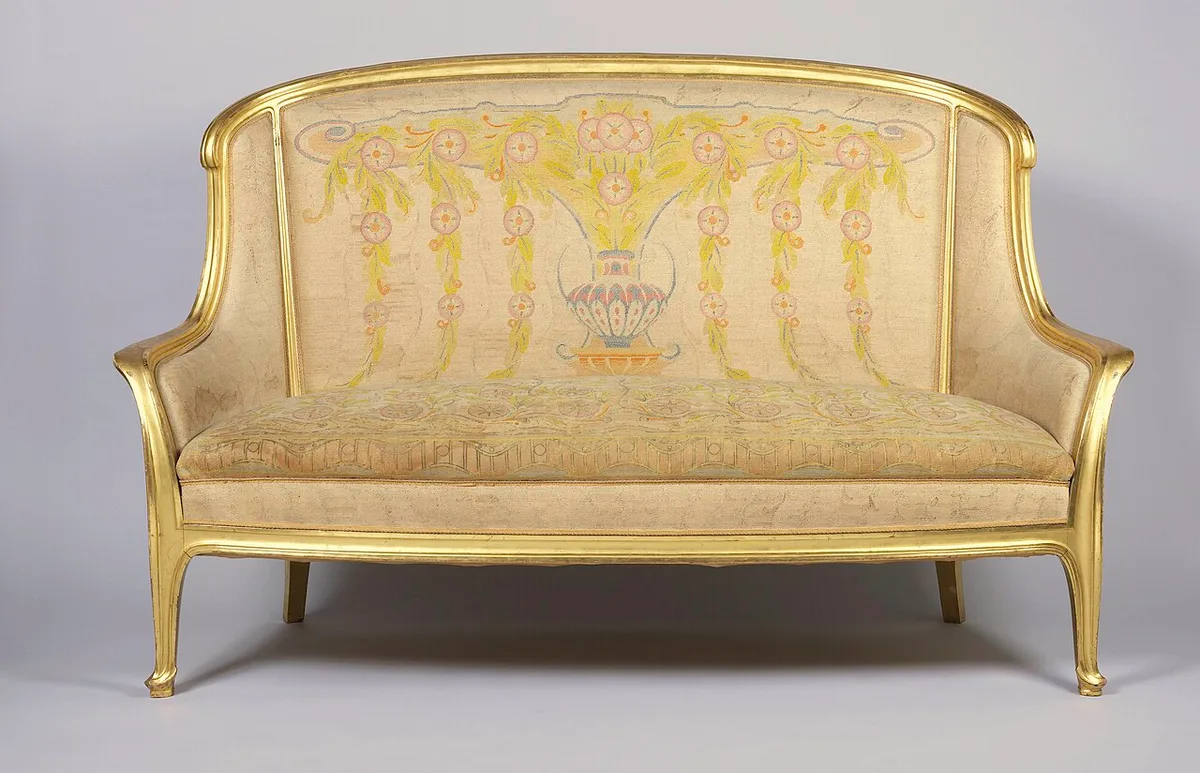
Image source: Wikimedia Commons / Unknown artistUnknown artist
Key Features That Define a Settee
Frame quality drives longevity. Look for kiln-dried hardwood with dowel and corner-block joinery. Engineered wood frames cost less but can sag within two to three years.
Sinuous springs offer firm support at a lower price. Eight-way hand-tied coils deliver premium feel and durability. Webbing systems appear on budget models and stretch faster.
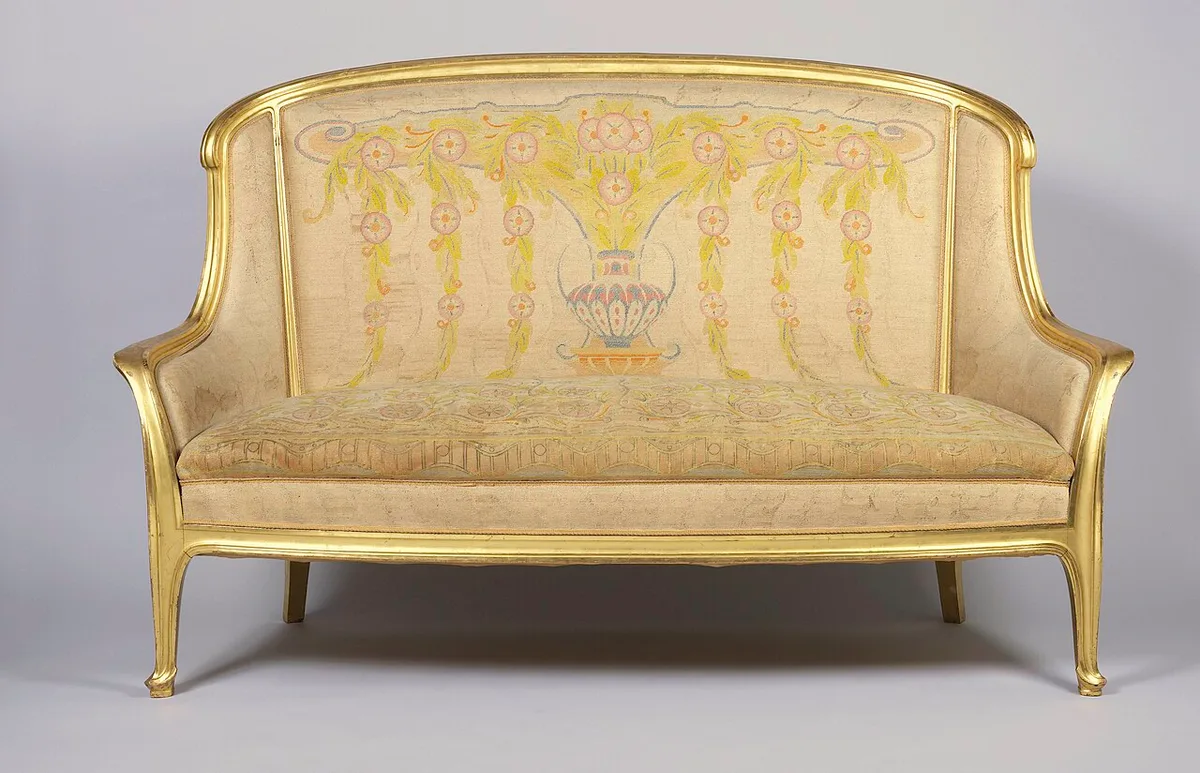
Image source: Wikimedia Commons / Unknown artistUnknown artist
Arm style shapes the vibe. Rolled arms suit traditional and English country rooms. Track arms fit modern and mid-century spaces.
English arms bring a soft roll with a tailored look. Camelback arms arch high for formal presence. Armless designs maximize seating width in tiny footprints.
You can see the anatomy in our sofa parts guide.
Cushion fill changes daily comfort. High-density foam at 1.8 to 2.5 pounds per cubic foot holds shape for years. Down-blend wraps foam with a soft top layer.
It needs regular fluffing. Polyester fiber costs least but compresses fast. Seat cushion construction matters.
Reversible cushions wear evenly. Attached cushions stay neat but cannot be flipped.
Fabric durability uses double rub counts. Residential standards start at 15000 double rubs. Heavy-duty residential hits 30000 plus.
Performance fabrics add stain resistance and cleanability. Leather grades range from corrected grain to full aniline. Leg style affects visual weight.
Tapered wood legs lighten the look. Block feet ground the piece. Casters add mobility but can damage floors.
Where a Settee Works Best
Small living rooms under 200 square feet top the list. A settee anchors the seating group without crowding walkways. Studio apartments benefit from the dual role of daytime seat and occasional guest bed.
Bedrooms gain a dressing perch or reading spot at the foot of the bed. Entryways and foyers welcome a formal touch that greets guests.
Home offices use settees for client seating or a quick break. Reading nooks pair a settee with a floor lamp and side table. Open-plan spaces deploy settees to define zones without blocking sightlines.
Renters value the lighter weight and easier moving. Downsizers appreciate the scale match for condos and senior living units.
Apartment-sized sofas share this niche but often run deeper. A settee keeps circulation paths clear. Standard doorways at 30 to 32 inches admit most settees without disassembly.
Stairwells and tight corners pass easier than a full sofa. If you need exact clearance numbers our sofa size guide lists doorway and hallway specs.
Commercial lobbies and waiting areas specify settees for high-traffic durability. BIFMA seating standards reference commercial-grade construction. Healthcare settings choose cleanable performance fabrics.
Hospitality projects mix settees with lounge chairs for flexible layouts. The key is matching scale to room volume.
What to Watch For Before You Buy
Terminology confusion tops the frustration list. Retailers label the same piece settee loveseat or apartment sofa interchangeably. Check dimensions not names.
Measure your room and doorway clearances before ordering. Allow 18 inches of walkway clearance around the piece. Compare seat depth to your height.
Shallow seats suit shorter users. Deeper seats favor taller users.
Frame joinery reveals quality fast. Ask for kiln-dried hardwood with corner blocks. Avoid staples-only construction.
Test cushion resilience in person if possible. Press the foam. It should rebound in seconds.
Down-blend feels soft but needs daily fluffing. Fabric swatches look different in your lighting. Order samples.
View them morning noon and night.
Delivery method matters. Threshold drop leaves assembly to you. White-glove service places and assembles in room.
Measure stairwells elevator doors and hallway turns. Weight ranges from 60 to 150 pounds. Two people can move most settees.
Sectional connectors and sleeper mechanisms add bulk. Budget brands may skip fire-label compliance. Verify California TB117-2013 tags.
Warranty terms vary. Frame coverage five years to lifetime. Cushion coverage one to five years.
Fabric coverage often excludes wear. Read the fine print. Return policies differ.
Restocking fees can hit 15 to 25 percent. Return shipping on large items runs high. Our standard sofa guide compares warranty norms across categories.
Price bands signal build tier. Entry level 300 to 800 dollars uses engineered wood webbing and polyester fiber. Mid range 800 to 1800 dollars brings hardwood frames sinuous springs and performance fabric.
High end 1800 dollars plus delivers eight-way hand-tied coils down-blend cushions and top-grain leather. As of 2026 supply chain stability has improved but lead times still stretch four to twelve weeks on custom orders.
How to Choose the Right One
Start with your room measurements. Sketch a quick floor plan including doorways windows and traffic paths. Allow 18 inches of clearance on all sides.
Match seat depth to the primary user. Shallow 20 inch seats suit petite frames. Standard 22 inch seats work for most adults.
Deep 24 inch seats favor taller people who like to tuck their legs.
Frame construction decides lifespan. Kiln-dried hardwood with corner blocks lasts decades. Engineered wood with staples fails in two to three years.
Ask the retailer for frame specs. If they cannot confirm hardwood walk away. Suspension follows the same logic.
Sinuous springs give firm support for five to seven years. Eight-way hand-tied coils hold comfort for 15 plus years. Webbing stretches fast.
Fabric choice matches lifestyle. Households with kids or pets need performance fabric rated 30000 double rubs minimum. Look for Crypton Sunbrella or similar stain-resistant finishes.
Leather develops patina but scratches show. Velvet feels luxe but crushes in high traffic. Linen breathes well but wrinkles.
Order swatches. Tape them to the wall. Live with them for 48 hours.
Cushion fill drives daily feel. High-density foam at 2.0 pounds per cubic foot stays supportive. Down-blend adds softness but requires fluffing.
Hybrid cores wrap foam in a down envelope. Test sit for ten minutes. You should not bottom out.
Your knees should bend at 90 degrees with feet flat.
Style must dialogue with existing pieces. A rolled-arm settee reads traditional next to a modern sectional. Track arms bridge contemporary and mid-century.
Armless designs disappear visually in tight spots. Leg finish ties the room together. Match wood tones to flooring or other furniture.
Metal legs suit industrial lofts.
Budget allocation matters. Spend 60 percent on frame and suspension. Spend 30 percent on fabric durability.
Spend 10 percent on aesthetic details. A $1200 settee with hardwood frame and performance fabric outperforms a $2000 settee with engineered wood and velvet. Check warranty terms.
Lifetime frame warranty signals manufacturer confidence. One-year cushion warranty signals cost cutting.
Delivery logistics can derail the project. Measure every doorway stairwell and elevator. Confirm the piece fits through the tightest turn.
White-glove delivery costs $150 to $300 but saves damaged walls and strained backs. Threshold delivery leaves assembly to you. Most settees arrive in two cartons.
Assembly takes 15 minutes with a screwdriver.
Frequently Asked Questions
How many people fit on a settee sofa?
Two adults sit comfortably. Three fit for short periods if the piece runs 70 inches wide. Seat cushions usually divide at the center.
Can a settee be used as a primary sofa?
Yes in studios or small living rooms under 200 square feet. It serves as the main seating anchor. Pair it with a chair or ottoman for extra spots.
What is the difference between a settee and a loveseat?
They share dimensions. Settees tend toward formal upright silhouettes with higher backs. Loveseats lean casual with deeper seats and lower profiles.
Retailers use the terms interchangeably.
How long does a quality settee last?
A hardwood frame with eight-way hand-tied coils lasts 15 to 20 years. Cushion foam replaces at the 7 to 10 year mark. Fabric wears at 10 to 15 years depending on use.
Is a settee comfortable for daily use?
Yes when seat depth matches your height and cushion density hits 2.0 pounds per cubic foot. Test sit before buying. Shallow seats feel upright.
Deep seats invite lounging.
What fabric holds up best to pets?
Performance fabrics with tight weaves and stain guards resist claws and accidents. Crypton and Sunbrella lead the category. Leather wipes clean but shows scratches.