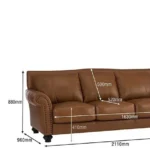
What is a sofa frame made of? That answer decides whether your couch holds up for fifteen years or sags by year two. The frame is the hidden skeleton under the cushions, and it controls feel, strength, and lifespan.
Manufacturer specs put a typical residential frame rating near 500 pounds of total load. Standards bodies such as ASTM International and BIFMA test frames for joint strength and stability. Here's how to read what's underneath, starting with the failures cheap frames show first.
What Is a Sofa Frame Made Of?
A sofa frame is the load-bearing skeleton under the cushions. Most frames use solid wood, engineered wood, or metal. Budget models sometimes use particle board or plastic.
Kiln-dried hardwood with mortise and tenon joints lasts longest. Frame quality decides comfort, sag resistance, and overall sofa life.
Why Frame Material Matters: Common Pain Points & Why It's Not Just "Wood"
Most sofa complaints are really frame complaints wearing cushions. Owners blame the foam, but the skeleton underneath failed first. Aggregate owner reviews keep pointing at the same handful of breaks.
- Squeaking joints from loose dowels or dried glue.
- Sagging seats from slats spaced too far apart.
- Wobble from uneven legs or a racked corner block.
- Cracked rails where particle board took the load.
- Warping where air-dried softwood met a damp room.
Humidity matters more than shoppers expect. Engineered panels soak up moisture, swell, and never dry flat again. That is why cheap flat-pack frames die first in sunrooms and coastal homes.
Marketing labels add to the confusion. A frame tagged "solid hardwood" can still hide softwood stretchers or composite corner blocks. Read the joinery, not the sticker.
A cheap frame turns good foam into a bad investment. Price tells you little. Joinery tells you everything.
Ask the seller what species the rails use. If they cannot name one, that is your answer. And check the warranty, since honest frame coverage runs five years or more.
Weight is another clue, because solid hardwood frames run 40 to 50 pounds. Our guide to sofa anatomy names every rail, arm, and deck part you will hear described.
Core Explanation: Sofa Frame Materials, Joints, and Construction Methods
Start at the deck. That is the flat platform your cushions sit on, framed by a front rail, a back rail, and two side rails. Stretchers tie those rails together, and corner blocks brace each angle.
Below the deck you will see sinuous steel springs, elastic webbing, or eight-way hand-tied coils. Legs bolt to the corners. Some open bases run wooden slats instead.
Joints carry the whole load:
- Mortise and tenon: strongest, glued and often doweled.
- Corner blocks with screws: common, serviceable, repairable.
- Dowels: fine in hardwood, useless in particle board.
- Pocket screws: acceptable on light duty, loose under racking.
Species matter as much as the joint. Kiln-dried oak, maple, or beech resists warping. Air-dried pine moves with the seasons.
As of 2026, many mid-range frames blend hardwood rails with engineered corner blocks. That mix holds the price down.
Body size changes the engineering too. A longer frame needs a center stretcher or the middle bows, which is why sofa dimensions matter. A divan base drops the legs entirely and sits on a platform.
Traditional builds lean on turned hardwood. Contemporary builds hide steel inside upholstered shapes. Flip any sofa on its back before you buy.
Loose screws, glue blobs, and gaps at the joints tell you enough.
Features & Components: Solid Wood, Engineered Wood, Metal, Plastic & Their Key Traits
Every frame falls into one of four material buckets. Their specs decide how the sofa carries weight, handles humidity, and ages.

| Material | Typical spec | Load rating | Expected life |
|---|---|---|---|
| Solid hardwood (oak, maple, beech) | 1.5 to 2.5 inch kiln-dried stock | 500 to 800 lb | 15 to 20 plus years |
| Engineered panel (plywood, MDF) | 3/4 to 1 inch, screw-fixed | 300 to 500 lb | 5 to 8 years |
| Steel or aluminum | Welded tube, powder coated | 500 to 800 lb | 15 plus years |
| Plastic or composite blend | Molded, bolt-on legs | 250 to 400 lb | 3 to 5 years |
Thickness drives strength. A 1.5 inch oak rail beats a 2.5 inch pine rail every time. Density does the work, not the species name alone.
Hardware matters too. Corner blocks should be screwed and glued, never glued alone. Center stretchers stop long decks from bowing.
Watch the legs next. They take point loads when you sit on the arm or climb aboard. Cheap plastic glides crack.
Solid turned feet or steel posts hold.
Ask for the spec sheet. Reputable brands publish rail thickness and joint type. If the sheet stays vague, assume the thinnest stock.
Weight is a clue as well, since a sound frame runs 40 to 50 pounds.
Benefits & Drawbacks: Pros, Cons, and Real-World Trade-offs of Each Material
Solid hardwood wins on strength and repair. A cracked rail can be re-glued or replaced. It also holds screws for decades.
The downsides are price, weight, and movement if the wood was not kiln-dried.
Engineered board wins on cost and shape. It takes curved arms and stays flat in dry heat. It swells in damp rooms, strips screws loose, and cannot be repaired.
Metal wins on raw strength and fire behavior. It sags less and never rots. It can creak, rattle, and feel cold under upholstery.
Plastic blends win on price and moisture. They lose on load capacity and long-term creep.

Composite panels carry one more concern, and that is emissions. Look for stock that meets California Air Resources Board limits on formaldehyde. Ask for the sheet, not a verbal promise.
Aggregate buyer reviews show the same pattern. Frames rated at 500 pounds or more drew far fewer sag complaints. Cheap panels topped the complaint lists inside three years.
Match material to room, not to showroom. Damp or sunny spaces push you toward kiln-dried hardwood or coated steel. Heavy daily use pushes you toward mortise and tenon joints.
Light guest room duty lets engineered board earn its keep. Comfort foam cannot fix a weak skeleton.
Comparison: Solid Wood vs Engineered Wood vs Metal vs Plastic for Your Home
| Material | Best for | Watch out for | Typical sofa band |
|---|---|---|---|
| Solid hardwood | Daily family use, heavy sitters | Cost, weight | $900 and up |
| Engineered board | Budget buys, dry rooms | Moisture, stripped screws | Under $600 |
| Steel | Commercial spaces, modern builds | Creak, rattle | $600 to $1,500 |
| Plastic blend | Damp rooms, light guest use | Creep, low load | Under $400 |
Pick by household, not by label. Families with kids and pets should buy hardwood. Older adults who want light weight and easy movement can take steel.
A spare-room settee gets away with engineered board. Reclining frames add a metal mechanism, so the wood rail matters even more.
Certified timber is worth asking about. FSC-certified stock means the timber came from managed forests. More mid-range brands list it on the spec sheet as of 2026.
Match the frame to the room style too. Traditional builds reward solid hardwood rails. Contemporary builds hide steel inside clean upholstered lines.
Either way, the frame outlasts the fabric you pick.
One last check before you sign. Flip the sofa over. Look for joint type, rail thickness, and center support.
Comfort lasts longer when the skeleton does. Those three details beat every badge on the tag.
Best Use Cases: Who Needs Solid Wood, Who Should Choose Metal, and Other Scenarios
Solid hardwood frames suit households with daily heavy use, children, or pets. Kiln-dried oak or maple resists dents and warps in humid rooms. If you rent or move often, the extra 20 pounds matters, so engineered board or lightweight steel may feel better.
Damp basements or sunrooms push you toward metal or plastic blends, which stay dimensionally stable when moisture spikes. A narrow apartment or studio benefits from a low-profile metal frame that maximizes floor space. Guest rooms or occasional-use sofas justify engineered particle board, since sag risk stays low without daily load.
Commercial settings like cafés or waiting rooms demand steel or reinforced composites because code compliance and fire ratings matter more than tactile warmth. Ask yourself how many hours per day someone will sit, what the room’s humidity is, and whether the style calls for turned legs or clean lines. Answering those three questions narrows the material choice faster than any showroom tag.
If you work from a home office, a sturdy frame also supports frequent sitting shifts without creaking over time. Checking typical dimensions before buying helps avoid mismatched scale, typical dimensions guide can clarify expected width and depth for your space.
Mistakes to Avoid: Common Errors When Picking or Assembling a Frame
Buying a frame tagged solid wood without checking the joinery often hides softwood stretchers or composite corner blocks. Skipping the weight rating leaves you with a frame that sags under regular family use within two years. Assembling particle board with standard screws strips the material quickly, so use pre-drilled holes and wood glue for any DIY work.
Ignoring center support on sofas wider than 80 inches allows the deck to bow, which no amount of foam can fix. Placing a heavy sofa on a carpet without leg pads accelerates floor scratches and leg wobble over time. Ignoring manufacturer warranty terms means you have no recourse if joints loosen or rails crack under normal load.
federal safety standards recommend checking joint integrity before purchase, and always flip the sofa to inspect rail thickness and center stretcher before finalizing.
Frequently Asked Questions
What is a sofa frame made of?
A sofa frame is typically built from solid hardwood, engineered wood, metal, or plastic blends. Kiln-dried hardwood offers the longest lifespan, resisting warping and sagging over fifteen years or more, while particle board and plastic blends usually last three to five years under normal use.
How do I know if a frame is high quality?
Look for mortise and tenon joints, kiln-dried lumber, and a weight rating of at least 500 pounds. Avoid frames that rely on glue alone or use particle board for daily use, as these tend to fail noticeably sooner.
Can I repair a sofa frame myself?
Yes, loose corner blocks can be re-glued and re-screwed, and broken slats can be replaced with matching wood stock from a hardware store. DIYers should sand edges smooth, reapply finish for a seamless look, and check that screw holes align with existing frames.
Does frame material affect fire safety?
Metal and properly treated hardwood meet ASTM E84 Class A fire ratings for home use. Some engineered panels may emit formaldehyde if not CARB Phase 2 certified. Always verify labeling and request test reports before purchase for safety compliance.
What should I check before buying online?
Read the product spec sheet for rail thickness, joint type, and material species. Check weight capacity ratings as well, because online reviews often omit real-world load details. If possible, call the retailer to confirm actual load limits when shopping.