Image source: Bing (Web (fair-use with source credit))
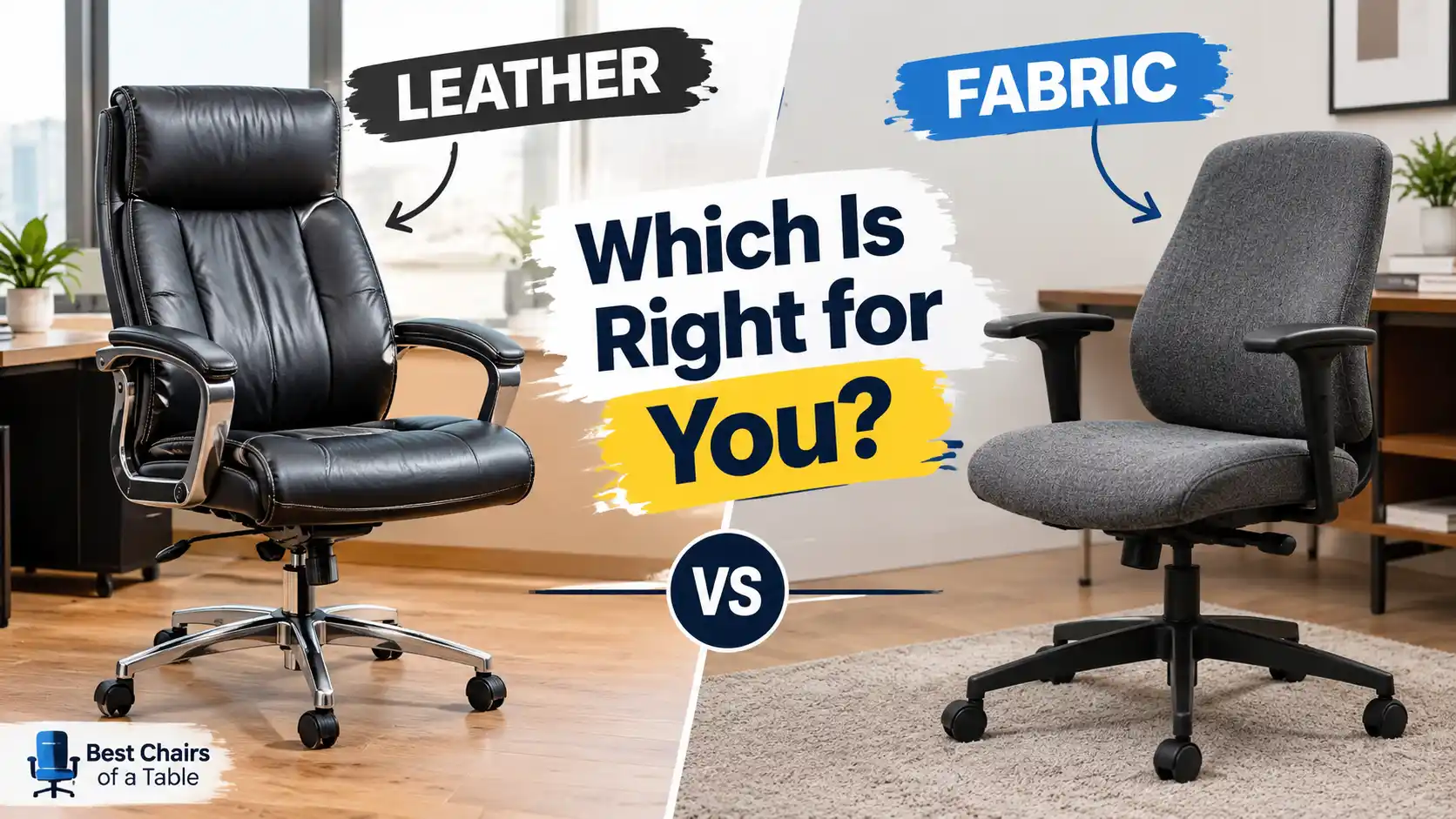
You picked up “leather vs fabric chairs comparison” because you’re trying to make a decision that’s going to impact your home every single day. Both materials have strong advocates, but neither one wins universally. The right answer depends entirely on your climate, your household routine, and what you’re willing to maintain over time.
Our research across thousands of verified buyer reviews, manufacturer specifications, and material science data shows leather typically lasts longer on paper, but fabric performs better in high-mess, high-pet households when you choose the right weave. This breakdown will walk you through exactly what each material does, where each one excels or fails, and how to pick the winner for your specific situation.
Quick Answer
Leather vs Fabric Chairs Comparison: Quality leather outlasts fabric by decades when properly conditioned. Fabric offers more color variety and generally costs less upfront. Leather cleans faster but shows scratches.
Fabric absorbs stains but hides pet hair. Your climate, pets, kids, and lifestyle decide the winner.
- Quality leather lasts 15 to 25 years minimum.
- Good fabric chairs last 5 to 15 years depending on grade.
- Leather costs more upfront but may save money long term.
- Fabric provides greater design flexibility at lower price points.
- Hot and humid climates favor breathable fabric heavily.
- Homes with young children often perform best with performance fabric.
What Actually Makes Leather and Fabric Different
The Material Science Behind Your Choice
Leather and fabric come from completely different source categories, and that fundamental difference drives nearly every behavior you’ll notice in daily use.
Leather is a natural protein material derived from animal hide. The collagen fiber structure creates a dense, flexible matrix that can be treated, dyed, and finished in multiple ways. When tanned properly, those collagen fibers resist microbial breakdown and maintain structural integrity far longer than most textile weaves.
Fabric upholstery covers a broad category. Common chair fabrics include tightly woven microfiber, cotton blends, polyester weaves, linen, velvet, and chenille. Each textile has its own fiber composition, weave density, and treatment history that determines how liquid, abrasion, and UV light interact with the surface.
The critical distinction lies in porosity. Leather has microscopic pores that allow air to pass through, which is why quality leather breathes. Fabric porosity varies wildly by weave tightness and fiber type.
A solution-dyed polyester will absorb almost nothing, while a loose-weave cotton will soak up spills like a sponge.
This porosity difference directly impacts two things you’ll experience daily: how quickly a spill dries on the surface, and how much heat your body retains during long sitting sessions. Leather transfers heat rapidly and can feel cool initially before warming to your body temperature. Fabric acts as an insulator, so it may feel warmer against your skin during extended use.
| Factor | Leather | Fabric |
|---|---|---|
| Source material | Animal hide (collagen matrix) | Plant, synthetic, or blended fibers |
| Porosity | Naturally breathable through pores | Varies by weave; generally less breathable |
| Liquid interaction | Beads and wipes from surface | Absorbs into fibers unless treated |
| Heat response | Conducts heat; feels cooler initially | Insulates; feels warmer over time |
| Surface texture | Smooth to pebbled grain patterns | Wide range from soft plush to tight weave |
| Aging behavior | Develops patina; may crack if neglected | Fades, pills, or fades depending on fiber |
| Allergen profile | Sheds surface dust easily | Can trap dust mites and dander deep inside |
Understanding this foundation matters because it explains why no single comparison chart can declare a universal winner. Your environment and habits determine which material’s natural behaviors work in your favor. You can read more about different chair types across price tiers to see how upholstery choices affect value at every budget level.
Leather Chairs: Grades, Feel, and Long-Term Behavior
Full-Grain, Top-Grain, Genuine, Bonded — and Why It Matters
Not all leather is created equal, and the naming conventions used by furniture brands can be misleading. Understanding the four main grades will save you from spending premium prices on materials that won’t last.
Full-grain leather represents the highest quality tier. It comes from the top layer of the hide and retains the natural grain pattern including any imperfections like scars or wrinkles. These marks are signs of authenticity, not flaws.
Full-grain leather develops a rich patina over time and is extremely durable when maintained properly. It commands the highest price because it uses the strongest part of the hide.
Top-grain leather has been lightly sanded or buffed to remove surface imperfections. This creates a more uniform appearance and a smoother feel than full-grain, but it also removes some of the densest fiber structure near the surface. Top-grain still offers excellent durability and is the most common choice for mid-to-high-end furniture.
It accepts dye and finish more evenly than full-grain.
Genuine leather is a marketing term that causes the most confusion. It refers to real leather, but not necessarily high-quality leather. In industry practice, genuine leather often describes lower-grade split layers that have been coated with polyurethane or pigment finishes.
It will wear, crack, and peel significantly faster than full-grain or top-grain options. Don’t let the word “genuine” convince you that the quality matches the name.
Bonded leather sits at the bottom of the hierarchy. It consists of shredded leather scraps and fibers bonded together with polyurethane coatings on a fabric backing. The result looks like leather from a distance but lacks the structural integrity of real hide.
Bonded leather typically begins cracking and delaminating within three to seven years, sometimes much sooner. It’s priced attractively, but you pay for it in replacement costs.
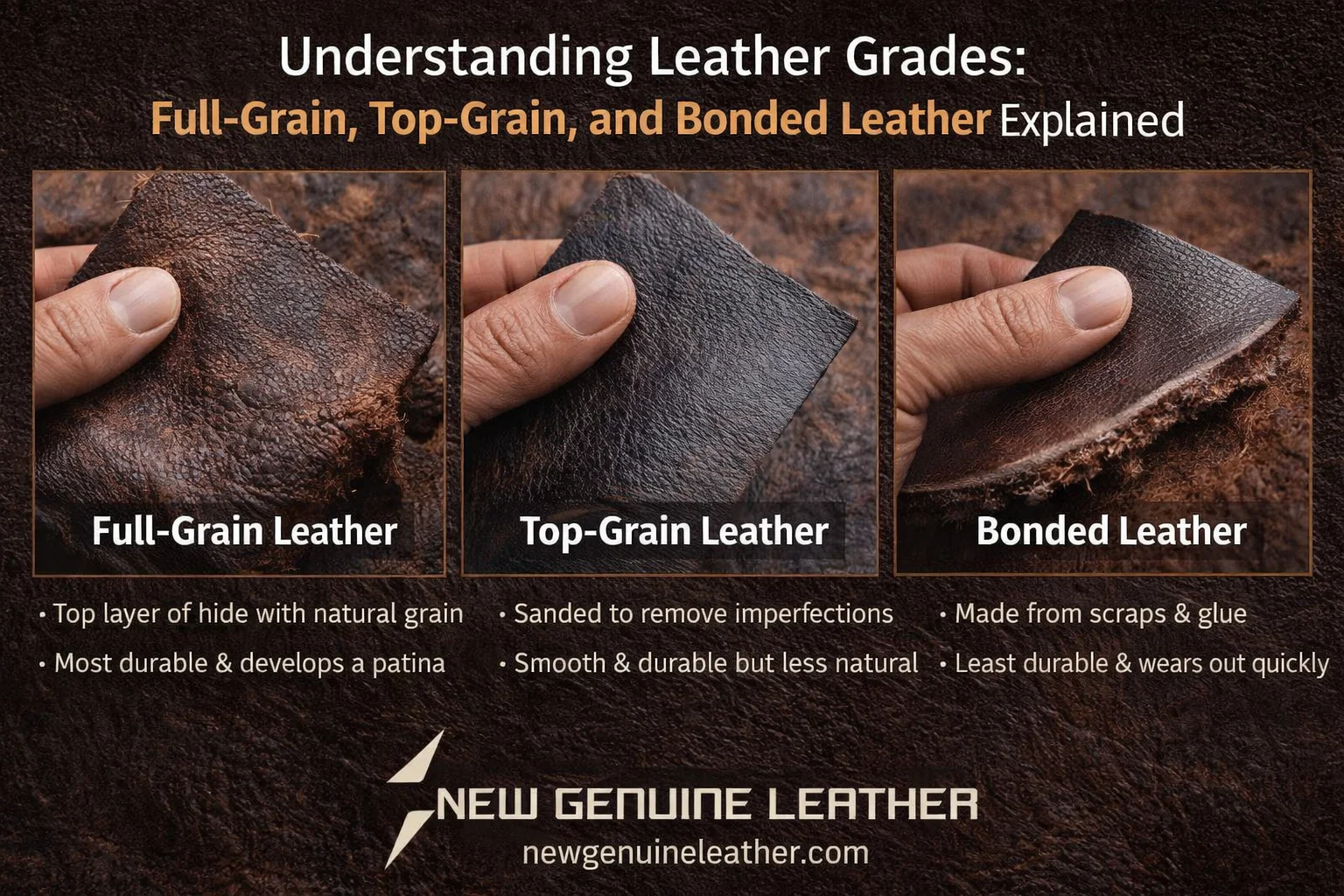
Image source: Bing (Web (fair-use with source credit))
Here’s the practical takeaway: if you’re investing in a leather chair, target full-grain or top-grain exclusively. Avoid anything labeled simply “genuine leather” or “bonded leather” unless you’re furnishing a low-use guest room on an extremely tight budget.
The grain structure also affects how the material responds to scratches. Full-grain and top-grain leather can often be conditioned and massaged to blend out minor scuffs. Bonded leather offers no such recovery path.
Scratches tear through the thin polymer coating and expose the broken fiber core beneath.
How Leather Ages, Breathability, and Climate Comfort
One of leather’s most distinctive qualities is how it changes over time, and that change isn’t always predictable without understanding the chemistry behind it.
Patina development occurs when the natural oils and dyes in quality leather oxidize and interact with light, heat, and skin contact. Over months and years, the surface softens and deepens in color, developing subtle variations that give character. This is considered desirable aging by most leather enthusiasts.
Cheap leather with heavy pigment coatings won’t develop patina because the coating seals the fibers. Instead, it cracks and flakes as the underlying material dries out.
Breathability is directly tied to grain integrity. Full-grain and top-grain leathers retain open pore structures that allow air and moisture vapor to pass through. This is why leather chairs feel comfortable during extended sitting.
Your body heat doesn’t get trapped against your skin the way it might with non-breathable synthetic materials. Bonded leather and heavily corrected surfaces have their pores sealed by thick finish layers, which defeats the breathability advantage entirely.
Climate plays a major role in leather longevity and comfort. In hot and humid environments, leather can feel sticky against bare skin during summer months. However, those same humid conditions help prevent leather from drying out and cracking, which is the primary failure mode in dry climates.
If you live in an arid region like the American Southwest, you’ll need to condition leather furniture more frequently to compensate for low ambient humidity.
Conversely, cold climates make leather feel noticeably chilly when you first sit down. The material conducts heat away from your body rapidly until it warms to equilibrium. Fabric chairs don’t have this initial thermal shock because textiles insulate rather than conduct.
| Climate Zone | Leather Performance Notes | Fabric Performance Notes |
|---|---|---|
| Hot and humid | May feel sticky; humidity helps prevent cracking | Breathable weaves excel; mold risk if damp cushions stay wet |
| Cold and dry | Feels cold initially; risk of cracking without conditioning | Warm touch feel; static buildup possible in very dry air |
| Arid desert | Requires regular conditioning every 3-6 months | Fade resistance depends on UV treatment and fiber type |
| Coastal salt air | Salt can accelerate finish deterioration | Metal frame parts may corrode; fabric fades in sun |
The Real Pros and Cons of Choosing Leather
After reviewing material science and real-world performance data, here’s an honest accounting of what leather delivers and where it falls short.
Advantages:
- Spills wipe clean instantly when addressed promptly. A glass of red wine or coffee won’t penetrate the surface if you blot it within minutes.
- Quality leather develops attractive patina over years of use instead of looking worn or damaged.
- Pet hair sits on the surface and removes easily with a damp cloth or rubber glove.
- Leather doesn’t harbor dust mites or pet dander deep within the material like fabric does, which helps allergy sufferers.
- Full-grain and top-grain options can last two decades or more with proper care.
- The sleek, unified surface complements minimalist and modern interior design styles effectively.
- Leather chairs tend to hold their resale value better than fabric alternatives when reselling furniture.
Disadvantages:
- Upfront cost runs significantly higher than comparable fabric chairs, especially for full-grain or top-grain options.
- Scratches and scuff marks are visible on smooth finishes, though minor marks can often be blended with conditioning.
- Leather requires periodic conditioning, typically every six to twelve months, to prevent drying and cracking.
- In warm climates, leather can adhere uncomfortably to bare legs during hot afternoons.
- Direct sunlight accelerates fading and drying, so positioning near windows demands protective measures.
- Low-grade bonded or genuinely mislabeled leather products fail prematurely and waste money.
- Repairing deep cuts or tears in leather is difficult and often requires professional intervention.
You might also want to compare ergonomic office chairs designed for back support since ergonomics interact strongly with your upholstery choice for daily use chairs.
Fabric Chairs: Weaves, Treatments, and Everyday Performance
Microfiber, Cotton, Polyester, Linen, Velvet — What’s Best for You?
Fabric isn’t a single material. It’s a category that spans dozens of fiber types, weave constructions, and chemical treatments, each producing dramatically different performance characteristics. Picking the right fabric for your chair means matching those properties to your actual living situation rather than choosing based on color alone.
Microfiber is arguably the most practical fabric for everyday family homes. Despite the name, most modern microfiber is made from ultra-fine polyester fibers rather than actual microfibers derived from cellulose. The tight weave creates a surface that resists liquid absorption and repels stains when treated with appropriate protectants.
Pet hair slides off microfiber easily, and the dense weave resists snagging from claws better than looser weaves.
Cotton offers a soft, natural hand feel and breathes well in warm weather. Pure cotton upholstery, however, absorbs liquids quickly and stains readily. Cotton blends with polyester improve durability and reduce wrinkling, but the fabric still requires prompt stain treatment.
Cotton chairs look great in low-traffic rooms but struggle in active household spaces.
Polyester is the workhorse of modern upholstery. It resists shrinking, stretching, and fading far better than natural fibers. Solution-dyed polyester, where color is added to the fiber before spinning rather than applied as a surface dye afterward, offers exceptional colorfastness and stain resistance.
This is why performance fabrics frequently use polyester as their base.
Linen provides a crisp, textured aesthetic that suits coastal and casual design styles. Natural linen is strong and breathable but wrinkles easily and shows soil patterns quickly. Most “linen-look” upholstery fabrics are actually linen-blend or polyester imitations designed to mimic the appearance without the maintenance burden of pure linen.
Velvet delivers a luxurious feel and rich color depth. Traditional velvet is made from silk, cotton, or wool, but modern upholstered velvet typically uses polyester or rayon blends. The nap direction creates light-and-shadow variation that can highlight or conceal wear patterns depending on how the fabric is cut and installed.
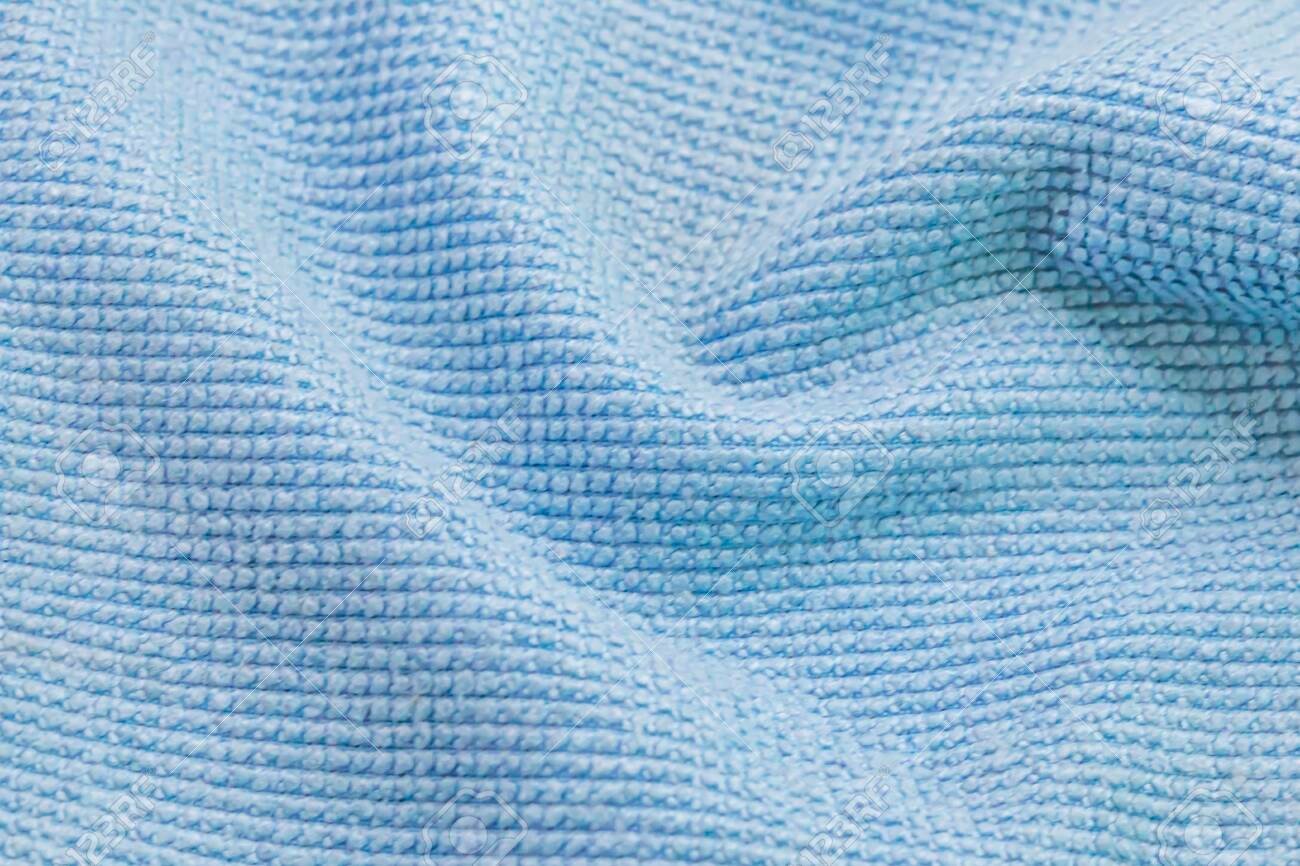
Image source: Bing (Web (fair-use with source credit))
When evaluating fabric options, look beyond the touch test. Request the Martindale rub count or double-rub rating from the manufacturer. This standardized durability measurement indicates how many cycles of abrasion the fabric can withstand before showing significant wear.
| Fabric Type | Stain Resistance | Durability Rating | Best Suited For | Maintenance Level |
|---|---|---|---|---|
| Microfiber | High (when treated) | High (tight weave) | Families with kids and pets | Low to moderate |
| Cotton | Low to moderate | Moderate | Low-traffic formal rooms | High (prompt spot cleaning needed) |
| Polyester | High (especially solution-dyed) | High | Daily-use chairs in active homes | Low |
| Linen | Low | Moderate | Light-use accent chairs | High (shows wrinkles and soil) |
| Velvet | Moderate to high (depends on blend) | Moderate | Decorative and low-traffic spaces | Moderate (vacuum to lift nap) |
| Chenille | Low to moderate | Moderate | Cozy reading nooks and bedrooms | Moderate (vacuum regularly) |
Stain Resistance, Durability Ratings, and Fade Reality
Understanding how fabric actually performs against the things that damage it requires looking past marketing labels and examining the underlying specifications.
Stain resistance comes in two forms: surface-level treatment and inherent fiber properties. Most fabric chairs receive a commercial stain-resistant treatment during manufacturing, often using fluoropolymer-based protectants. These create a barrier that causes liquids to bead and roll off the surface.
However, these treatments degrade over time through washing, abrasion, and exposure to cleaning chemicals. Reapplication is possible but rarely addresses the root problem of a low-quality base fabric.
Solution-dyed fabrics take a different approach. The dye is incorporated into the liquid polymer before the fiber is extruded, meaning the color runs through the entire cross-section of the fiber rather than sitting on the surface. When solution-dyed fabric wears or abrades, the exposed inner fiber is the same color as the surface.
This makes fading and wear patterns far less noticeable over time.
Durability ratings follow standardized testing protocols. The Martindale test measures abrasion resistance by rubbing the fabric against an abrasive material under controlled pressure. Light-duty fabrics withstand approximately 5,000 to 9,000 double rubs.
Medium-duty ratings fall between 9,000 and 15,000 double rubs. Heavy-duty commercial fabrics exceed 15,000 double rubs and are suitable for high-traffic residential and contract settings.
Fade resistance depends heavily on both the dye method and the fiber composition. Solution-dyed polyester offers the best UV resistance available in consumer upholstery. Pigment-dyed fabrics, where color sits on the fiber surface, degrade faster under direct sunlight and may show noticeable fading within one to two years of sun exposure.
| Use Intensity | Recommended Martindale Rating | Expected Lifespan | Fabric Types That Qualify |
|---|---|---|---|
| Light (accent chair, guest room) | 5,000 to 9,000 double rubs | 5 to 8 years | Cotton blends, basic polyester, velvet |
| Medium (daily living room use) | 9,000 to 15,000 double rubs | 8 to 12 years | Microfiber, performance polyester, chenille |
| Heavy (high-traffic family room) | 15,000+ double rubs | 12 to 20 years | Treated microfiber, heavy-duty performance fabrics |
If you’re comparing costs across different seating categories including recliners, fabric selection becomes even more consequential because cheaper frames paired with cheap fabric amplify failure rates on both components simultaneously.
Side-by-Side: Leather vs Fabric Chair Comparison Table
Breathability, Comfort, Stain & Scratch Handling, Lifespan, and Maintenance Effort
Putting all the variables into a single comparison table gives you a quick reference point before diving into your specific situation. No single metric declares a winner because each factor favors different lifestyles.
| Category | Leather Wins When | Fabric Wins When |
|---|---|---|
| Cleaning spills | You want to wipe and go in seconds | You catch the spill before it soaks in and treat immediately |
| Heat comfort | You sit in climate-controlled rooms year-round | You live in hot climates or unconditioned spaces |
| Scratch visibility | You avoid sharp objects and pet claws can’t reach | You prefer textured weaves that hide minor scuffs naturally |
| Allergen resistance | Dust mites and pet dander trigger symptoms | You vacuum fabric thoroughly and use washable slipcovers |
| Long-term durability | You buy full-grain or top-grain and condition regularly | You select heavy-duty performance fabric with high Martindale ratings |
| Upfront cost | Budget allows $800 to $3,000+ for quality leather | You need a solid chair under $500 with acceptable lifespan |
| Design flexibility | You prefer neutral, classic tones and smooth surfaces | You want bold colors, patterns, and textures to define a room |
| Pet ownership | You have dogs that shed heavily on hard surfaces | You have cats whose claws threaten smooth leather surfaces |
| Kids in the house | Spills happen but you clean them within minutes | Spills seep in and require deeper cleaning methods over time |
| Maintenance willingness | You commit to conditioning every 6 to 12 months | You prefer to vacuum weekly and spot-clean as needed |
This table works best when you score yourself honestly against each row. The chair that wins for your neighbor may lose decisively for your household because your conditions differ. The next section breaks down those conditions into specific scenarios where one material clearly outperforms the other.
Which Scenario Wins Every Time
Pet Owners and Households with Kids
This household type changes the calculus entirely. Spills happen constantly. Pet accidents occur without warning.
Scratches and scuffs become inevitable rather than occasional. Your upholstery choice needs to handle chaos without demanding perfection.
Leather has a clear advantage when liquid spills are involved. A knocked-over glass of milk wipes away before it penetrates. Pet accidents on hard surfaces clean up with disinfectant and a paper towel.
Nothing soaks into the material if you respond within the first few minutes. That speed matters when toddlers and pets share your living space.
Fabric performs better against claws. Cats dig into soft surfaces instinctively, and smooth leather offers nothing to grip. Their claws slide off without catching.
Tight-weave microfiber and performance fabrics absorb that scratching impulse without destructive results. A cat tearing through leather creates irreversible damage. The same behavior on heavy-duty fabric might leave a tiny pull in the weave that vanishes after gentle brushing.
Pet hair behavior splits differently between materials too. Dogs shed constantly, and loose hair sticks to fabric textures like Velcro. You’ll find it in every seam and crevice.
Leather repels fur entirely. A damp cloth or rubber glove removes every strand in seconds. That convenience saves hours of vacuuming over a year.
| Household Scenario | Recommended Material | Why It Works |
|---|---|---|
| Multiple cats with regular scratching | Heavy-duty microfiber or performance fabric | Claws slide off or catch minimally without destroying surface |
| Dogs that shed heavily | Leather | Hair removes instantly with damp cloth or glove |
| Toddlers spilling drinks daily | Leather or solution-dyed polyester | Both resist deep absorption when treated properly |
| Pets with accident-prone house training | Leather | Surface wipes clean completely when addressed quickly |
| Active family room with constant use | High Martindale-rated fabric (15,000+ double rubs) | Abrasion resistance outlasts leather in high-contact zones |
The deciding factor comes down to which problem bothers you more. If spilled liquids terrify you, leather provides peace of mind. If claw damage keeps you anxious, a tightly woven performance fabric protects your investment better.
You can explore best desk chair options for home offices to see how upholstery choices affect ergonomic functionality alongside durability.
Hot, Humid, or Dry Climates
Your geographic location determines comfort more than any stylistic preference ever will. Climate interacts with material science in ways that make one option significantly more livable depending on where you sit.
Hot and humid environments present the most obvious challenge. Leather traps body heat against your skin during summer months. The surface becomes warm quickly and stays warm.
Sweat cannot evaporate efficiently because the material blocks airflow. You’ll experience that sticky discomfort during long sitting sessions, especially in chairs without active cooling features.
Fabric breathes differently based on weave density. Loose-weave linen and cotton allow air to circulate freely across your skin. Even tight microfiber permits more vapor transmission than sealed leather surfaces.
In regions where temperatures regularly exceed eighty-five degrees Fahrenheit, fabric delivers noticeably better comfort during extended use.
Humidity creates a different problem for leather. While moderate humidity prevents leather from drying out and cracking, persistent high moisture combined with poor ventilation encourages mold growth inside cushion cores. Fabric-covered chairs with breathable covers dry faster after accidental spills.
Leather seats conceal moisture longer, creating ideal conditions for microbial growth within the padding beneath the surface.
Dry climates demand the opposite approach. Low humidity pulls moisture from leather constantly. Without regular conditioning, full-grain leather dries out, loses suppleness, and eventually cracks along stress points like seat edges and armrest contact zones.
In desert regions with consistent forty percent relative humidity or below, leather requires maintenance every three to four months instead of the standard six to twelve month interval.
| Climate Condition | Best Material Choice | Maintenance Adjustment Needed |
|---|---|---|
| Hot and humid subtropical | Performance fabric or breathable weave | Monitor cushions for moisture; ensure airflow underneath |
| Dry desert with low humidity | Leather with scheduled conditioning | Condition every three to four months minimum |
| Coastal salt air exposure | Both perform adequately; protect metal frames | Wipe metal components periodically to prevent corrosion |
| Cold winter with heated interiors | Fabric for warmth; leather acceptable with rugs | Place throw blankets over leather during extreme cold snaps |
If you’re furnished around tall desk chairs for proper ergonomics, climate considerations extend beyond upholstery to how your body temperature regulates during eight-hour work sessions.
Home Offices and Long-Hour Sitting
People who spend four or more hours daily seated face different requirements than occasional chair users. Comfort under sustained load determines whether a chair serves you well or causes physical strain over time.
Leather conducts temperature away from your body initially, then warms to match your skin temperature. After twenty or thirty minutes, most people stop noticing the surface temperature entirely. The real question becomes whether the material supports proper posture throughout long work sessions.
Ergonomic design matters far more than upholstery choice for spine health and circulation.
Fabric provides consistent insulation regardless of ambient temperature. That insulating property feels comfortable in air-conditioned offices during winter but may cause sweating problems during summer months without climate control. The texture of woven fabric also creates slightly more friction against clothing, reducing sliding motion as you shift positions throughout the day.
Back support, lumbar adjustment, seat depth, and armrest positioning determine daily comfort far more than whether the surface is leather or fabric. Reviewing options for wrist support chairs alongside upholstery research ensures you address both structural and surface-level needs simultaneously.
| Sitting Duration | Priority Factor | Material Consideration |
|---|---|---|
| Two hours or less daily | Aesthetic preference and room style | Either material performs adequately |
| Four to six hours daily | Temperature regulation and breathability | Fabric generally more comfortable in warm rooms |
| Eight plus hours daily | Ergonomic structure trumps upholstery | Choose based on support features first, fabric second |
| Variable daily use | Versatility across seasons | Mid-tone fabrics mask seasonal temperature complaints better |
Professional chair fitters consistently report that customers prioritize comfort features over material preferences once they experience proper ergonomic support. Don’t let upholstery aesthetics override structural quality in chairs intended for prolonged daily use.
Formal Spaces and Design-First Rooms
Certain rooms demand specific aesthetic language, and material choice reinforces or undermines that intention immediately.
Leather conveys tradition, authority, and sophistication in dining rooms and formal living spaces. The smooth, uninterrupted surface reflects light subtly without the visual noise of weave patterns. Dark brown and black leather chairs anchor classic interior design schemes effectively.
They pair naturally with hardwood floors, traditional moldings, and substantial wood furniture pieces.
Fabric opens design possibilities that leather simply cannot match. Bold patterns, rich textures, and unconventional color palettes define contemporary and eclectic interiors. A velvet accent chair in emerald green commands attention in ways a brown leather equivalent never could.
Patterned fabrics introduce visual rhythm that breaks up large neutral spaces.
Guest rooms and formal dining areas see minimal daily traffic. Material durability matters less in spaces used two or three times per week. Here, aesthetic goals outweigh longevity concerns almost entirely.
A delicate linen chair looks gorgeous in a formal dining room despite requiring careful maintenance. Nobody will notice minor wear in a space that sees occasional use.
High-traffic living rooms and family rooms demand different priorities. Style still matters, but the chair must survive real life. Performance fabrics bridge this gap effectively by offering attractive appearances alongside practical durability ratings that exceed most leather at comparable price points.
If you’re coordinating multiple seating types throughout your home, understanding how much different recliner styles cost helps you budget appropriately across rooms with varying durability requirements.
Budget-First Buyers vs. Buy-It-for-Life Shoppers
Money conversations separate cleanly between upfront investment and long-term value calculations. Both approaches produce valid decisions depending on your financial priorities and timeline expectations.
Budget-conscious shoppers find compelling options in both categories. Quality fabric chairs range from one hundred to four hundred dollars for functional everyday pieces. Good entry-level top-grain leather chairs start around five hundred dollars and climb quickly from there.
Bonded leather options exist below three hundred dollars but carry substantial lifespan compromises that defeat the initial savings within five years.
Buy-it-for-life buyers invest in full-grain leather or heavy-duty commercial-grade fabrics with confidence. The upfront cost may reach fifteen hundred dollars or more, but proper maintenance extends service life well beyond a decade. Annual conditioning costs remain modest, typically between fifty and one hundred dollars for quality products applied twice yearly.
The math favors leather when the chair replaces three cheaper alternatives over twenty years.
Intermediate buyers often overlook a third path: mid-range top-grain leather paired with careful maintenance. These chairs deliver eighty percent of full-grain longevity at sixty percent of the price. They represent the sweet spot for families planning to keep furniture through multiple life stages rather than replacing items every five years.
| Buyer Profile | Recommended Approach | Expected Investment Range | Replacement Timeline Expectation |
|---|---|---|---|
| Strict budget constraint | Quality performance fabric | $150 to $400 per chair | 5 to 8 years with moderate care |
| Moderate budget, daily use | Top-grain leather or premium fabric | $500 to $1,200 per chair | 10 to 15 years with proper maintenance |
| Premium investment focus | Full-grain leather with lifetime frame | $1,200 to $4,000+ per chair | 20+ years with annual conditioning |
| Design-priority occasional use | Delicate fabric or decorative leather | $300 to $800 per chair | 8 to 12 years (low usage extends life) |
Financial decisions about furniture ultimately reflect how long you plan to stay in your current home and how much daily use you expect from each piece. Moving within three years justifies different spending than settling for twenty.
How Much Do Leather and Fabric Chairs Really Cost?
Upfront Price Ranges by Quality Tier
Price discussion without quality context misleads buyers into false economies. A three-hundred-dollar leather chair and a three-hundred-dollar fabric chair deliver fundamentally different experiences and lifespans. Understanding what drives cost differences prevents painful purchasing mistakes.
The cheapest tier exists across both materials. Bonded leather chairs and basic cotton-polyester blends appear frequently in big-box store clearance sections. These pieces look attractive in showroom lighting but degrade rapidly under real household conditions.
Fabric in this range typically carries Martindale ratings below seven thousand double rubs and lacks stain-resistant treatments. Bonded leather lacks the fiber structure to support anything beyond light residential use.
Mid-range pricing delivers noticeable quality improvements. Top-grain leather at this level uses proper tanning processes and protective finishes without excessive pigment coating. Quality fabric options include solution-dyed polyester with commercial-grade stain treatments and Martindale ratings above ten thousand double rubs.
Frames shift from engineered wood composites to kiln-dried hardwood construction at this price point.
Premium and luxury tiers separate clearly between materials. Full-grain leather chairs command prices reflecting both material rarity and skilled craftsmanship. Hand-stitched seams, premium padding layers, and solid hardwood frames justify costs reaching several thousand dollars per piece.
High-end fabric chairs at similar price points feature imported textiles, custom cushioning systems, and frame constructions designed for decades of daily abuse.
| Quality Tier | Leather Chair Price Range | Fabric Chair Price Range | What You Actually Get |
|---|---|---|---|
| Budget entry | $150 to $350 | $100 to $300 | Bonded leather or basic polyester blends; engineered wood frames |
| Mid-range reliable | $400 to $900 | $250 to $600 | Top-grain leather or performance fabric; hardwood frame basics |
| Premium durable | $900 to $1,800 | $600 to $1,200 | Full-grain or superior top-grain leather; heavy-duty performance fabrics |
| Luxury investment | $1,800 to $4,000+ | $1,200 to $2,500+ | Hand-selected hides, imported textiles, custom construction details |
Price variations within each category depend heavily on brand reputation, frame construction quality, cushion density specifications, and regional manufacturing costs. Imported European leather furniture carries different price structures than domestically produced American pieces even within identical quality tiers.
The price guide for various wheelchair and mobility seating options illustrates how medical-grade specifications dramatically increase base costs compared to residential furniture in comparable size categories.
Total Cost of Ownership: Conditioning, Cleaning, and Replacement Reality
Purchase price represents only the first payment in a furniture chair’s lifecycle. Hidden maintenance costs accumulate invisibly until replacement becomes necessary, often surprising budget-conscious buyers.
Leather conditioning products cost between fifteen and forty dollars per bottle. Applied twice annually to a single chair, that translates to thirty to eighty dollars per year in maintenance supplies. Professional leather cleaning services run eighty to one hundred fifty dollars per session for deep restoration work beyond routine surface treatment.
Minor scratch repair kits cost twenty-five to sixty dollars and handle small surface imperfections without professional intervention.
Fabric maintenance follows a different financial path. Commercial stain treatments and protectant sprays run twenty to fifty dollars per application and last approximately one to two years depending on usage intensity. Professional fabric cleaning costs one hundred to two hundred dollars per chair for thorough deep-cleaning services that remove embedded soil and neutralize odors.
Replacement cushion inserts run two hundred to five hundred dollars when original padding compresses beyond recovery after eight to twelve years.
Both materials share frame failure as the ultimate cost终结ator. When hardwood joints loosen or metal mechanisms break, repair costs frequently exceed fifty percent of replacement chair prices. This reality makes frame construction quality the most important cost factor hidden inside every upholstery purchase decision.
| Maintenance Activity | Leather Cost Estimate | Fabric Cost Estimate | Frequency Required |
|---|---|---|---|
| Regular cleaning supplies | $30 to $80 annually | $20 to $50 annually | Yearly supply refresh |
| Professional deep cleaning | $80 to $150 per session | $100 to $200 per session | Every two to three years |
| Scratch/stain repair materials | $25 to $60 per incident | $20 to $40 per incident | As needed |
| Cushion replacement | N/A (leather rarely needs) | $200 to $500 per set | Every 8 to 12 years |
| Frame repair or replacement | $150 to $400 | $150 to $400 | Irregular, depends on quality |
Total five-year ownership costs for a mid-range leather chair typically range from six hundred to one thousand two hundred dollars including purchase price and maintenance. Comparable fabric chairs land between five hundred and nine hundred dollars for the same period. The gap narrows significantly if fabric requires professional cleaning or cushion replacement during that timeframe.
Reading guides about desk chair lifespan and replacement indicators helps establish realistic expectations about when maintenance costs cross into replacement territory for any seating type.
Where the Hidden Costs Hide
Several cost factors operate invisibly during purchase decisions but create significant financial impact over time. Awareness of these hidden expenses separates informed buyers from regretful ones.
Sunlight exposure accelerates deterioration in both materials but follows different degradation patterns. Leather fades and dries under UV exposure, requiring more frequent conditioning in sun-drenched rooms. Direct sunlight destroys fabric dyes permanently through photochemical breakdown.
Solution-dyed polyester resists UV fading substantially better than pigment-dyed alternatives, making it the smarter choice for sun-exposed seating areas.
Positioning decisions carry financial consequences too. Chairs placed against exterior walls in cold climates experience temperature fluctuations that contract and expand frame materials differently than climate-controlled interior placements. These expansion cycles stress joint connections and accelerate wear on upholstered stress points.
Interior room placement extends structural lifespan by two to four years on average compared to perimeter positioning.
Insurance and replacement value considerations rarely enter purchase conversations but matter significantly for high-value furniture investments. Full-grain leather chairs retain resale value better than fabric equivalents because condition assessment remains straightforward. Buyers can evaluate leather quality visually and by touch without specialized knowledge.
Fabric condition depends on hidden cushion integrity and frame stability, making secondary market sales more difficult and lower-valued.
Home warranty and guarantee terms vary substantially between manufacturers and material types. Some brands offer fifteen-year warranties on full-grain leather frames but only five-year coverage on fabric upholstery. These warranty disparities reflect actual observed failure rates across product categories and should factor into long-term cost calculations before purchase decisions finalize.
Keeping Them Looking Fresh: Cleaning and Care Routines
The Minimal Effort Routine for Leather
Leather maintenance follows predictable patterns that require modest time investments but deliver enormous longevity returns. Consistency matters far more than perfection in routine execution.
Weekly surface cleaning involves only a soft, lint-free cloth lightly dampened with water. Wipe the entire seating surface in gentle circular motions, paying extra attention to armrest contact zones and seat edges where oils and dirt accumulate fastest. Allow the surface to air dry completely before resumed use.
Never saturate leather with water, as excess moisture penetrates seams and damages internal cushioning materials over time.
Monthly conditioning depends on climate conditions and usage intensity. Apply a quality leather conditioner designed for furniture (not automotive or medical leather products) using clean circular motions across the entire surface. Focus on high-contact areas including seat centers, backrest upper portions, and armrest tops where natural oils deplete fastest.
Allow the conditioner to absorb for twenty to thirty minutes before buffing away excess with a dry cloth.
Quarterly inspections catch developing problems before they escalate into costly repairs. Examine seams for splitting, check for early cracking patterns along flex points, and verify that finish coating remains intact without peeling or flaking. Address minor finish deterioration immediately with appropriate leather restorer products before bare fibers expose themselves to environmental damage.
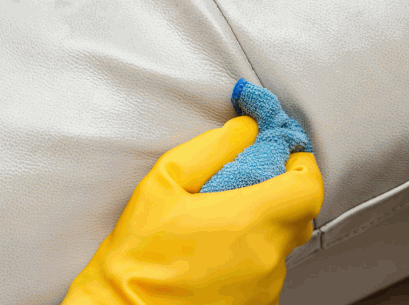
Image source: Bing (Web (fair-use with source credit))
Emergency spill response determines whether a disaster becomes a minor inconvenience. Blot liquid spills immediately with absorbent paper towels. Never rub spilled liquids into leather surfaces, as rubbing forces contaminants deeper into pore structures and spreads contamination across wider areas.
Allow treated areas to dry naturally away from direct heat sources like heaters or sunlight.
| Maintenance Task | Frequency | Time Required | Products Needed |
|---|---|---|---|
| Dust and surface wipe | Weekly | 5 minutes | Soft microfiber cloth, water |
| Deep conditioning | Monthly to quarterly | 15 minutes | Quality leather conditioner |
| Spill emergency response | As needed | 2 to 5 minutes | Absorbent paper towels, damp cloth |
| Inspection for wear/damage | Quarterly | 10 minutes | Visual assessment only |
| Professional cleaning | Every 2 to 3 years | Chair removed from room | Service appointment required |
Skipping monthly conditioning in dry climates accelerates cracking patterns dramatically. The three-to-six-month conditioning interval standard applies primarily to moderate humidity environments with stable indoor temperatures. Desert and arid region owners should condition every eight to ten weeks regardless of apparent leather condition.
You might also find massage chair maintenance guidance useful since massage mechanisms impose additional stress on upholstery materials beyond normal seating wear patterns.
The Real Work (and When to Call a Pro) for Fabric
Fabric care demands more frequent attention than leather but follows equally predictable routines when approached systematically. The key difference involves understanding that fabric absorbs rather than repels contaminants, making preventive care more critical than reactive cleaning.
Weekly vacuuming removes surface dust, pet hair, and food particles before they embed deeply into fiber structures. Use the upholstery attachment setting on your vacuum cleaner and work in overlapping strokes across all fabric surfaces. Pay particular attention to seat cushions, backrest crevices, and armrest valleys where debris accumulates most rapidly.
Vacuum both sides of removable cushion covers when possible.
Monthly spot treatment addresses fresh stains before they oxidize and bond permanently with fabric fibers. Blot liquid spills immediately using clean white cloths to avoid dye transfer from patterned fabrics. Apply manufacturer-recommended fabric cleaner according to package directions, working from the outer edge of stains toward the center to prevent ring formation during drying.
Deep cleaning occurs seasonally or biannually depending on household traffic levels. Combination homes with pets and children require biannual professional cleaning to maintain appearance and hygiene standards. Single-occupant or low-traffic homes may manage adequate cleanliness with annual professional extraction services supplemented by monthly home cleaning products.
When professional intervention becomes necessary, certain situations demand immediate expert attention. Pet urine accidents penetrating deep into cushion cores require enzymatic cleaning specialists who can neutralize odor molecules at their source. Extensive water damage from flooding or persistent leaks needs professional drying and antimicrobial treatment to prevent mold colonization inside sealed cushion assemblies.
Large-scale stain removal involving wine, coffee, or ink deposits often exceeds effective home cleaning capabilities.
| Fabric Cleaning Task | Frequency | DIY vs Professional | Risk Level if Done Incorrectly |
|---|---|---|---|
| Surface vacuuming | Weekly | DIY | Very low |
| Spot stain treatment | As needed | DIY with proper products | Moderate (may set stain if heated) |
| Seasonal deep cleaning | Biannually | Mix of DIY and pro options | Low to moderate |
| Pet urine remediation | Immediate | Professional required | High (odor persists if untreated) |
| Mold/mildew detection | Quarterly inspection | Professional assessment recommended | High (health hazard if ignored) |
| Complete reupholstery | Every 8 to 12 years | Professional required | N/A (major project) |
Reading guides on reupholstering chair cushions provides valuable context about when fabric restoration becomes economically viable versus when complete chair replacement proves more cost-effective.
Spot-Cleaning Do’s and Don’ts for Both Materials
Wrong cleaning techniques cause more upholstery damage than the original stains themselves. Understanding what never to attempt prevents catastrophic cleanup failures that transform minor accidents into permanent chair replacements.
Never use ammonia-based cleaners on leather under any circumstances. Ammonia strips natural oils from collagen fibers, accelerating drying and cracking patterns across treated surfaces. Vinegar-water solutions at one-to-one ratios work safely for occasional leather spot treatment when diluted further to one part vinegar to three parts water for sensitive colored leathers.
Fabric cleaning carries its own danger zone. Heat sets protein-based stains permanently into textile fibers. Blood, egg, dairy, and similar organic spills require cold water treatment exclusively.
Hot water transforms temporary stains into permanent discoloration that no amount of subsequent cleaning can reverse. Always test cleaning products on hidden fabric areas before applying to visible surfaces to detect colorfastness issues early.
Rubbing action destroys fiber integrity in both materials. Aggressive scrubbing frays surface fibers, creates premature wear patterns, and forces contaminants deeper into substrate layers. Blotting and gentle dabbing motions lift contaminants without damaging protective surface structures.
This technique requires patience but preserves material longevity far better than vigorous cleaning efforts.
Steam cleaning presents particular risk for leather surfaces. High-temperature steam injection penetrates porous leather structures and damages internal adhesive bonds that hold layered materials together. Fabric chairs承受 steam cleaning more readily, but excessive moisture introduction into cushion cores creates mold risk if drying occurs slowly in enclosed environments.
| Cleaning Action | Leather Safety | Fabric Safety | Alternative Approach |
|---|---|---|---|
| Ammonia-based solutions | Destructive | Generally safe | pH-neutral upholstery cleaner |
| Vinegar solutions (diluted) | Safe occasionally | Safe occasionally | Manufacturer-approved formulations |
| Hot water application | Risky for some dyes | Sets protein stains permanently | Cold water only for organic stains |
| Vigorous scrubbing | Damages finish coatings | Frays fiber structure | Gentle blotting and dabbing |
| Steam cleaning | Interior damage risk | Cushion core moisture risk | Professional extraction methods |
| Bleach products | Destroys leather completely | Destroys most fabric dyes | Oxygen-based brighteners only |
Testing cleaning products on inconspicuous areas first prevents expensive mistakes across entire chair surfaces. Five-minute observation periods reveal color transfer, bleaching, or texture damage before full application becomes necessary.
Reading Fabric Care Codes Without the Headache
Manufacturers encode cleaning instructions into standardized codes sewn into chair seams and tags. Understanding these codes prevents cleaning method mismatches that damage upholstery unnecessarily.
Code W indicates water-based cleaners only. Solutions containing water as the primary solvent work safely. Standard upholstery shampoos and foam cleaners labeled for water-soluble application meet this requirement.
Alcohol-based cleaners and solvent-heavy products may weaken fiber bonds or remove protective treatments unnecessarily.
Code S specifies solvent-only cleaning methods. Water-based products create water spots, discoloration, or residue buildup on these specially treated fabrics. Dry-cleaning solvents and non-water upholstery cleaning products designed for solvent-safe fabrics meet this requirement.
Standard water-based shampoos violate the cleaning specification and may void manufacturer warranties.
Code WS accommodates either water-based or solvent-based cleaning approaches flexibly. These fabrics tolerate broader cleaning method ranges without adverse reactions. Choose whichever cleaning product type suits your situation and availability while following general spot-cleaning best practices.
Code X means vacuum only. No liquid or solvent cleaners should touch these delicate surfaces under any circumstances. Specialized dry cleaning methods involving powdered absorbents may apply, but standard home cleaning approaches limited to vacuuming and gentle brushing prevent damage to sensitive fiber structures.
| Care Code | Meaning | Safe Cleaning Methods | Products to Avoid |
|---|---|---|---|
| W | Water-based cleaners only | Water-soluble shampoos, foam cleaners | Solvent-based spot treatments |
| S | Solvent-based only | Dry-cleaning fluids, solvent cleaners | Water, steam, aqueous solutions |
| WS | Either water or solvent | Maximum flexibility in product selection | Extreme pH products regardless of base |
| X | Vacuum only | Upholstery attachment vacuuming | Any liquid, foam, or solvent application |
Always locate and photograph care code tags before beginning any cleaning project. These codes represent manufacturer testing results that predict how specific materials respond to particular chemical treatments. Ignoring coded instructions transfers cleaning risk entirely onto the homeowner rather than the product manufacturer.
Common Mistakes People Make (And How to Sidestep Them)
Buying “Genuine Leather” and Expecting Durability
This mistake generates the highest volume of customer complaints across furniture retail categories. The term genuine leather appears on inexpensive chairs everywhere, creating false impressions about material quality that disappoint buyers within two to three years of purchase.
Marketing departments exploit consumer confusion deliberately. Genuine leather literally means real leather, which sounds premium to inexperienced shoppers. In industry practice, genuine leather describes lower-grade split layers processed through heavy finishing operations.
These surfaces look acceptable initially but lack the fiber density required for long-term durability.
The real degradation pattern becomes visible after eighteen to twenty-four months of regular use. Surface coating begins flaking along high-flex areas like seat edges and armrest contact zones. Underneath the peeling finish, fragmented leather particles bind weakly to fabric backing materials.
Cracks propagate rapidly once the protective coating fails, exposing the brittle core structure beneath to accelerated deterioration.
Full-grain and top-grain labels indicate properly tanned hide sections with intact fiber structures. These materials develop patina patterns instead of crack patterns as they age. The visual difference between authentic aging character and premature failure appearance becomes obvious within the first year when both materials sit side by side in comparable conditions.
| Label Term | Actual Quality | Expected Lifespan | Cost Savings Myth? |
|---|---|---|---|
| Full-grain | Highest quality intact hide | 20+ years with care | True premium investment |
| Top-grain | Sanded surface, excellent durability | 15 to 20 years | Fair value at mid-range prices |
| Genuine leather | Split layers with heavy coating | 3 to 7 years typically | False economy in most cases |
| Bonded leather | Shredded fiber composite | 2 to 5 years maximum | Almost always regrettable purchase |
Verifying leather grade specifications before purchase prevents buyer remorse later. Request documentation from manufacturers about hide sourcing and processing methods. Reputable suppliers provide transparency about grain classification because it affects warranty coverage and expected service life significantly.
Ignoring Climate Impact on Leather Cracking or Fabric Mold
Environmental conditions create invisible degradation pressures that accumulate silently until sudden failure occurs. Buyers rarely connect furniture problems to geographic climate factors until repair costs force the realization.
Interior humidity control represents the single most impactful environmental factor affecting upholstered furniture longevity. Home humidity保持在 forty to sixty percent relative range prevents both leather desiccation and mold proliferation simultaneously. Dehumidifiers in humid climates and humidifiers in dry winter conditions maintain this protective range consistently throughout seasonal transitions.
Direct sunlight exposure accelerates degradation through ultraviolet radiation damage to both organic and synthetic fiber structures. Window-facing chairs receive concentrated UV exposure during peak daylight hours that destroys colorfastness and weakens molecular bonds holding materials together. Sheer curtains, UV-filtering window films, and strategic furniture repositioning reduce exposure significantly during summer months.
Temperature fluctuations cause repeated expansion and contraction cycles in frame materials and cushion cores. These movement stresses create invisible fatigue points that eventually manifest as squeaking joints, loose cushion fit, and upholstery seam separation. Stable indoor temperatures between sixty-five and seventy-five degrees Fahrenheit minimize thermal cycling damage across all chair components.
| Climate Challenge | Leather Risk | Fabric Risk | Prevention Strategy |
|---|---|---|---|
| Low humidity (<30% RH) | Rapid drying and cracking | Minimal direct impact | Indoor humidification to 40-60% range |
| High humidity (>70% RH) | Mold growth in seams | Deep mold in cushion cores | Dehumidification and ventilation |
| Direct UV exposure | Fading and coating breakdown | Fiber strength deterioration | Window treatments and rotation |
| Temperature swings (>15°F daily) | Joint stress and seam splitting | Frame warping and cushion compression | Climate stabilization systems |
| Coastal salt air exposure | Finish deterioration acceleration | Metal component corrosion | Regular wiping and protective sealing |
Seasonal preparation routines prevent most climate-related damage before it begins. Winter humidification启动 in October prevents spring cracking emergencies. Summer UV protection measures established before June preserve color integrity throughout peak sun exposure months.
These proactive steps cost minimal time and money compared to replacement expenses from neglect.
Skipping Frame and Cushion Quality for Upholstery Glamour
Showroom appeal traps buyers into prioritizing surface appearance over structural integrity repeatedly. Attractive upholstery conceals inadequate frame construction and cheap cushioning for months or years until failure becomes unavoidable.
Hardwood frame construction separates durable chairs from those destined for landfill within five to seven years. Kiln-dried oak, maple, and hardwood plywood joints resist wobble, squeaking, and structural collapse under normal loading conditions. Engineered wood composite frames contain adhesives that deteriorate with humidity cycling, causing joint separation and eventual catastrophic failure under sustained weight.
Cushion density measurements determine comfort longevity far more than initial plushness suggests. High-resilience foam rated at four to five pounds per cubic foot maintains supportive properties across thousands of compression cycles. Low-density foam below three pounds compresses permanently within one to two years, leaving uncomfortable flat spots that no amount of fluffing reverses.
Mixed construction approaches sometimes combine quality frames with inferior cushions or vice versa. Verify both specifications independently before purchase. Frame quality affects structural safety and longevity.
Cushion quality determines daily comfort and support characteristics. Neither component compensates adequately for deficiencies in the other over extended timeframes.
| Component | Quality Indicator | Cheap Alternative Risk | Replacement Cost if Failed |
|---|---|---|---|
| Frame construction | Kiln-dried hardwood, mortise-and-tenon joints | Engineered wood, staple-only assembly | $200 to $600 for professional repair |
| Cushion density | 4-5 lb/cu ft high-resilience foam | Below 3 lb density recycled foam | $150 to $400 per cushion set |
| Suspension system | Eight-way hand-tied springs or elastic webbing | Cheap coil springs or fabric tapes | $100 to $300 for re-springing |
| Seat depth construction | Solid hardwood platform with reinforced edges | Thin plywood with weak attachment points | $200 to $500 for structural repair |
Reading comprehensive office chair reviews comparing build quality factors alongside upholstery considerations ensures structural decisions receive equal weighting with material selection throughout the purchasing process.
Assuming All Fabric Is Created Equal
Fabric specifications reveal dramatic performance differences that marketing displays obscure completely. Two chairs covered in blue fabric may perform identically or differ radically depending on underlying construction specifications nobody examines during showroom visits.
Fiber composition determines baseline performance characteristics before weave patterns or color treatments enter calculations. Polyester fibers resist staining, fading, and abrasion better than natural cotton or rayon alternatives under most household conditions. Nylon adds exceptional durability but attracts static electricity and shows soil patterns more readily than polyester variants.
Blended fabrics combine strengths from multiple fiber types but may compromise individual performance characteristics in exchange for balanced overall properties.
Weave density directly correlates with durability ratings and stain resistance effectiveness. Tight weaves prevent liquid penetration and resist claw snags better than loose constructions regardless of fiber type. A tightly woven polyester performs significantly better than a loosely woven cotton even though cotton receives favorable marketing associations with natural comfort and breathability perceptions.
Chemical treatments applied during manufacturing create performance variations that fiber composition alone cannot predict. Fluoropolymer stain repellents, antimicrobial treatments, and UV-blocking additives transform basic fabrics into specialized performance products. These treatments degrade over time through washing and abrasion, requiring reapplication or replacement to maintain original protective capabilities.
| Specification | Budget Fabric Reality | Premium Fabric Capability | Impact on Daily Use |
|---|---|---|---|
| Fiber composition | Basic polyester-cotton blends | Solution-dyed high-performance polyester | Stain resistance and fade durability |
| Weave tightness | 8 to 12 threads per inch | 18 to 24+ threads per inch | Claw resistance and soil penetration prevention |
| Martindale rating | 5,000 to 9,000 double rubs | 15,000 to 30,000+ double rubs | Expected lifespan under regular use conditions |
| Treatment type | Basic stain resistance only | Multi-layer protection including antimicrobial | Hygiene maintenance and odor control capability |
| Colorfastness rating | 3 to 4 on Woolscale | 5 to 7 on Woolscale | Visible fading timelines in sun-exposed locations |
Requesting detailed specification sheets from manufacturers enables informed comparisons beyond visual showroom presentations. Fabric performance data reveals hidden value differences that aesthetic considerations alone cannot communicate effectively.
Comparing gaming chair specifications and durability testing provides useful reference points for understanding how intensive daily use impacts different material constructions across similar price categories.
Overlooking Replacement Part Availability
Chairs purchased today may require cushion replacement, fabric repair, or component servicing five to ten years from now. Manufacturers discontinuing replacement parts for popular models create abandonment scenarios where otherwise functional chairs become unusable due to unavailable support.
Standardized component sizing increases future replacement feasibility significantly. Chairs using common cushion dimensions, standard spring configurations, and widely available hardware fasteners enable third-party repair solutions when manufacturer support disappears. Custom-sized components specific to individual models create obsolescence dependencies that trap owners into premature replacement purchases.
Manufacturer longevity commitments represent the strongest protection against planned obsolescence concerns. Companies producing replacement parts programs spanning fifteen to twenty years demonstrate confidence in product durability while providing ongoing service infrastructure for existing owners. These commitments rarely appear in initial purchase conversations but prove invaluable when maintenance needs arise during extended ownership periods.
Warranty documentation review before purchase reveals replacement part availability commitments explicitly. Some manufacturers guarantee part availability for ten years after production cessation. Others provide no such assurance, leaving owners dependent upon unauthorized third-party repair sources with uncertain quality outcomes and compatibility risks.
| Replacement Part Type | Availability Risk Level | Cost Impact if Discontinued | Mitigation Strategy |
|---|---|---|---|
| Standard cushion inserts | Moderate risk | $150 to $400 per set | Measure exact dimensions before purchase |
| Frame hardware and brackets | Low risk generally | $50 to $150 per repair | Photograph serial numbers and order spare kits |
| Original upholstery fabric | High risk over time | $400 to $1,200 for reupholstery | Research fabric availability guarantee terms |
| Mechanism components | Moderate to high risk | $200 to $600 per part | Consider universal replacement mechanisms |
| Armrest caps and covers | Low risk usually | $30 to $100 per pair | Order extras during initial purchase |
Ordering spare components during initial purchase phase prevents future sourcing difficulties entirely. Extra cushion covers, matching fabric remnants, and commonly failed hardware items cost minimal additional expense now but save significant frustration and expense later when replacements become necessary.
Pro Advice From the Trade
What Showroom Staff Won’t Tell You About Leather Patina
Patina development represents leather’s most misunderstood characteristic among casual buyers. The concept confuses intentional aging beauty with premature deterioration damage, creating unnecessary anxiety about normal material behavior changes.
Authentic patina develops gradually across months and years of controlled use. Surface oils from skin contact, ambient humidity variations, and gentle UV exposure interact with natural leather constituents to create subtle color deepening and softening patterns. These variations add visual richness without compromising structural integrity.
Patina improvement continues as long as leather receives regular conditioning and protection from extreme environmental conditions.
Premature deterioration mimics patina superficially but follows completely different progression patterns. Early cracking along stress points indicates insufficient conditioning or exposure to destructive environmental factors. Uneven color loss suggests UV damage rather than natural oxidation processes.
Surface flaking reveals coating failure beneath decorative finishes rather than healthy fiber maturation.
Professional leather restorers distinguish patina from damage through tactile examination and microscopic fiber analysis. Consumers can approximate this assessment by examining affected areas under bright directional lighting while feeling surface texture changes with fingertips. Smooth, slightly glossy surfaces with uniform color variation indicate healthy patina development.
Rough, chalky textures with visible fiber separation signal deterioration requiring immediate intervention.
| Patina Characteristic | Healthy Development Signs | Deterioration Warning Signs | Action Required |
|---|---|---|---|
| Color change | Gradual darkening over years | Sudden spotting or bleaching | Conditioning adjustment or professional assessment |
| Surface texture | Maintains smooth suppleness | Roughness, chalkiness, or stiffness | Increase conditioning frequency immediately |
| Flex point behavior | Softens with use | Cracking along natural fold lines | Professional restoration consultation |
| Sheen development | Even gloss distribution | Patchy shine indicating coating failure | Surface refinishing by qualified technician |
| Odor profile | Mild natural leather scent | Musty or chemical odors | Deep cleaning and environmental investigation |
Understanding these distinctions prevents both unnecessary panic about normal aging and dangerous neglect of developing problems that require professional attention before becoming irreversible.
How to Test Fabric Durability Before You Buy
Showroom conditions conceal fabric performance limitations that daily household use exposes immediately. Simple testing procedures available during showroom visits reveal durability characteristics before purchase commitment becomes final.
The stretch and recovery test reveals weave resilience characteristics that indicate long-term shape retention ability. Press firmly into seated areas and armrest surfaces with palm pressure, then release completely. Quality fabrics spring back to original configuration within one to two seconds.
Poor-quality constructions show visible wrinkling, distortion, or slow recovery patterns indicating weak fiber bonds and inadequate weave tension.
The light exposure simulation checks colorfastness potential quickly. Hold fabric samples near showroom windows or bright artificial lighting sources and examine surface color consistency under different angles. Solution-dyed fabrics maintain uniform color appearance across viewing angles.
Pigment-dyed alternatives may show slight color variation depending on light interaction with surface dye concentration variations.
The tactile abrasion test involves rubbing fabric surfaces vigorously with thumb pressure for ten to fifteen seconds. Fine fabric particles appearing on skin after rubbing indicate weak fiber binding that will accelerate into visible wear patterns under normal household use. Quality performance fabrics produce minimal to no fiber loss during this assessment procedure.
The liquid bead observation checks stain resistance treatment effectiveness in real time. Place a small water droplet on fabric surfaces and observe absorption behavior over thirty seconds. Properly treated fabrics cause water to bead and remain spherical on the surface.
Untreated or degraded treatments allow immediate absorption and darkening beneath the droplet outline.
| Testing Method | What It Reveals | Quick Pass Criteria | Red Flag Indicators |
|---|---|---|---|
| Stretch recovery press | Fiber bond strength and weave tension | Returns to original shape within 2 seconds | Permanent deformation or slow recovery |
| Angle light examination | Color uniformity and dye quality | Consistent appearance from all angles | Visible color shifts or spotting |
| Thumb abrasion rub | Fiber binding integrity | Minimal to no fiber loss observed | Visible fuzz generation or pilling initiation |
| Water bead test | Current stain treatment effectiveness | Droplet maintains spherical shape 30+ seconds | Immediate absorption and darkening |
| Seam stress pull | Construction quality verification | Seam threads maintain tension without stretching | Visible seam separation or thread elongation |
These quick tests require no special equipment and take less than five minutes per chair evaluation. The information gained prevents expensive buyer regret far more effectively than any showroom presentation or marketing literature review.
Questions to Ask Manufacturers About Fire Retardancy and Emissions
Safety compliance questions separate responsible manufacturers from companies prioritizing cost reduction over consumer protection. Fire retardancy standards and chemical emission profiles represent critical health and safety considerations that consumers rarely investigate before purchase.
California TB 117-2013 flame retardancy standards govern upholstery furniture sales within California and influence national industry practices significantly. This standard requires complete assembly fire resistance testing including fabric, padding, and underlying materials assembled together. Manufacturers compliant with current standards provide certification documentation upon request without reluctance or hesitation.
VOC (volatile organic compound) emission levels represent another important health consideration, particularly for enclosed spaces with limited ventilation. CertiPUR-US certified foams meet strict emission standards limiting harmful chemical release into indoor air environments. Formaldehyde emissions, phthalate content, and heavy metal restrictions form part of comprehensive certification testing protocols that protect occupant health during extended exposure periods.
UK upholstery fire safety regulations (Fire Safety Act 2021 and BS 5852 standards) impose different compliance requirements than North American testing protocols. Importing furniture from international manufacturers requires verification that products meet destination country safety standards specifically rather than assuming universal compliance compatibility.
| Safety Question | Why It Matters | Responsible Answer Indicators | Red Flag Responses |
|---|---|---|---|
| Does this meet California TB 117-2013? | Legal sales requirement in major market | Clear certification with documentation available | Vague references to “fire resistant treatments” without specifics |
| Are foams CertiPUR-US certified? | Indoor air quality and chemical exposure | Published certification numbers verifiable online | Deflection or inability to provide certification details |
| What flame retardant chemicals are used? | Health impact assessment for concerned buyers | Transparent disclosure of treatment compositions | Refusal to discuss chemical ingredients or safety data |
| Do imports meet destination country standards? | Regulatory compliance verification | Country-specific certification documentation provided | Assurances based on origin country standards only |
| Are phthalates and formaldehyde tested for? | Long-term health exposure风险评估 | Negative test results published willingly | Evasion or claims that “all materials are safe” without evidence |
Published safety documentation should be readily accessible through manufacturer websites, customer service representatives, or direct product documentation inclusion. Reluctance to provide safety information warrants serious reconsideration of purchase decisions regardless of aesthetic appeal or price attractiveness.
Exploring wingback chair style options and comfort features alongside safety specification research ensures comprehensive evaluation covering both lifestyle preferences and health protection requirements simultaneously.
Frequently Asked Questions About Leather vs Fabric Office Chairs
Is faux leather a good middle ground?
Faux leather sits between genuine leather and fabric in both price and performance, but it rarely delivers the longevity buyers expect. Polyurethane-coated vinyl options cost significantly less than top-grain leather while mimicking the smooth appearance. However, these materials lack the breathable collagen fiber structure that gives real leather its durability and aging characteristics.
Synthetic leather typically begins cracking and peeling within three to five years of regular use. The polymer coating separates from the fabric backing under normal flexing conditions, creating irreversible damage patterns. Some premium microfiber-based faux leathers perform better than basic vinyl options, but none approach the twenty-year lifespan of properly maintained full-grain leather.
If budget constraints prevent genuine leather purchase and fabric seems impractical for your lifestyle, faux leather represents an acceptable temporary solution. Set realistic expectations about replacement timelines and prioritize reputable manufacturers offering warranty coverage for material defects rather than cosmetic appearance alone.
Can I reupholster fabric chairs to look like leather?
Reupholstering fabric chairs with leather or leather-look materials is technically possible but rarely cost-effective for most homeowners. Professional reupholstery services charge four hundred to twelve hundred dollars depending on chair complexity, frame condition, and material selection. These costs frequently approach or exceed purchasing new quality leather chairs entirely.
DIY reupholstery requires specialized tools including staple guns, upholsterer hammers, curve needles, and tension management techniques that take considerable practice to master. Even experienced crafters struggle with achieving clean corners and consistent tension across curved surfaces without professional training. Mistakes during the process often damage irreparable frame components or require complete disassembly.
Fabric-to-leather conversion also introduces compatibility issues between original cushion shapes and new upholstery requirements. Leather stretches and contracts differently than woven fabrics, potentially creating loose fitment problems or excessive tension points that stress frame joints over time. These complications make new purchase decisions more practical than restoration projects in most scenarios.
Which material is better for allergies?
Leather surfaces generally support allergy sufferers better than fabric upholstery due to fundamental material structure differences. Dust mites, pet dander, and pollen particles cannot penetrate leather pore structures deeply enough to establish breeding colonies or trigger significant immune responses. Surface cleaning removes these allergens completely through simple wiping procedures.
Fabric materials create deep reservoirs for allergen accumulation within weave structures and cushion cores. Dust mite populations thrive in the warm, humid environment between fabric fibers and foam padding. Even thorough vacuuming cannot remove all embedded particles from deep textile structures, requiring periodic professional extraction cleaning to maintain acceptable hygiene standards.
Individual allergy severity determines whether the difference matters practically. Mild sensitivity sufferers may experience no meaningful difference between well-maintained leather and regularly cleaned fabric chairs. Severe allergy patients, particularly those with dust mite hypersensitivity, benefit substantially from leather’s surface-only allergen exposure characteristics.
Do leather chairs really feel colder in winter?
Leather conducts body heat away from skin more rapidly than fabric materials, creating that initial cold sensation during winter months. The thermal conductivity difference becomes noticeable within the first thirty seconds of contact before your body temperature gradually warms the surface. Most people adapt quickly as equilibrium develops during continued sitting.
Fabric chairs maintain surface temperatures closer to room temperature initially because textile fibers insulate rather than conduct heat. This warmth advantage persists throughout extended sitting periods, making fabric more comfortable in unheated or poorly insulated spaces during cold weather months. The difference becomes particularly pronounced in homes maintaining lower thermostat settings during winter.
Heated seating cushions and thick throw blankets eliminate leather’s thermal disadvantage completely. These accessories cost twenty to sixty dollars and transform cold leather surfaces into comfortable seating options regardless of ambient temperature. The investment proves worthwhile compared to replacing functional chairs solely due to comfort preferences.
How long should I expect each to last?
Lifespan expectations depend heavily on material grade, maintenance consistency, and household usage intensity rather than simple material categorization. Quality full-grain leather chairs with proper conditioning routines regularly exceed twenty-five years of service life. Top-grain leather options typically deliver fifteen to twenty years under comparable care conditions.
Bonded leather and low-grade genuine leather products fail prematurely, averaging three to seven years before visible deterioration compromises appearance and structural integrity. These budget options create false economy situations where initial savings disappear through replacement costs within a decade.
Fabric chair lifespans vary dramatically based on Martindale ratings and treatment quality. Light-duty fabrics below nine thousand double rubs rarely exceed five to eight years in active households. Heavy-duty performance fabrics rated above fifteen thousand double rubs regularly last ten to fifteen years with appropriate maintenance, occasionally reaching twenty years in low-traffic applications.
| Material Grade | Expected Lifespan with Proper Care | Primary Failure Mode | Replacement Cost Indicator |
|---|---|---|---|
| Full-grain leather | 20 to 30+ years | Patina development (cosmetic only) | Higher initial investment justified |
| Top-grain leather | 15 to 20 years | Surface finish wear | Moderate investment range |
| Genuine leather | 5 to 10 years | Coating separation and cracking | Budget option, frequent replacement |
| Bonded leather | 2 to 5 years | Complete delamination | Poor value proposition |
| Light-duty fabric | 5 to 8 years | Fiber breakdown and fading | Low initial cost accepted |
| Heavy-duty fabric | 12 to 20 years | Cushion compression | Moderate to high investment |
Longevity calculations should include maintenance cost projections alongside purchase prices for accurate lifetime value comparisons. Cheap chairs requiring replacement every five years cost more over two decades than quality pieces maintained properly throughout ownership periods.
Final Verdict and Decision Guide
The One-Sentence Rule for Your Household
Your household composition, climate zone, and maintenance willingness determine everything else about this decision. Families with active children and pets in hot climates should prioritize heavy-duty performance fabric for practical daily resilience. Single occupants or couples in moderate climates who value timeless aesthetics and extended lifespan should invest in quality top-grain or full-grain leather with planned maintenance commitments.
Checklist: Which Chair Type Fits Your Life Right Now
This checklist helps you evaluate your specific situation against the key decision factors we’ve examined throughout this guide. Answer each question honestly based on your actual circumstances rather than idealized expectations.
Household factors:
- Do you have children under twelve years old living in the home permanently?
- Do you own cats or dogs that contact furniture regularly?
- Does anyone in your household suffer from significant dust mite or pet dander allergies?
- Are you expecting guests who might spill beverages during occasional visits?
Environmental factors:
- Does your living space receive direct sunlight through windows for several hours daily?
- Do you maintain consistent indoor humidity between forty and sixty percent year-round?
- Does your region experience extreme temperature fluctuations between seasons?
- Is your home located near coastal salt air or industrial pollution sources?
Lifestyle factors:
- Do you entertain frequently enough that chair appearance matters for social occasions?
- Can you commit to quarterly leather conditioning or biannual fabric professional cleaning?
- Do you prefer changing decor colors and styles every few years?
- Are you planning to sell your home within five years or stay long-term?
| If You Answered YES To | Recommended Material | Priority Focus |
|---|---|---|
| More than 3 household factor questions | Heavy-duty performance fabric | Stain resistance, claw durability, replacement flexibility |
| More than 2 environmental concerns | Climate-adapted choice required | Humidity control, UV protection, ventilation strategies |
| No maintenance commitment possible | Either material needs protection plans | Establish cleaning routines immediately after purchase |
| Long-term ownership (10+ years) | Full-grain leather or premium fabric | Frame construction quality, warranty coverage, part availability |
| Frequent decor changes | Fabric with removable/washable covers | Style flexibility, color matching, replacement cushion access |
When to Splurge on Leather and When Fabric Is the Smarter Buy
Splurging on quality leather makes financial sense when you plan extended ownership, maintain stable indoor climate conditions, and appreciate natural material aging characteristics. The twenty-year lifespan of full-grain leather combined with modest annual maintenance costs creates favorable lifetime value calculations compared to multiple fabric replacements. Luxury leather investments work best in formal dining rooms, study libraries, and climate-controlled living spaces seeing moderate daily use.
Fabric represents the smarter financial choice when budgets constrain upfront spending, household chaos demands maximum durability, or design flexibility across color and pattern options matters more than decades-long permanence. Performance fabric chairs deliver impressive longevity at substantially lower price points while accommodating style updates through cushion covers and slipcovers when tastes evolve.
Mid-range buyers often find the optimal balance by selecting quality top-grain leather chairs with hardwood frames and high-density cushioning at five hundred to twelve hundred dollar price points. These pieces deliver eighty percent of full-grain longevity at sixty percent of luxury pricing, creating excellent value for families planning fifteen-plus year ownership horizons.
Budget purchasers should resist bonded leather temptation entirely and invest in medium-priced performance fabric alternatives instead. The fabric will outlast cheap leather in most household scenarios while providing superior comfort, design variety, and easier maintenance without conditioning requirements.
Quality investment decisions always prioritize frame construction, cushion density specifications, and material grade verification over showroom appearance or salesperson recommendations. Take photographs of care labels, request specification sheets, and verify warranty terms before finalizing any upholstery purchase for lasting satisfaction.