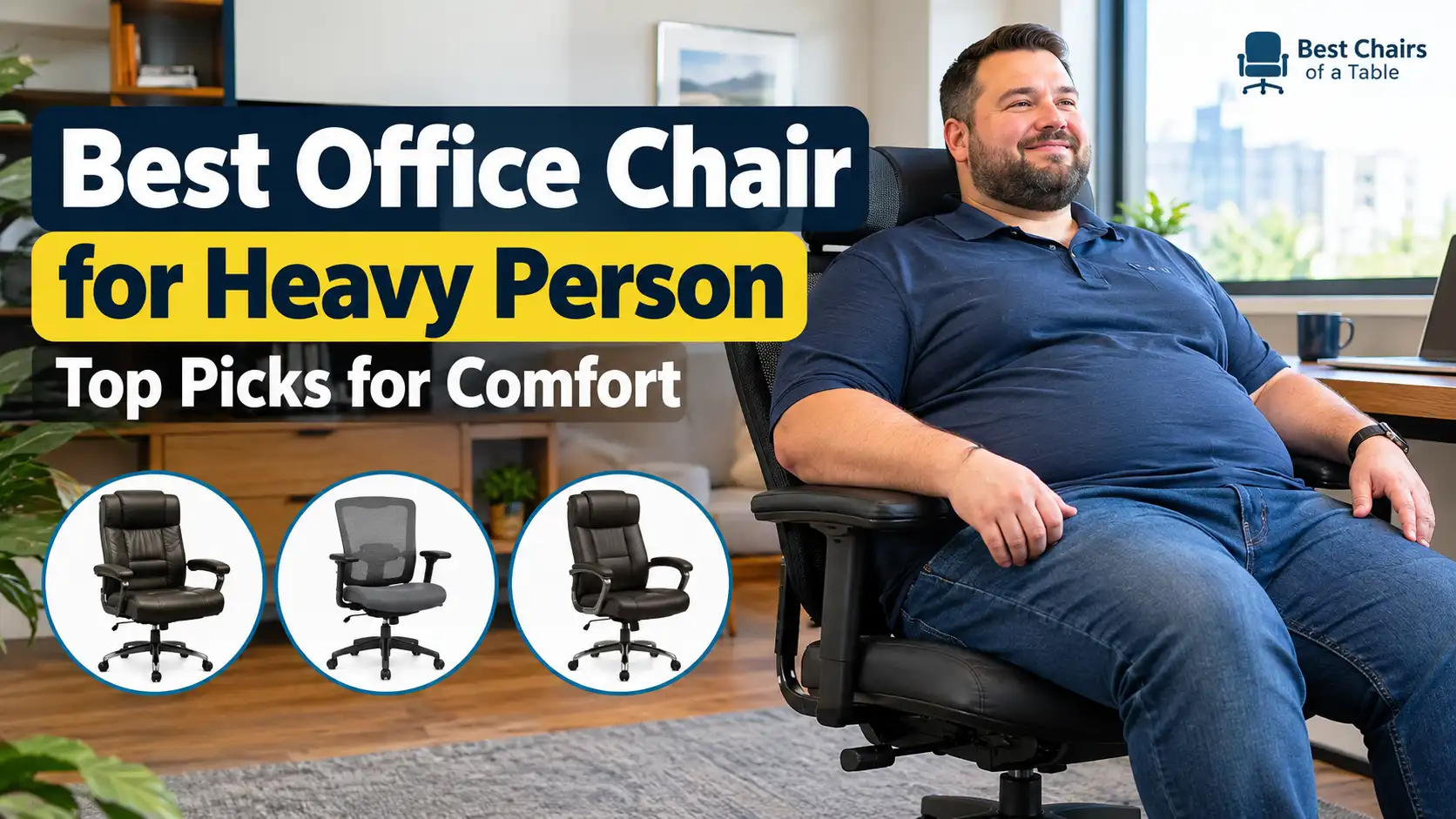
Frustrated by chairs that sag, wobble, or break after a few weeks? Finding the best office chair for heavy person doesn’t mean spending a fortune or settling for industrial-looking furniture. You deserve support that holds up without constant repair bills.
According to BIFMA testing standards, a properly engineered chair should maintain structural integrity under dynamic loading well beyond its stated weight capacity. That gap between what most chairs claim and what they deliver is exactly where heavy users get burned. Let’s talk about how to sidestep those problems.
Quick Answer
The best office chair for heavy person has at least 300 pounds capacity. Look for a certified gas lift cylinder. Choose adjustable lumbar support.
Pick wide seat pans measuring 21 inches or more. Herman Miller and Steelcase lead the premium tier. Sihoo and HON deliver solid mid-range value.
The Problem: Why Most Office Chairs Fail Heavy Users
Most office chairs are engineered for average body types. That typically means someone weighing between 150 and 200 pounds. When you tip the scales higher, everything starts failing in predictable ways.
The gas lift sags. The base cracks. The seat foam flattens into oblivion.
Armrests bend or snap off entirely.
Standard weight ratings stop at 250 pounds for a reason. Cheap chairs cut corners on materials and internal mechanisms. They use thin steel tubing, low-grade plastics, and weak gas cylinders rated for exactly their listed limit, sometimes less.
That leaves zero margin for real-world wear and tear. Sit in one of these for six months and you’re likely looking at a replacement.
The real issue goes beyond broken parts. Poor weight distribution causes serious physical discomfort. A seat that’s too narrow digs into your thighs and restricts blood flow.
Backrests that curve for slimmer frames press against empty space rather than supporting your spine. Armrests positioned for lighter frames force your shoulders upward, creating tension headaches and neck strain.
Source: Bing (Web (fair-use with source credit))
Bottoming out is one of the most common complaints. When the seat cushion collapses completely beneath you, your tailbone takes the full force of your body weight. This creates pressure points that lead to discomfort, poor posture, and sometimes chronic pain over time.
Your lower back loses its natural curve. Your hips tilt forward. Before you know it, you’re standing up every thirty minutes just to relieve the ache.
Cheap chairs also tend to wobble. A loose or poorly manufactured base doesn’t distribute weight evenly across its five casters. One leg bears more stress.
The whole chair rocks when you shift your weight. That instability feels unsafe and makes it nearly impossible to relax into good posture. You stay tense, guarding against the movement, which defeats the entire purpose of an ergonomic chair.
Premium Picks That Actually Hold Up
The premium tier delivers exactly what you’d pay for, longevity, engineering precision, and materials that don’t give out. These chairs cost more upfront but often last a decade or longer with proper care. That puts the annual cost well below most budget replacements that fall apart in eighteen months.
Herman Miller Aeron (Size C)
The Aeron Size C is one of the most recognized names in heavy-person seating. It supports up to 350 pounds and uses a distinctive Pellicle mesh suspension that distributes weight across the entire seat surface. Unlike foam cushions that compress over time, mesh maintains its support level year after year.
The adjustable lumbar system targets the lower back precisely, regardless of your height or sitting position.
Key specs for the Aeron Size C:
- Weight capacity: 350 lbs
- Seat dimensions: 20.25″ W × 16.75″ D to 20.5″ D
- Frame: Aluminum with recycled content
- Warranty: 12 years
- Tilt: Forward tilt available for active sitting
One thing worth noting, the Aeron runs firm. Some buyers describe it as “unyielding” during the first week. That’s normal.
Mesh chairs require a brief break-in period before they feel comfortable. Once adjusted properly, the firm support actually reduces pressure on your sit bones better than soft foam ever could.
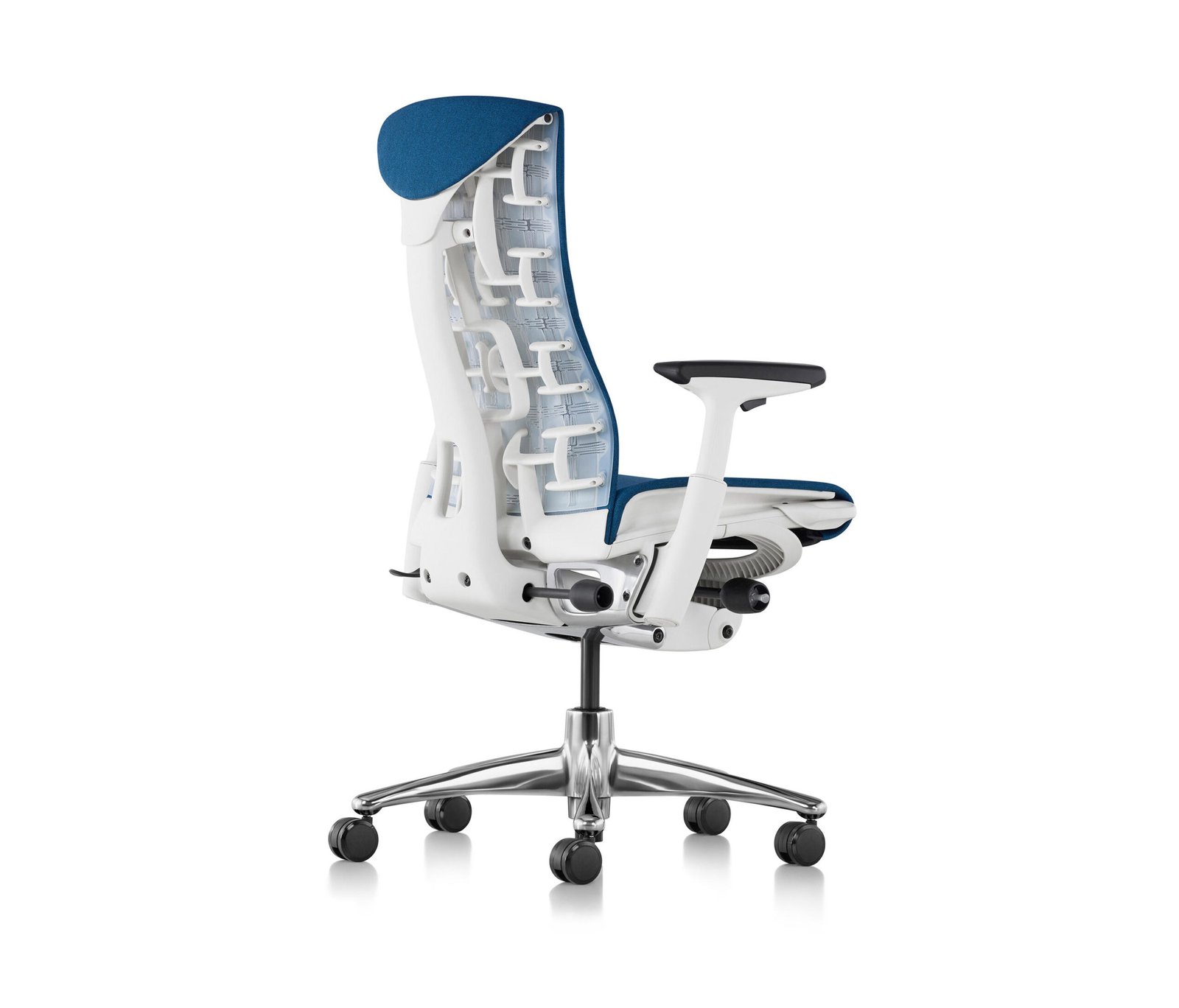
Herman Miller Embody
The Embody takes a different approach. Instead of mesh, it uses a pixelated support system, thousands of tiny pillars that flex independently based on where your body applies pressure. This creates a custom-fit surface that cradles rather than pushes back.
It supports up to 300 pounds and comes with a 12-year warranty covering all components including the base and casters.
The Embody’s backrest follows your spine through every position. Lean forward to type, recline to think, sit back to rest, the chair adjusts automatically. No levers to fiddle with.
Just built-in adaptability that responds to your movements in real time. That kind of responsiveness is rare at any price point.
| Feature | Aeron Size C | Embody |
|---|---|---|
| Weight capacity | 350 lbs | 300 lbs |
| Seat material | Pellicle mesh | Pixelated fabric |
| Lumbar support | Adjustable post | Integrated spine |
| Warranty | 12 years | 12 years |
| Price range | $1,395–$1,695 | $1,495–$1,795 |
Steelcase Leap V2 and Big & Tall
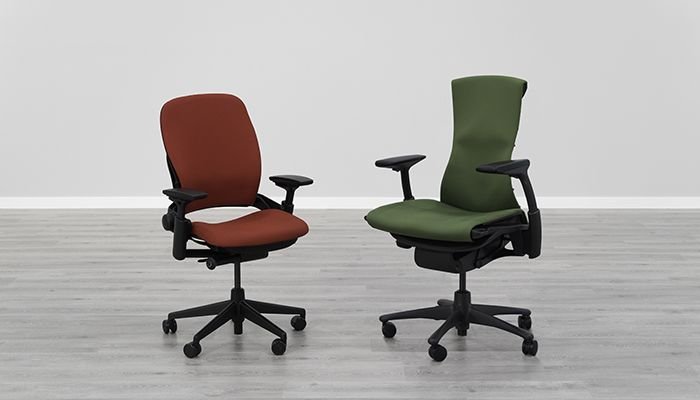
Steelcase builds chairs specifically designed for the American workspace, which means broader seating options than many European brands offer. The Leap V2 supports 300 pounds and features LiveBack technology, a flexible backrest that changes shape to match your spine as you move. The Natural Glide System lets you recline smoothly without locking into fixed positions.
For users above 300 pounds, Steelcase offers the Leap Big & Tall at 400 pounds capacity. The frame, seat, and mechanism are all reinforced. The armrests are wider and stronger.
The lumbar adjustment covers a larger range to accommodate taller torsos. This is the chair to consider if you regularly exceed the standard 300-pound threshold.
Source: Bing (Web (fair-use with source credit))
Both Steelcase models come with a 12-year warranty, one of the strongest guarantees in the industry. That warranty covers the mechanism, the gas lift, the base, and the upholstery. If anything fails under normal use, Steelcase replaces it.
No arguments, no hassle. That peace of mind alone justifies the investment for many heavy users who’ve been burned by cheaper alternatives before.
Steelcase Gesture
The Gesture rounds out Steelcase’s premium lineup with support for 300 pounds and an exceptionally broad range of adjustments. Its name comes from its ability to support any posture, typing, reading, using a phone, leaning back, side-sitting. The armrests move in every direction and adjust independently.
The seat depth slides forward or backward to match your leg length.
If you switch between tasks throughout the day or work from multiple devices, the Gesture is arguably the most versatile option available. The build quality matches the Leap series. The warranty is identical.
The main trade-off is price, it sits at the top end of Steelcase’s catalog alongside the Aeron and Embody.
Mid-Range Champions Worth Your Money
You don’t need to spend $1,500 to get a chair that holds up. The mid-range segment has grown significantly in recent years, with brands investing in better materials and smarter designs. Here are the options that consistently earn positive reviews from heavy users without the premium price tag.
HON Ignition 2.0
The HON Ignition 2.0 is a workhorse built for commercial environments. It supports 300 pounds and features HON’s Synchro-Tilt mechanism, which coordinates the backrest recline with the seat pan movement. This prevents the “fold-in-half” sensation that cheap chairs produce when you lean back.
Your thighs stay supported the entire time.
What sets the Ignition apart is the range of adjustments packed into one package. The lumbar support moves up and down and in and out. The seat depth adjusts across a meaningful range.
The armrests flip up for easier desk access. The casters work on both carpet and hard floors. All of this fits in a chair that retails around $400 to $550, which is a fraction of the premium options.
HON chairs are certified for commercial use, meaning they undergo stricter testing than residential models. The Ignition 2.0 carries a BIFMA certification for durability and safety. That’s the same standard used by corporate procurement teams who outfit entire offices, they don’t buy replacements every two years.
Sihoo M57
The Sihoo M57 has become one of the most discussed chairs among heavier users on forums and review sites. At roughly $300 to $400, it offers a surprising amount of adjustability for the price. The breathable mesh backrest provides ventilation that foam seats can’t match, especially during long work sessions.
The seat cushion uses high-density foam rated for 300 pounds.
The M57 includes adjustable lumbar support, a headrest, and 3D armrests that move up, down, and forward. The gas lift is rated for repeated height adjustments without sagging. Assembly takes about twenty minutes with the included tools.
Several reviewers noted that the chair arrived well-packaged with no damaged parts, something that isn’t guaranteed with budget imports.
One limitation worth mentioning: the Sihoo M57’s seat width measures approximately 20.5 inches. That works for most users up to 300 pounds, but someone nearing that ceiling might find the edges pressing into their thighs. If you’re in that range, the HON Ignition 2.0’s slightly wider seat pan may feel more comfortable.
| Chair | Weight Capacity | Key Feature | Price Range | Best For |
|---|---|---|---|---|
| HON Ignition 2.0 | 300 lbs | Synchro-Tilt | $400–$550 | Commercial use, all-day sitting |
| Sihoo M57 | 300 lbs | Mesh back + headrest | $300–$400 | Budget-conscious buyers |
| Humanscale Diffus | 300 lbs | Self-adjusting recline | $500–$700 | Minimalist adjustability lovers |
| Branch Dunk | 300 lbs | Clean design + mesh | $399 | Modern home offices |
Humanscale Diffus
Humanscale takes a minimalist approach with the Diffus. There are no visible levers, knobs, or adjustment dials. Instead, the chair senses your weight and adjusts the recline resistance automatically.
Change your posture, and the chair responds without you touching anything. It supports 300 pounds and comes with a 15-year warranty, the longest in this segment.
The seat is upholstered in a durable fabric that resists wear and maintains its shape over years of use. The backrest curves to follow your spine naturally. The headrest adjusts for neck support if needed.
The base is made from recycled aluminum, and the casters glide smoothly on most floor types.
This chair appeals to buyers who find too many adjustments overwhelming. If you want to sit down and have the chair figure out the rest, the Diffus delivers. It’s not the most feature-rich option, but it excels at simplicity and long-term reliability.
Branch Dunk and Arrive
Branch occupies the space between mass-market budget chairs and true premium options. The Dunk and Arrive models both support 300 pounds and target the modern home office aesthetic. Mesh backrests keep you cool.
Clean lines and neutral colors blend into any workspace. The price point lands around $399 to $549.
The Dunk uses a synchro-tilt mechanism similar to the HON Ignition. The Arrive adds adjustable lumbar support and flip-up armrests for a slightly higher price. Both come with a 5-year warranty, which is decent but shorter than what Steelcase or Herman Miller offer.
If you prefer a contemporary look over industrial durability, these are worth considering.
Comparison / Alternatives / Options
Choosing the right chair means comparing apples to apples. Understanding what each option gives you and where it falls short helps you match the product to your actual needs rather than chasing specs that sound impressive but don’t address your real problems.
Weight Capacity and Build Quality
Weight capacity numbers tell only part of the story. Two chairs might both claim 300 pounds, but the construction underneath tells a very different tale. The Herman Miller Aeron’s aluminum frame and reinforced base are engineered for commercial-grade abuse.
The Steelcase Leap’s LiveBack technology distributes weight across a flexible support structure rather than relying on rigid materials. Budget chairs often reach 300 pounds through thicker foam alone, which compresses and loses support long before the structural components fail.
When evaluating build quality, look for these indicators:
- Steel or reinforced aluminum base instead of plastic
- Class 4 or 5 gas lift cylinder (supports repeated height adjustment without failure)
- Double-walled armrest brackets
- Reinforced seat pan with internal metal supports
- BIFMA or equivalent certification marks
Mesh vs. Foam Seats
This is one of the biggest divide lines in heavy-person chair shopping. Mesh seats offer breathability and consistent support that doesn’t degrade over time. They’re also generally lighter, which makes the chair easier to move.
The trade-off is firmness. Mesh doesn’t conform to your body the way foam does, and some users find the initial feel uncomfortably rigid.
Foam seats provide immediate plushness and contour to your shape. High-density foam used in quality chairs maintains that support far longer than cheap polyurethane found in budget options. The downside is heat retention.
A foam-backed chair traps warmth, which becomes uncomfortable during long sitting sessions, especially in warmer climates.
The best approach depends on your priorities. If you run hot or sit for extended periods, mesh is the safer choice. If you prefer a softer initial feel and your schedule allows you to shift positions regularly, quality foam works well.
Price Tiers and Value Assessment
Breaking the market into price tiers helps set realistic expectations:
| Tier | Price Range | Expected Lifespan | Notable Brands |
|---|---|---|---|
| Budget | $150–$350 | 1–3 years | AmazonBasics, Flash Furniture, some Sihoo models |
| Mid-range | $350–$800 | 3–7 years | HON, Sihoo M57, Branch, Humanscale Diffus |
| Premium | $800–$1,800+ | 10–15+ years | Herman Miller, Steelcase, Haworth |
Budget chairs in the $150 to $350 range can work for lighter users, but heavy users should approach them with caution. The cost savings disappear fast when you replace a chair every eighteen months. A mid-range chair at $500 that lasts five years costs less per year than a $250 chair replaced every two years.
Premium chairs demand a significant upfront investment, but the math shifts dramatically over a ten-year horizon. Add in the health benefits of proper support, reduced back pain, better posture, fewer breaks due to discomfort, and the value proposition becomes clear. That’s why many professionals recommend investing in a quality chair before considering other ergonomic solutions for back pain.
Alternatives Worth Considering
If none of the standard office chairs feel like the right fit, a few alternatives exist. Kneeling chairs shift weight from your sit bones to your shins, reducing lower back pressure. However, they aren’t suitable for everyone and can cause knee discomfort if used too long.
Standing desk converters paired with anti-fatigue mats let you alternate between sitting and standing, which reduces overall seated time.
Some heavy users explore reclining office chairs that convert into napping positions. These tend to lack the structured support needed for focused work but serve well for casual environments. Another option is a high-quality lift chair if mobility is a concern, though those serve a different primary function than a traditional ergonomic office chair.
For users who prioritize specific features over brand names, the best desk chairs and best WFH chairs lists compiled by independent reviewers can help narrow the field further based on current model availability and pricing.
Use Cases / Best For / Who It’s Right For
Not every heavy-user chair suits every situation. Understanding where each option shines helps you match the product to your actual needs rather than chasing specs that sound impressive but don’t address your real problems.
Long-Hour Desk Workers (6–10 Hours Daily)
If you sit for eight hours or more each day, your chair needs to maintain support throughout that entire stretch. Foam that feels comfortable at hour one may have collapsed by hour four. Mesh chairs excel here because they don’t compress the same way.
The Herman Miller Aeron and Steelcase Leap are purpose-built for extended sitting sessions, which is why they remain popular in corporate environments worldwide.
Look for chairs with adjustable lumbar support that stays in place as you shift positions. Seat depth adjustment matters enormously, your thighs need full support without pressure behind your knees. Armrests that adjust in height and width prevent shoulder strain during long typing sessions.
Occasional or Hybrid Workers (2–4 Hours Daily)
Shorter daily sitting times reduce the pressure on any chair’s support systems. A mid-range option with decent build quality can serve a hybrid worker well. The Sihoo M57 or Branch Dunk handles a few hours of daily use comfortably without requiring a premium investment.
The key is still matching the chair to your body dimensions, capacity, seat width, and seat depth matter regardless of how many hours you log.
Side Workers Who Move Frequently
Some people alternate between sitting, standing, and walking around during their workday. These workers benefit most from chairs with easy-recline mechanisms and flip-up armrests. The Steelcase Gesture and Humanscale Diffus excel here because they adapt to movement rather than resisting it.
A chair that encourages shifting positions naturally reduces the static load on any single body area.
Users with Existing Back or Hip Issues
If you already manage chronic back pain or hip problems, the difference between a supportive chair and a poor one becomes much more pronounced. Studies published in journals like Applied Ergonomics have shown that proper lumbar support and seat depth adjustment significantly reduce disc pressure and improve posture during prolonged sitting.
In these cases, prioritize adjustable lumbar support that targets your specific pain points. A chair that lets you customize the backrest curvature and height can make a meaningful difference. Budgeting for a premium ergonomic chair may also complement other treatments like physical therapy or mobility aids.
The right chair becomes part of a broader strategy for managing discomfort.
Budget Options That Don’t Suck
There’s a misconception that cheap chairs are automatic failures for heavier users. That’s not entirely true. Some budget models deliver surprising value when you know what to look for and what to avoid.
The trick is separating genuinely solid chairs from those that merely advertise a high weight limit on paper.

Source: Bing (Web (fair-use with source credit))
Sihoo M57 and V1 Models
The Sihoo M57 remains one of the most popular budget picks, and the newer V1 model refines the formula with improved lumbar support and a more robust base. Both sit in the $300 to $400 range and carry 300-pound capacity ratings. The mesh backrest provides ventilation that foam seats struggle to match.
Adjustable components cover most essentials: seat height, lumbar depth, armrest height, and recline tension.
What makes Sihoo stand out in the budget tier is the attention to detail. The headrest adjusts in multiple directions. The armrests flip up for tighter desk clearance.
The casters roll smoothly on both carpet and hard floors. Several verified buyers noted that assembly took under twenty minutes with clear instructions. That kind of usability is often overlooked in this price range.
AmazonBasics Big & Tall
AmazonBasics offers a straightforward executive-style chair at roughly $200 to $280. The high-back design provides full spine coverage, and the padded armrests sit at a comfortable height for most users. The seat cushion uses dense foam that holds up better than typical budget alternatives.
At 300 pounds capacity, it clears the most common failure threshold for heavy users.
The trade-offs are visible but manageable. The recline mechanism locks into fixed positions rather than flowing smoothly. The armrests adjust only in height, not width or depth.
The upholstery is bonded leather rather than genuine or premium synthetic materials. These limitations keep the price down, and for someone who primarily sits facing forward, they rarely become dealbreakers.
Flash Furniture High-Back Executive
Flash Furniture targets the commercial sector with chairs built for daily abuse. Their high-back executive models often retail between $250 and $400 and carry 300-plus pound capacities. The seats use high-resiliency foam wrapped in vinyl or leatherette upholstery.
The steel frame construction feels substantially more rigid than plastic-based alternatives.
The build quality impresses relative to the price point. Heavy-duty casters handle carpet well. The pneumatic lift operates smoothly through its full range.
Lumbar support is built into the backrest curve rather than offering independent adjustment. If you prefer a traditional executive look over modern ergonomic styling, this chair delivers that aesthetic without sacrificing durability.
Honigman and Duramont Alternatives
Other budget-friendly names worth investigating include Honigman and Duramont. Honigman’s high-back options often retail under $350 and feature reinforced steel frames with thick foam cushions. Duramont positions itself as an ergonomic budget alternative with adjustable lumbar support and flip-up arms.
Both brands consistently earn above-average reviews from heavier buyers who prioritize function over flash.
When shopping budget options, verify the gas lift certification. Look for Class 3 or Class 4 cylinders, which meet higher safety standards for repeated height adjustment. Avoid chairs without visible BIFMA certification marks or those listing weight capacity without specifying the testing standard used.
A bare number means far less than a certified rating backed by documented testing protocols.
| Brand | Price Range | Weight Capacity | Notable Feature | Best For |
|---|---|---|---|---|
| Sihoo M57/V1 | $300–$400 | 300 lbs | Multi-adjustable mesh | Tech workers on a budget |
| AmazonBasics BT | $200–$280 | 300 lbs | High-back executive style | Classic aesthetics seekers |
| Flash Furniture | $250–$400 | 300+ lbs | Steel frame + vinyl | Commercial environments |
| Honigman | $200–$350 | 300 lbs | Thick foam cushioning | All-day comfort on budget |
| Duramont | $300–$400 | 300 lbs | Flip-up armrests | Desk proximity flexibility |
What Budget Chairs Sacrifice
Understanding the compromises helps you decide whether a budget option serves your needs. Cheap chairs typically lack adjustable seat depth, which becomes critical if your thighs run long or short. Armrests often move only up and down instead of tracking your body’s full range of motion.
Recline mechanisms feel stiff or loose rather than smooth and controlled.
Upholstery materials degrade faster too. Bonded leather cracks within two to three years of daily use. Lower-grade foams lose resilience sooner, meaning the seat firmness you enjoy at month one may feel noticeably softer by month eighteen.
Warranty coverage reflects this reality. Budget chairs usually offer one to two years versus the five to twelve years found on mid-range and premium models.
If you plan to keep a chair for three years or less, a well-chosen budget model makes financial sense. Extend that timeline, and the math favors investing upward. The best cheap office chairs roundup available online can help you compare current models and their real-world durability reports before committing.
Side-by-Side Comparison: The Top Contenders at a Glance
A comparison table alone won’t tell the whole story, but it gives you a fast reference point before diving into details. Here’s how the leading options measure against each other across the specifications that matter most to heavy users.
| Chair | Weight Limit | Seat Width | Seat Depth | Adjustability | Warranty | Price Range |
|---|---|---|---|---|---|---|
| Herman Miller Aeron C | 350 lbs | 20.25″ | 16.75–20.5″ | High | 12 years | $1,395–$1,695 |
| Herman Miller Embody | 300 lbs | 20.5″ | Fixed ~19″ | Medium | 12 years | $1,495–$1,795 |
| Steelcase Leap V2 | 300 lbs | 20.5″ | Adjustable | High | 12 years | $1,000–$1,200 |
| Steelcase Leap B&T | 400 lbs | 22″ | Adjustable | High | 12 years | $1,200–$1,500 |
| HON Ignition 2.0 | 300 lbs | 20.5″ | Adjustable | Medium-High | 12 years | $400–$550 |
| Sihoo M57 | 300 lbs | ~20.5″ | Fixed | Medium | 3–5 years | $300–$400 |
| Humanscale Diffus | 300 lbs | 20″ | Fixed | Low | 15 years | $500–$700 |
| Flash Furniture BT | 300+ lbs | 21–22″ | Fixed | Low | 5 years | $250–$400 |
Adjustability Breakdown
Adjustability directly impacts how well a chair conforms to your unique body dimensions. High adjustability covers seat depth, lumbar height and depth, armrest width and height, and recline tension. Medium adjustability typically includes seat height and lumbar position but fixes other variables.
Low adjustability means you accept whatever configuration the manufacturer designed.
For heavy users, seat depth and armrest width carry outsized importance. A seat that extends too far behind your knees compresses circulation. One that’s too short leaves your thighs unsupported, shifting all your weight onto your sit bones.
Wide armrests accommodate broader shoulders without forcing your elbows inward. Narrow ones dig into your ribs.
The Steelcase Leap and Herman Miller Aeron lead in adjustability for good reason. They let you fine-tune nearly every contact point between your body and the chair. The Humanscale Diffus deliberately limits adjustments in favor of automatic weight-sensing recline.
Neither approach is wrong. They serve different preferences.
Material and Comfort Differences
Material choices affect comfort, breathability, and longevity in distinct ways. Mesh backrests ventilate heat away from your spine and upper back. They also stretch minimally over time compared to fabric upholstery, meaning the support characteristics remain consistent for years.
The trade-off is reduced cushioning against the backrest, which some users find too firm initially.
Foam and upholstered seats provide immediate plushness. High-density foam retains its shape better than low-density variants, but all foam compresses gradually under sustained load. Vinyl and leatherette covers resist stains and moisture but trap more heat than breathable fabrics.
Genuine leather ages gracefully but requires maintenance and carries a premium price.
The Herman Miller Aeron’s Pellicle mesh represents a third category. It combines the breathability of open-weave fabric with the structural integrity of molded suspension. That hybrid approach explains why it remains popular despite its firm feel and premium cost.
Longevity Projections
Chair longevity depends on build quality, material selection, usage intensity, and maintenance habits. A Herman Miller or Steelcase chair used eight hours daily in a home office can reasonably last ten to fifteen years. The same chair in a busy corporate environment with multiple users might serve five to eight years before mechanical wear demands service.
Mid-range chairs from HON or Sihoo typically last three to seven years under comparable conditions. Budget options from Flash Furniture or AmazonBasics often fall in the one-to-three-year range, though some budget models exceed expectations if maintained properly. Checking how long an office chair lasts provides additional context on lifespan markers and when replacement signals appear.
Warranty length correlates loosely with projected durability but isn’t a perfect indicator. Some manufacturers offer generous warranties as a marketing tool while using cheaper materials internally. Others provide shorter warranties on simpler chairs that nonetheless perform reliably for many years.
Read user reviews alongside warranty terms to get the fuller picture.
Value Assessment Per Dollar
Value analysis requires looking beyond the sticker price. A $1,500 chair that lasts twelve years costs approximately $125 per year. A $300 chair that needs replacing every two years costs $150 per year.
The cheaper option actually costs more over time.
That equation shifts when your body demands specific features a budget chair simply cannot provide. If a $300 chair causes back pain after six months because the lumbar support misses your spine, no amount of annual cost savings justifies the purchase. In those cases, spending more upfront on proper support pays dividends in comfort, health, and productivity.
The Steelcase Leap Big & Tall represents perhaps the strongest value proposition for users above 300 pounds. It delivers premium build quality, extensive adjustability, and a 400-pound capacity at a price point below competing Herman Miller options. For budget-conscious buyers under 300 pounds, the HON Ignition 2.0 offers commercial-grade durability at half the price of premium equivalents.
Best Chair for Your Body Type and Work Style
No single chair fits every heavy user perfectly. Your body dimensions, daily sitting patterns, and specific comfort priorities all factor into which option serves you best. This section breaks down the decision matrix so you can identify your ideal match quickly.
By Body Weight Range
Your weight range determines which chairs enter consideration and which exit immediately. Below 250 pounds, most mid-range and budget options perform adequately. Between 250 and 300 pounds, you should prioritize chairs with reinforced frames and certified weight ratings.
Above 300 pounds, the pool narrows significantly, and quality becomes non-negotiable.
- Under 250 lbs: Broad options across all tiers work well
- 250, 300 lbs: Focus on mid-range and premium with BIFMA certification
- 300, 350 lbs: Premium tier strongly recommended; HON Ignition 2.0 as budget alternative
- 350, 400 lbs: Steelcase Leap Big & Tall, Octane, or custom commercial solutions
- Above 400 lbs: Specialized bariatric seating from medical supply or commercial furniture manufacturers
When your weight approaches a chair’s maximum rating, leave a buffer. A 300-pound chair rated at exactly 300 pounds has no margin for dynamic loads like leaning back, shifting suddenly, or bouncing slightly while seated. Those moments create peak forces that exceed your static body weight.
Choosing a chair rated 20 to 30 pounds above your actual weight provides a safety cushion that prevents premature failure.
By Height and Torso Length
Taller users face unique challenges with standard chairs. Seat depth that’s too shallow leaves thighs unsupported. Backrests that end too low fail to support the upper thoracic spine.
Headrests positioned incorrectly create neck strain instead of relief.
If you’re over 6 feet tall, prioritize these features:
- Seat depth of 20 inches or more, or an adjustable range covering your leg length
- Backrest height exceeding 26 inches for full upper back coverage
- Headrest with vertical and angular adjustment
- Lumbar support reaching the lower-thoracic region when fully extended
The Steelcase Leap Big & Tall and Herman Miller Aeron Size C both accommodate taller frames effectively. The Aeron’s Size C adds approximately two inches of width and depth compared to the standard medium size. The Leap B&T extends its backrest height and widens the seat pan specifically for larger torsos.
Shorter users face the opposite problem. Standard seats often extend too far, pressing behind the knees and restricting circulation. Adjustable seat depth becomes essential here.
The Steelcase Leap and several Sihoo models slide their seat pans forward to reduce the gap between the front edge and your knees.
By Daily Sitting Duration
How many hours you spend seated each day changes which chair features matter most. Long-duration sitters need superior weight distribution, ongoing lumbar engagement, and breathability to prevent overheating. Short-duration users can tolerate firmer seats and fewer adjustments without discomfort.
- 2 to 4 hours daily: Mid-range options with basic adjustability suffice
- 4 to 6 hours daily: Prioritize adjustable lumbar and seat depth
- 6 to 8 hours daily: Full ergonomic adjustability becomes essential
- 8+ hours daily: Premium chairs with comprehensive support systems recommended
Extended sitting amplifies the consequences of poor support. A chair that feels acceptable during a brief test sit may cause significant fatigue after four hours of continuous use. That’s why trying before buying, whenever possible, remains the gold standard.
Visiting a showroom to sit in multiple models for at least ten minutes each reveals comfort differences that spec sheets never capture.
If visiting a store isn’t practical, best tall desk chair resources often review models accommodating various heights and sitting durations, which can guide your online research.
By Primary Use Case
Your work style influences which chair features rank highest on your priority list. Different tasks place different demands on your seating system.
Writers and coders who face forward for extended periods benefit most from strong lumbar support and stable armrests positioned at desk height. Gamers who lean back frequently need chairs with smooth recline mechanisms and headrest support. Creative professionals who shift between laptop, monitor, and note-taking require versatile armrests that move out of the way easily.
For pure forward-facing work, the Herman Miller Embody’s pixelated support system excels because it keeps your spine aligned without requiring constant micro-adjustments. For varied positioning throughout the day, the Steelcase Gesture adapts to typing, reading, and leaning postures equally well. If you mostly read and type, the Aeron provides the consistent lumbar engagement that sustained forward posture demands.
Consulting guides on best gaming chairs can help if your work involves extended gaming sessions alongside professional tasks, since gaming chairs often emphasize recline range and headrest support that general office chairs may lack.
How to Set It Up Right (So You Don’t Waste the Investment)
Buying the right chair is only half the equation. Installing and adjusting it correctly determines whether you actually benefit from its engineering. A perfectly spec’d chair set up wrong delivers zero advantage and may even cause new discomfort.
Let’s walk through the setup process step by step.
Unboxing and Assembly
Proper assembly prevents wobble, misalignment, and premature wear. Start by laying out all components on a clean, flat surface. Check the parts list against the hardware bag contents before discarding packaging.
Missing screws or loose fittings discovered after partial assembly create unnecessary frustration.
Follow the manufacturer’s instructions in order rather than improvising based on experience with other chairs. Torque specifications matter more than most builders realize. Over-tightening bolts strips threads.
Under-tightening allows components to shift under load. Hand-tight plus a quarter-turn with the provided tool usually hits the sweet spot for most office chair hardware.
Once assembled, test the chair before committing to a workspace position. Raise and lower the seat through its full range. Engage the recline mechanism across all detents.
Sit in the chair and verify that the gas lift holds position without creeping downward over five minutes. Any sinking indicates a defective cylinder that should be replaced immediately under warranty.
Adjusting Seat Height Properly
Correct seat height aligns your feet flat on the floor with your thighs parallel to the ground. Your knees should bend at approximately 90 degrees, or slightly more open if you prefer a more relaxed posture. This position distributes weight evenly across your sit bones and minimizes pressure behind the knees.
To set the height, raise the seat fully, sit down, then lower until your feet contact the floor comfortably. If your feet dangle, the chair is too tall. If your thighs press against the desk edge, it’s too low.
Most desks sit between 28 and 30 inches high, so factor that constraint into your adjustment. If your ideal seat height puts your thighs above parallel with your desk clearance, consider a footrest to support your lower legs.
Positioning Lumbar Support
Lumbar support should contact the natural inward curve of your lower spine, roughly at belt-line level. Too high, and it presses against your ribcage. Too low, and it supports nothing but your tailbone region.
The adjustment should feel supportive without creating a localized pressure point.
Sit forward in the chair first, then engage the lumbar mechanism. Many users set lumbar support while leaning back, which places it too high once they return to an upright position. If your chair offers both height and depth adjustment for lumbar support, start with height centered at your belt line, then adjust depth until you feel even pressure along the curve without excessive push.
Setting Armrest Height and Width
Armrests should support your forearms without elevating your shoulders. When resting your hands on the armrests, your shoulders should stay relaxed and down, not shrugged toward your ears. Elevated shoulders create sustained tension in the trapezius muscles, leading to neck pain and headaches over time.
For width adjustment, position the armrests wide enough that your elbows rest naturally at your sides without brushing against your torso. Narrow armrests force your shoulders inward, compressing the chest and restricting breathing. Wide armrests that extend past your elbows provide no meaningful support and waste desk space.
The ideal armrest height aligns with your desk surface. When typing, your wrists should stay straight and your elbows maintain that 90-degree angle. If your desk sits higher or lower than your armrests, the mismatch creates shoulder strain regardless of armrest quality.
In those situations, adjusting your desk height or using a keyboard tray may resolve the issue better than accepting imperfect armrest positioning.
Calibrating Recline Tension
Recline tension should match your body weight precisely. Too loose, and you slide forward uncontrollably when leaning back. Too tight, and you can’t initiate a recline at all.
The adjustment knob or lever typically sits under the right side of the seat pan. Turn clockwise to increase resistance. Turn counterclockwise to decrease it.
Test the tension by sitting upright, engaging the recline lever, and leaning back gently. You should settle into a comfortable angle without sliding further or fighting against resistance. Return to upright, and the chair should support your weight steadily without drift.
A properly calibrated mechanism lets you recline with minimal effort and hold position without constant muscle engagement.
Final Alignment Check
Before declaring the chair ready, run through a final verification sequence. Confirm the seat height keeps your feet flat and thighs parallel. Verify lumbar support contacts your lower back curve comfortably.
Check that armrests keep your shoulders relaxed and elbows at 90 degrees. Test the recline tension one more time. Ensure all casters roll freely and the base sits level on your floor.
This alignment process takes approximately five to ten minutes. Skipping it guarantees that years of daily use will compound minor misalignments into real discomfort. Taking the time upfront pays compounding returns in sustained comfort and posture support.
Common Mistakes Heavy Users Make When Buying a Chair
Even experienced shoppers fall into predictable traps when purchasing chairs for heavier bodies. Recognizing these pitfalls before you buy saves money, time, and frustration. Here are the most common mistakes we see repeatedly.
Mistaking Weight Rating for Structural Quality
A chair stamped with a 350-pound rating isn’t automatically built to handle 350 pounds reliably. The rating represents a tested threshold, not a design target. Manufacturing tolerances, material quality, and internal component grades vary enormously between chairs sharing the same published number.
Two chairs both claiming 300-pound capacity may age very differently. One uses a reinforced steel frame, a BIFMA-certified gas lift, and double-stitched upholstery. The other relies on thin-walled metal tubing, an uncertified cylinder, and basic staples holding the fabric together.
Both pass the initial weight test. Only one survives three years of daily use.
Always cross-reference weight ratings with warranty length, material specifications, and independent reviews. A high rating paired with a one-year warranty raises more questions than it answers.
Ignoring Seat Dimensions and Depth
Weight capacity gets all the attention, but seat dimensions determine whether you fit comfortably inside the chair. A 400-pound-rated chair with a narrow 18-inch seat pan excludes users whose hips exceed that width. The rating becomes irrelevant if your body doesn’t fit.
Seat depth equally matters. A deep seat pushes against the back of your knees when the chair is at proper height, cutting off circulation. A shallow seat fails to support your thighs, concentrating pressure on your sit bones.
Measure your thigh length from hip crease to knee back, then select a chair with a seat depth that leaves two to four fingers of space between the seat edge and your knee.
Overlooking Armrest Specifications
Armrests receive minimal scrutiny during the buying process, yet they critically impact shoulder, neck, and upper back comfort. Heavy users often skip checking inner-to-inner armrest width, assuming standard spacing accommodates most bodies. It doesn’t.
Average armrest spacing measures around 20 to 21 inches apart. Broader frames need 22 inches or more to allow natural elbow positioning.
Fixed armrests on budget chairs cannot be adjusted for width at all. If your shoulders sit wider than the armrests, you either hunch inward or rest your forearms on the seat edge, creating unsustainable postures. Flip-up or 4D adjustable armrests solve this problem by allowing horizontal repositioning or complete removal when not needed.
Chasing Deals Without Verifying Reviews
Discounted prices attract attention, but a bargain chair that fails in six months costs more than a reliable mid-range alternative bought at full price. Before committing to any deal, scan verified buyer reviews specifically from heavy users. Look for complaints about gas lift sagging, base cracking, armrest breaking, or seat foam compression.
Reviews from lighter users often miss issues that matter to heavier bodies. A chair praised by a 170-pound reviewer may collapse under 280 pounds. Filter reviews by weight range when the platform allows it, or search for comments mentioning user weight in the review text.
Aggregate patterns across dozens of reviews reveal reliability trends far more accurately than any single testimonial.
Assuming All Ergonomic Labels Mean the Same Thing
The word ergonomic appears on chairs spanning every price tier and quality level. It carries no legal definition or certification requirement in most markets. Manufacturers apply the label liberally because consumers associate it with comfort and health benefits.
An ergonomic chair at $200 may feature nothing more than a curved backrest compared to a flat one.
Genuine ergonomic credentials come from third-party certifications like BIFMA compliance, OSHA ergonomic guideline alignment, or validation studies published in peer-reviewed journals. When a chair claims ergonomic design without backing it up, treat the claim as marketing language rather than a quality guarantee. Look for specific adjustability features rather than relying on a single buzzword.
Forgetting to Measure Your Space
A chair that fits your body might not fit your room. Measure your desk width, the space between desk and wall, and the floor area surrounding your intended chair position. Add six to eight inches on each side for comfortable caster movement and easy entry and exit.
Oversized big and tall chairs sometimes exceed standard desk clearances. A chair with 24-inch-wide armrests needs appropriate desk width to accommodate them without forcing you into uncomfortable proximity to the desk edge. Floor space matters too.
A wide base with large casters requires more clearance than a compact standard model, especially on carpeted surfaces where casters sink and demand additional push force.
Skipping the Return Policy Check
Online purchases remove the ability to test a chair before paying. Return policies vary dramatically between retailers. Some offer full refunds within thirty days regardless of condition.
Others charge restocking fees of 15 to 25 percent. A few refuse returns on assembled furniture entirely.
Before ordering, confirm the return window, any restocking charges, and who pays return shipping. Heavy chairs incur substantial shipping costs, sometimes exceeding $100 each way. A seemingly attractive price erodes quickly when return shipping eats into your savings.
Choosing a retailer with a generous, no-hassle return policy protects you during the critical break-in period when real comfort signals emerge.
What You’ll Actually Pay: Pricing Breakdown and Value
Understanding cost structures helps you budget realistically and avoid buyer’s remorse. Chair pricing spans a wide range, and knowing what each tier delivers prevents overspending or underinvesting based on your actual needs.
Understanding the Price Tiers
Office chairs for heavy users divide into three distinct price brackets, each delivering progressively better materials, adjustability, and longevity.
Budget chairs between $150 and $350 serve as entry points for lighter heavy users or those with tighter budgets. These models typically offer fixed or minimally adjustable components, basic upholstery materials, and shorter warranty periods. Construction quality varies significantly within this range.
Some manufacturers cut corners on internal mechanisms while others deliver surprisingly durable frames using cost-effective but functional materials.
Mid-range chairs spanning $350 to $800 represent the sweet spot for most heavy users. This tier introduces meaningful improvements in build quality, adjustability options, and material durability. You’ll find BIFMA-certified gas lifts, reinforced seat pans, adjustable lumbar support, and multi-directional armrests as standard features.
Warranties extend to five to seven years, reflecting manufacturer confidence in product lifespan.
Premium chairs above $800 deliver best-in-class engineering, premium materials, and comprehensive warranties. Herman Miller and Steelcase dominate this space with decades of research behind their designs. The investment covers advanced recline mechanisms, proprietary frame technologies, premium mesh or fabric options, and coverage spanning ten to fifteen years.
These chairs justify their price through longevity and performance consistency that budget alternatives simply cannot match.
| Tier | Price Range | Expected Lifespan | Key Features |
|---|---|---|---|
| Budget | $150–$350 | 1–3 years | Basic adjustability, standard materials |
| Mid-range | $350–$800 | 3–7 years | Certified gas lifts, adaptive support |
| Premium | $800–$1,800+ | 10–15+ years | Proprietary tech, comprehensive warranty |
Hidden Costs to Consider
The sticker price represents only part of the total investment. Several ancillary expenses often surprise buyers during the purchasing process.
Shipping costs for heavy chairs can range from fifty to two hundred dollars depending on distance and carrier. Many retailers include free shipping on orders over a certain threshold, but budget-conscious buyers may miss those deals when comparing per-item prices. Assembly services run another fifty to one hundred dollars if you prefer professional setup rather than DIY installation.
Floor protection deserves attention too. Standard casters designed for hard floors can damage hardwood, laminate, or tile surfaces. Carpet casters work differently and may not roll smoothly on hard surfaces.
Buying a chair mat protects your flooring and improves caster mobility regardless of surface type. Quality chair mats cost between thirty and one hundred dollars depending on material and size.
Replacement parts add to long-term ownership costs. Gas lift cylinders, casters, armrest pads, and upholstery repairs all require parts purchases or professional service. Premium chairs mitigate these costs through generous warranties covering most component failures.
Budget chairs leave you responsible for repair expenses after the short warranty period expires.
Cost Per Year Analysis
Calculating annualized cost reveals whether spending more upfront actually saves money. Divide the total purchase price by expected lifespan to get your yearly investment.
A $250 budget chair lasting two years costs $125 annually. A $600 mid-range chair serving six years drops to $100 per year. A $1,400 premium chair delivering twelve years of service comes to approximately $117 annually.
The mid-range option emerges as the clear winner in pure cost efficiency.
However, that calculation ignores comfort and health outcomes. A cheaper chair causing back pain, poor posture, or frequent replacement disrupts productivity and may generate medical expenses. When you factor in the value of sustained comfort and injury prevention, the premium tier often justifies its higher annual cost through improved well-being and reduced downtime.
For comprehensive pricing context across different chair categories, checking the complete chair cost guide provides useful benchmarks for comparing against current market rates.
Where to Find the Best Deals
Timing your purchase strategically can reduce costs significantly without compromising on quality. Retailers run predictable sales cycles throughout the year that heavy-user buyers should track.
Black Friday through Cyber Monday offers the deepest discounts on premium brands. Herman Miller and Steelcase rarely participate in major sales events, but authorized dealers sometimes offer ten to twenty percent off or bundle promotions. Mid-range brands like HON, Sihoo, and Branch typically discount fifteen to thirty percent during holiday weekends.
End-of-quarter sales drive additional opportunities. Companies clearing inventory before fiscal periods often mark down floor models and older stock. Checking refurbished or open-box sections on manufacturer websites yields genuine savings on nearly-new chairs with full warranty coverage.
Price tracking tools and browser extensions alert you when desired chairs drop below your target price. Setting price alerts on Amazon, direct-to-consumer sites, and office furniture retailers ensures you catch deals without constant manual monitoring.
When Spending More Makes Sense
Certain situations demand premium investment rather than budget compromise. If you sit eight or more hours daily, the daily comfort differential between a good chair and a great chair compounds into significant quality-of-life improvements. Chronic back issues, post-surgical recovery, or diagnosed postural problems warrant professional-grade support systems.
Corporate purchasers benefit from bulk pricing and extended warranty negotiations. Ordering five or more chairs often unlocks volume discounts of ten to twenty percent, bringing premium options closer to mid-range pricing per unit. Maintenance contracts covering periodic servicing further reduce long-term ownership costs for fleet operators.
Heavy users exceeding 350 pounds face a narrower selection of viable options. Few budget and mid-range chairs accommodate those weight ranges safely. In those cases, premium commercial or bariatric seating becomes the practical choice regardless of initial cost, since alternatives simply don’t exist in lower tiers.
Maintenance Tips: Keeping Your Chair Solid for Years
Proper maintenance extends chair lifespan dramatically and preserves the comfort features that make your investment worthwhile. Regular cleaning, inspection, and minor adjustments prevent small issues from becoming expensive repairs or replacements.
Weekly Cleaning Routine
Dust, skin oils, and debris accumulate on chair surfaces faster than most people realize. Weekly cleaning prevents material degradation and maintains a hygienic seating environment.
Start with a microfiber cloth to wipe down all plastic, metal, and fabric surfaces. Use a gentle soap solution for upholstered seats and mesh backrests. Avoid harsh chemicals that break down fabrics or damage finishes.
Vinegar and water mixtures work effectively for most cleaning tasks without risking material damage.
Mesh surfaces collect lint and dust in their woven structure. A soft brush attachment on a vacuum cleaner removes embedded particles without damaging the mesh fibers. For deeper cleaning, remove the mesh panel if your chair design allows it, then clean both sides separately before reinstallation.
Monthly Inspection Checklist
Monthly inspections catch wear patterns before they escalate into failures. Follow this systematic approach each month.
Check gas lift operation by raising and lowering the seat through its full range. The mechanism should move smoothly without hesitation or grinding. Listen for unusual sounds indicating internal wear.
Lubricate the cylinder shaft with silicone spray if movement feels stiff.
Inspect all bolt connections for tightness. Vibration from daily use gradually loosens fasteners, especially on the base-to-column connection, seat-to-mechanism bolts, and armrest attachments. Tighten any loose fasteners with the appropriate tools.
Over-torquing strips threads, so finger-tight plus a quarter-turn suffices for most hardware.
Examine casters for wear and debris accumulation. Hair, string, and carpet fibers wrap around caster axles, impeding rotation and accelerating bearing wear. Remove debris by hand or with tweezers.
Replace casters showing flat spots, cracking, or excessive wobbling rather than attempting repair.
Lubrication Schedule
Moving parts benefit from periodic lubrication to maintain smooth operation and prevent premature wear. Follow these guidelines based on component type.
Recline mechanism pivot points receive synthetic white lithium grease every six months. Apply sparingly with a small brush or cotton swab, then operate the mechanism through its full range to distribute the lubricant evenly. Excess grease attracts dust, so wipe away any overflow immediately.
Gas lift cylinders require no internal lubrication and should never be disassembled. External shaft cleaning with a dry cloth prevents dust buildup that could contaminate the seal. If the cylinder begins leaking hydraulic fluid or failing to hold height, replacement is the only safe repair option.
Tilt tension knobs and adjustment levers benefit from occasional dry lubricant spray. PTFE-based lubricants work well without attracting particulate matter. Avoid wet lubricants like WD-40 on these components, as they degrade plastic parts and collect abrasive dust over time.
Extending Seat Cushion Life
Seat cushion degradation represents the most common failure point in budget and mid-range chairs. Proper care slows compression and maintains support longer.
Rotate your sitting position periodically throughout the day rather than maintaining a single posture. Shifting weight distribution prevents any one area of the cushion from bearing constant pressure. Even minimal movement like leaning slightly forward or backward distributes load across different foam regions.
Avoid jumping onto or off the chair, which impacts the cushion with forces exceeding your body weight. Controlled mounting and dismounting preserves the foam structure. Similarly, standing on the seat to reach high shelves concentrates force on a small area, accelerating permanent deformation.
For foam cushions showing early signs of compression, consider aftermarket seat cushions as temporary solutions. High-density gel or memory foam toppers add a protective layer while extending the underlying cushion’s service life. However, these additions alter seat height and depth measurements, so verify compatibility with your ergonomic setup before committing.
Replacing Worn Components
Most office chair components are replaceable individually rather than requiring full chair replacement. Knowing which parts fail first and how to source replacements extends overall chair utility.
Armrest pads deteriorate fastest through friction contact with clothing and skin. Replacement pads cost between fifteen and forty dollars depending on brand and material. Measure the original pad dimensions and mounting hardware before ordering to ensure proper fit.
Upholstery tears and splits become unsightly and expose underlying foam to further damage. Fabric patch kits and vinyl repair compounds handle minor tears effectively. Major damage requires professional reupholstery or complete cover replacement, which costs between seventy-five and two hundred dollars depending on complexity.
Mechanism assemblies fail less frequently but represent the most costly single-component replacement. Complete tilt mechanism units run two hundred to four hundred dollars for premium models. Intermediate repairs replacing individual springs or bushings cost significantly less but require mechanical aptitude and specific replacement parts.
If your chair’s mechanism fails, check whether the manufacturer offers replacement parts directly. Some brands sell mechanism assemblies only to authorized service centers, complicating DIY repair. In those cases, weigh repair costs against replacement chair costs to determine the most economical path forward.
Storage and Transport Considerations
Chairs stored long-term or transported regularly face unique maintenance challenges requiring special attention.
Before storing a chair for extended periods, clean all surfaces thoroughly and apply light lubrication to moving parts. Disassemble if possible to reduce package size and protect vulnerable components. Store in a climate-controlled environment away from direct sunlight, which degrades fabrics and plastics over time.
When transporting chairs, protect the finish with moving blankets or bubble wrap. Secure loose components like armrests and headrests to prevent loss or damage during transit. Keep the original packaging whenever possible, as custom foam inserts provide superior protection compared to generic packing materials.
For chairs used in multiple locations regularly, invest in a dedicated carrying case or transport bag. Commercial seating companies offer padded garment-style bags designed specifically for ergonomic chairs. These protect against scratches, dust, and minor impacts during moves between home and office spaces.
Frequently Asked Questions
What weight capacity should I look for?
Choose a chair rated at least twenty to thirty pounds above your body weight. This buffer accommodates dynamic forces from leaning, shifting, and bouncing that exceed your static weight. A 280-pound user should target chairs rated for 300 to 320 pounds minimum rather than settling for exact matches.
Is mesh better than foam for heavier users?
Mesh generally outperforms foam for long-duration sitting because it resists compression and maintains support consistency over time. Foam compresses gradually under sustained load, reducing effectiveness during later work hours. However, foam provides softer initial comfort that some users prefer during shorter sessions.
How do I know if a chair will fit my body?
Measure your hip width, thigh length, and total seated height, then compare those dimensions against chair specifications. Seat width should exceed hip width by two to three inches. Seat depth should allow two to four fingers between the seat edge and your knee back.
Backrest height must reach at least your shoulder blades.
Can cheap chairs really cause back pain?
Poorly supported seating forces your spine into compromised positions throughout the day. Without proper lumbar engagement, your lower back rounds forward, increasing disc pressure and muscle strain. Over months or years, this contributes to chronic discomfort and postural degeneration.
Quality ergonomic support reduces these risks significantly.
How long should a quality chair last?
Premium chairs from established brands routinely last ten to fifteen years with proper maintenance. Mid-range chairs typically serve three to seven years depending on usage intensity. Budget chairs often decline in comfort and function within one to three years under regular heavy use.
Warranty length serves as one indicator, but real-world durability depends heavily on construction quality.
Are refurbished chairs worth considering?
Refurbished premium chairs from manufacturer-certified programs offer excellent value when they include comprehensive warranties. Third-party refurbished units carry more risk unless thoroughly inspected. Always verify what components received replacement, whether the gas lift was serviced, and what warranty coverage applies before purchasing refurbished seating.